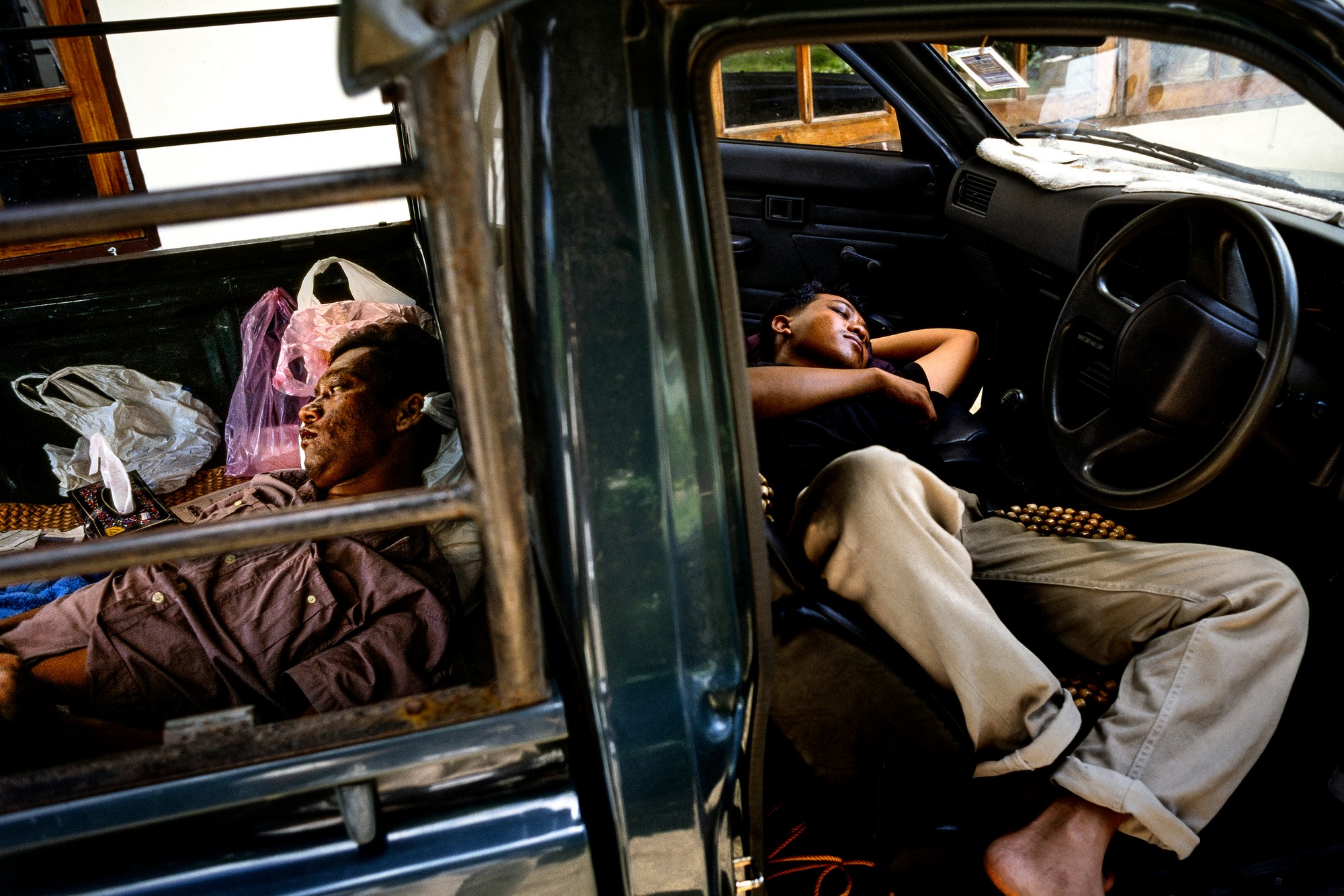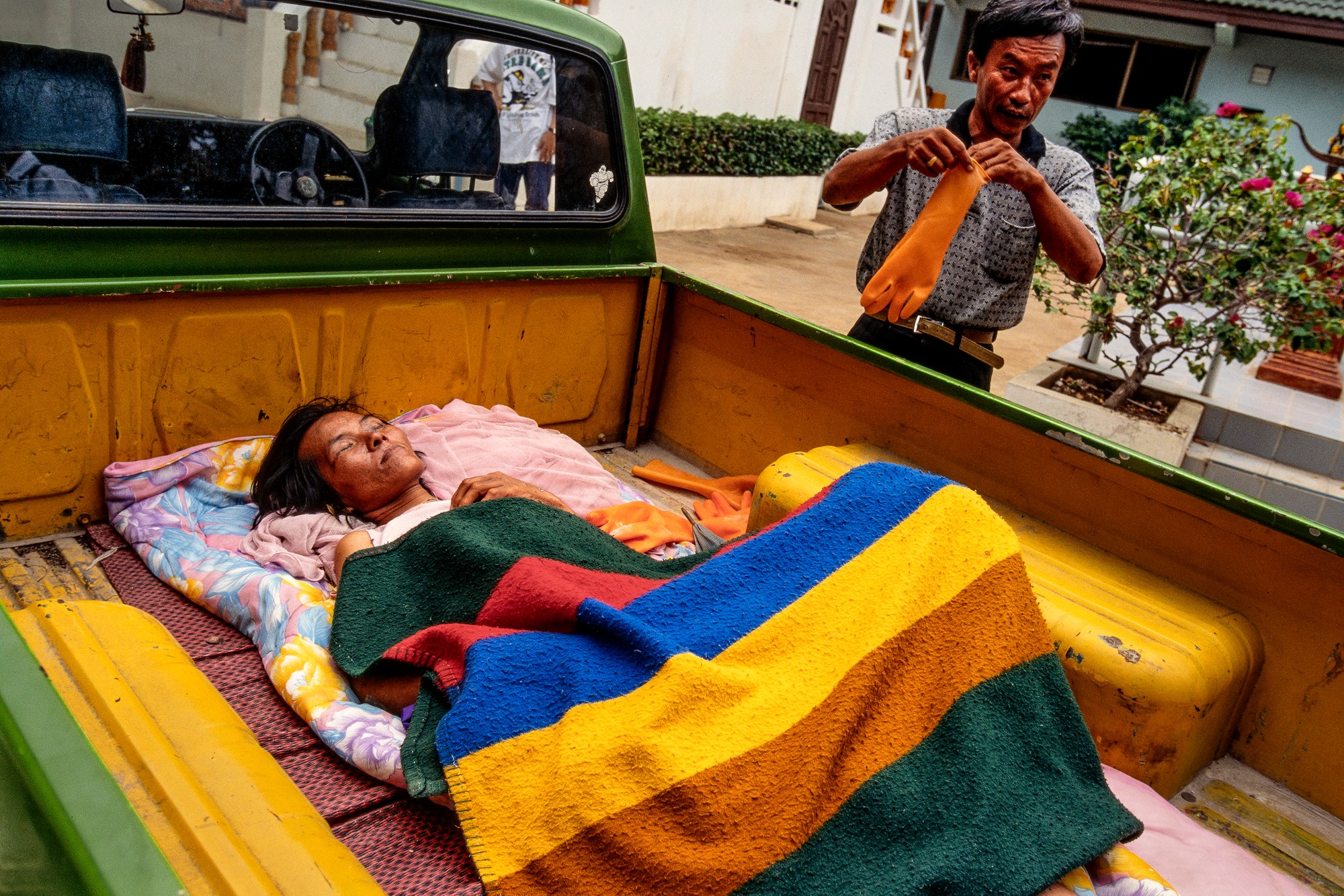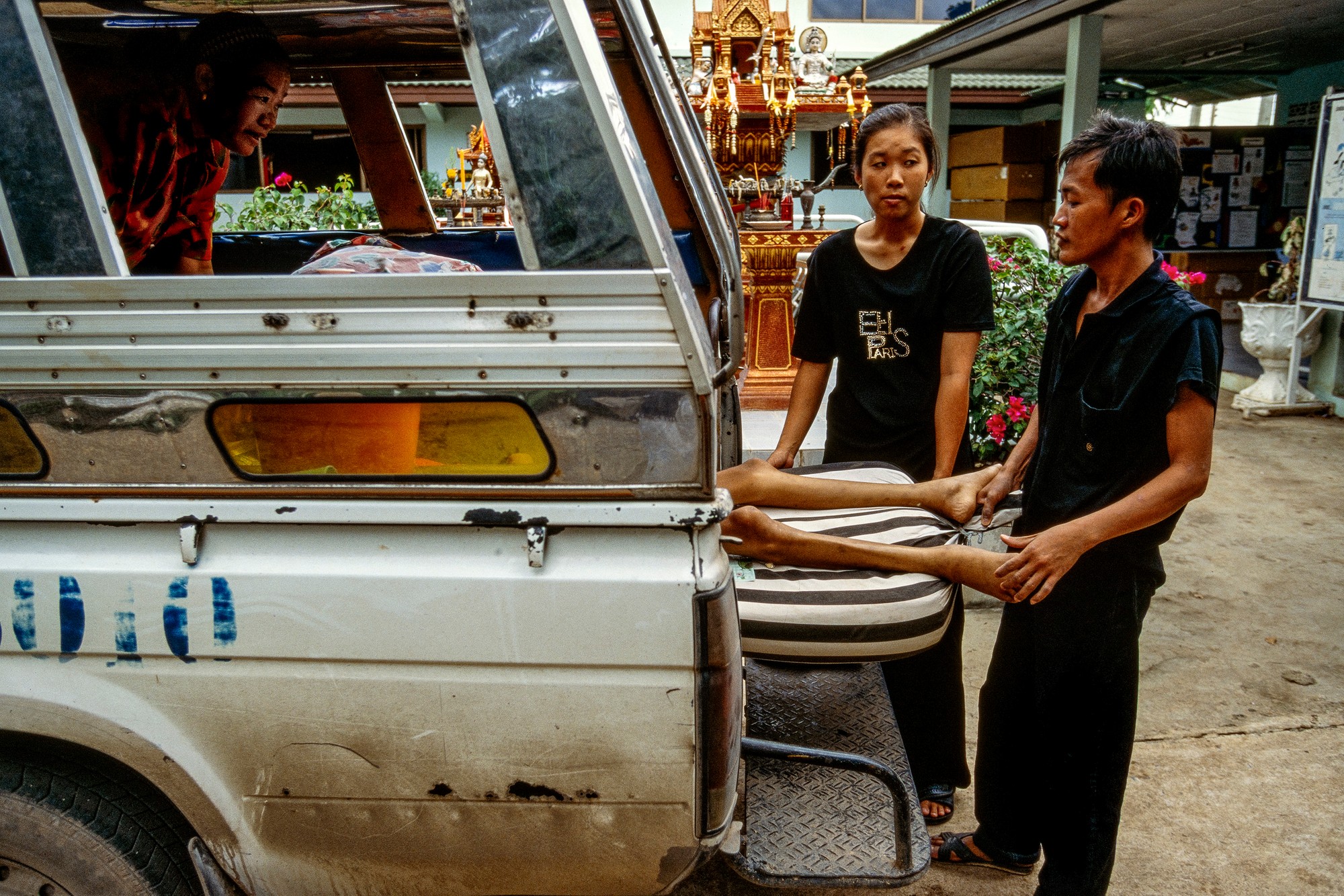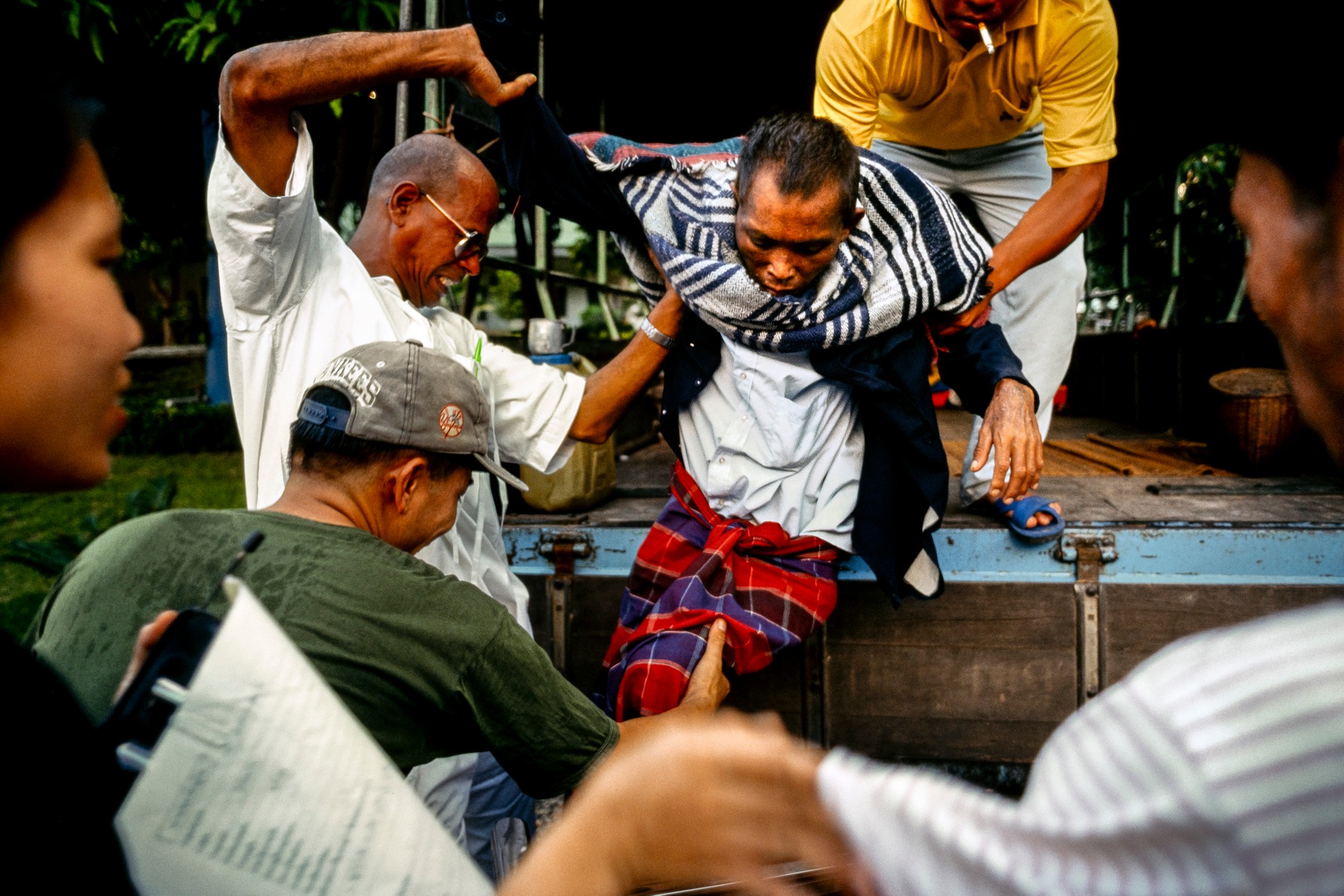
OCTOBER, 1996. IN THAILAND, AIDS PATIENTS TURN TO A TEMPLE FOR REFUGE.
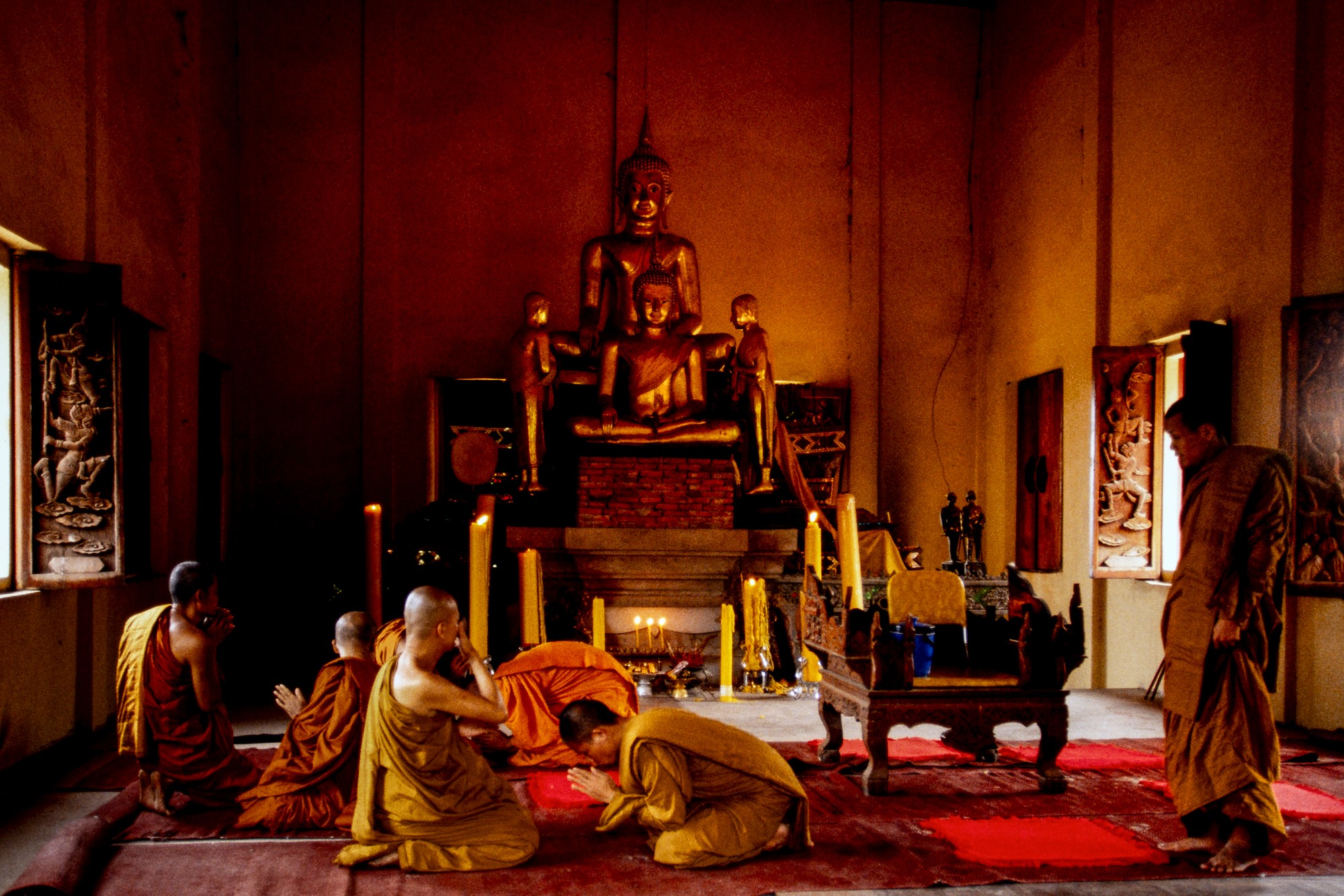
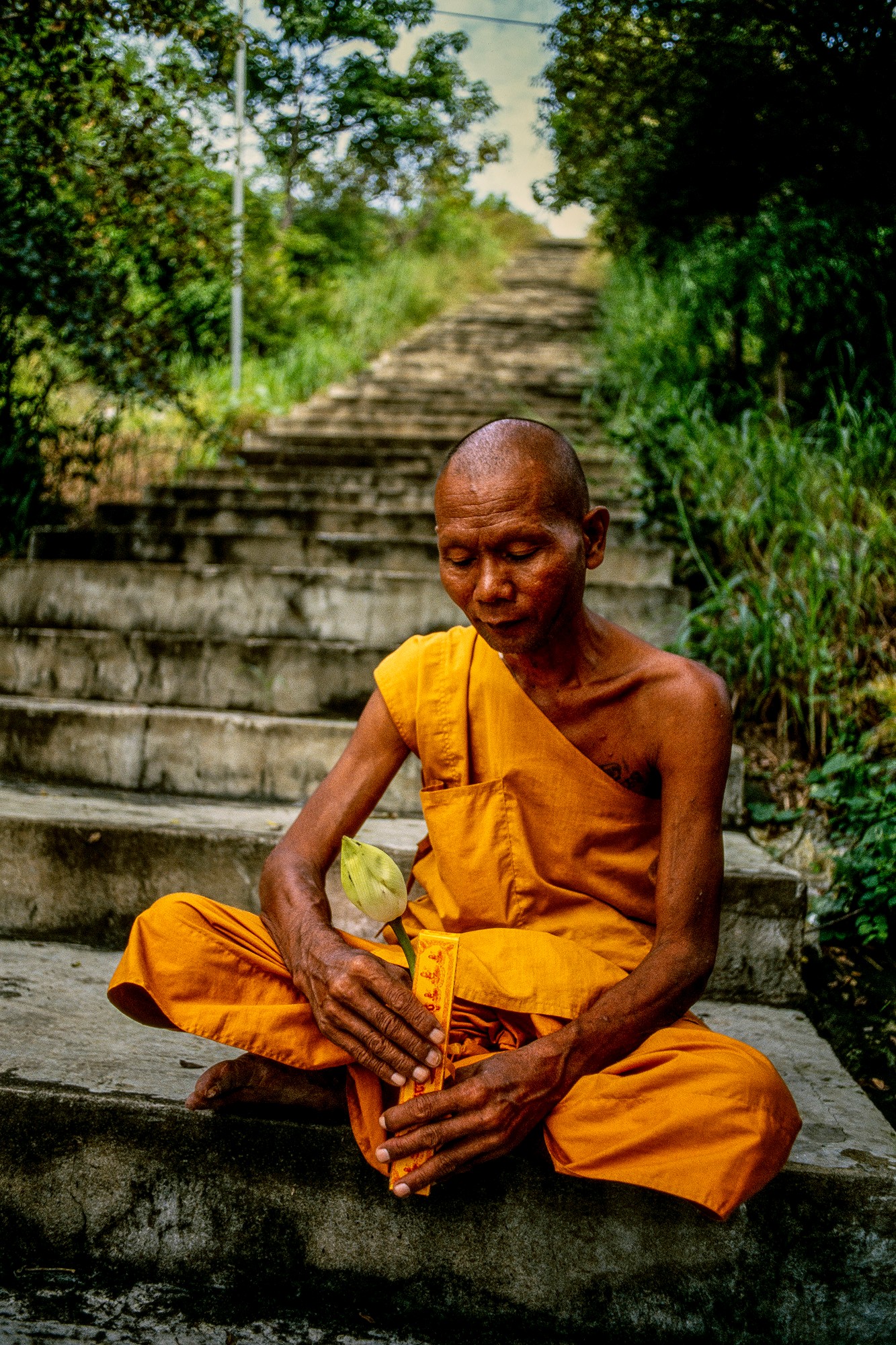
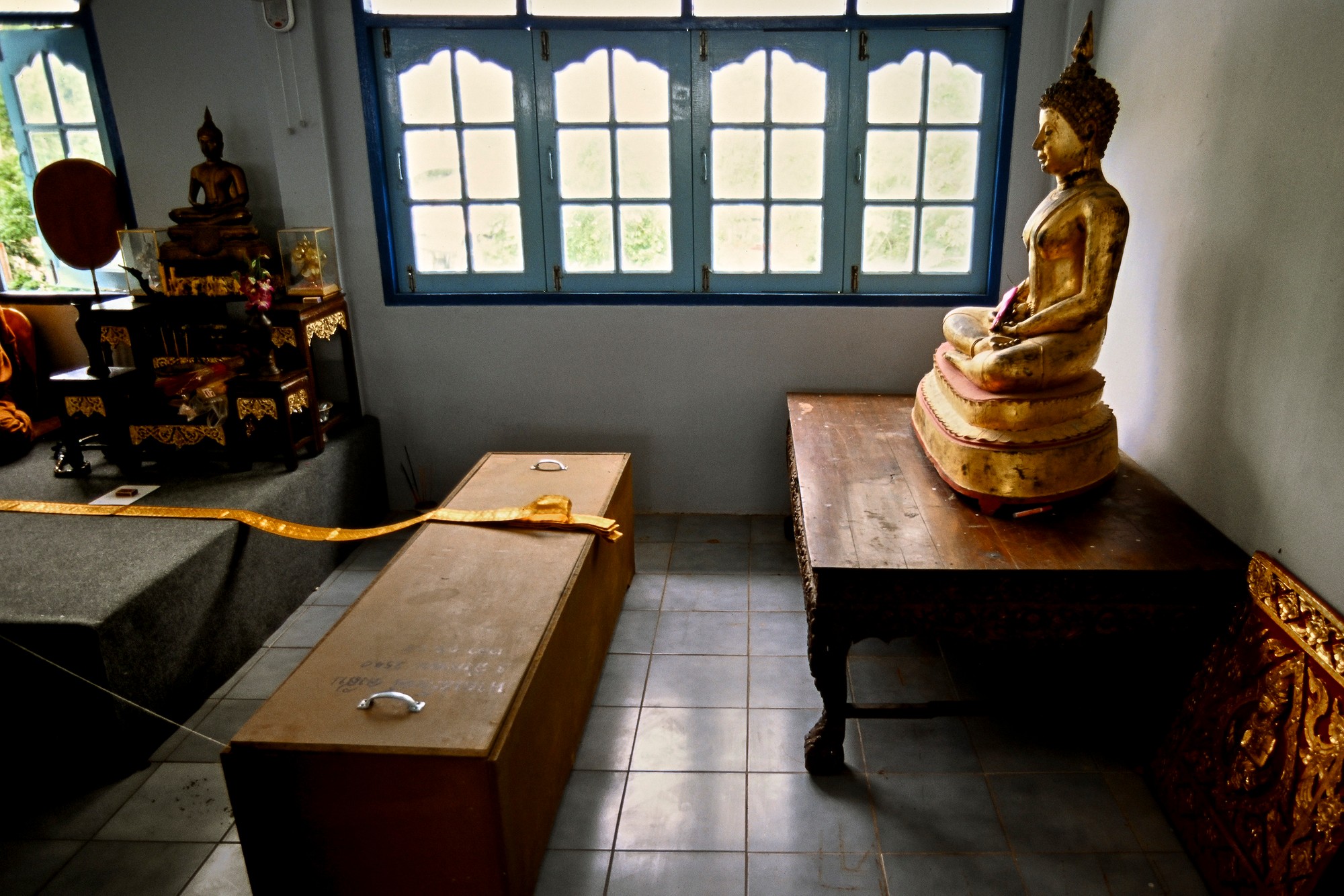
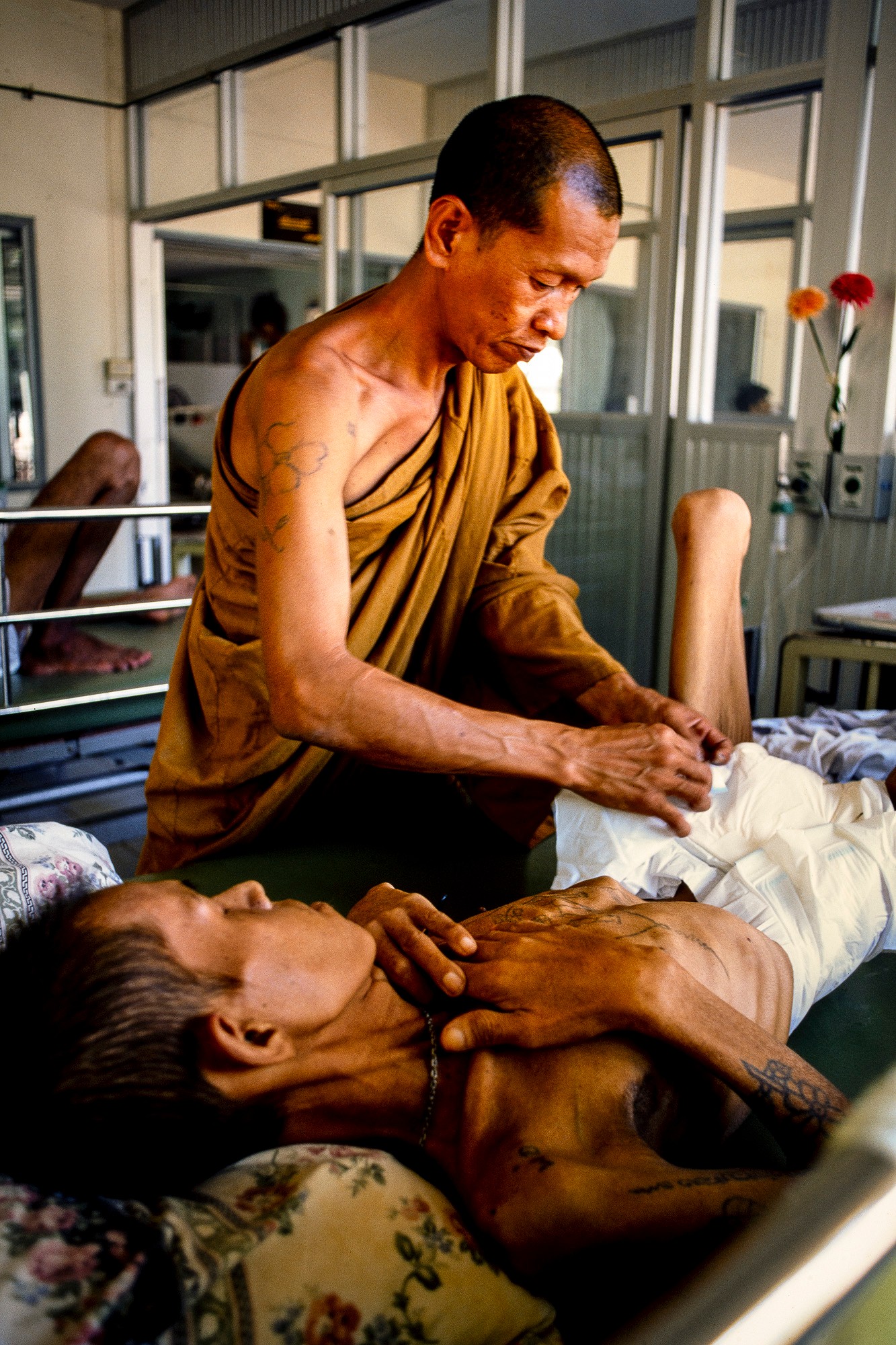
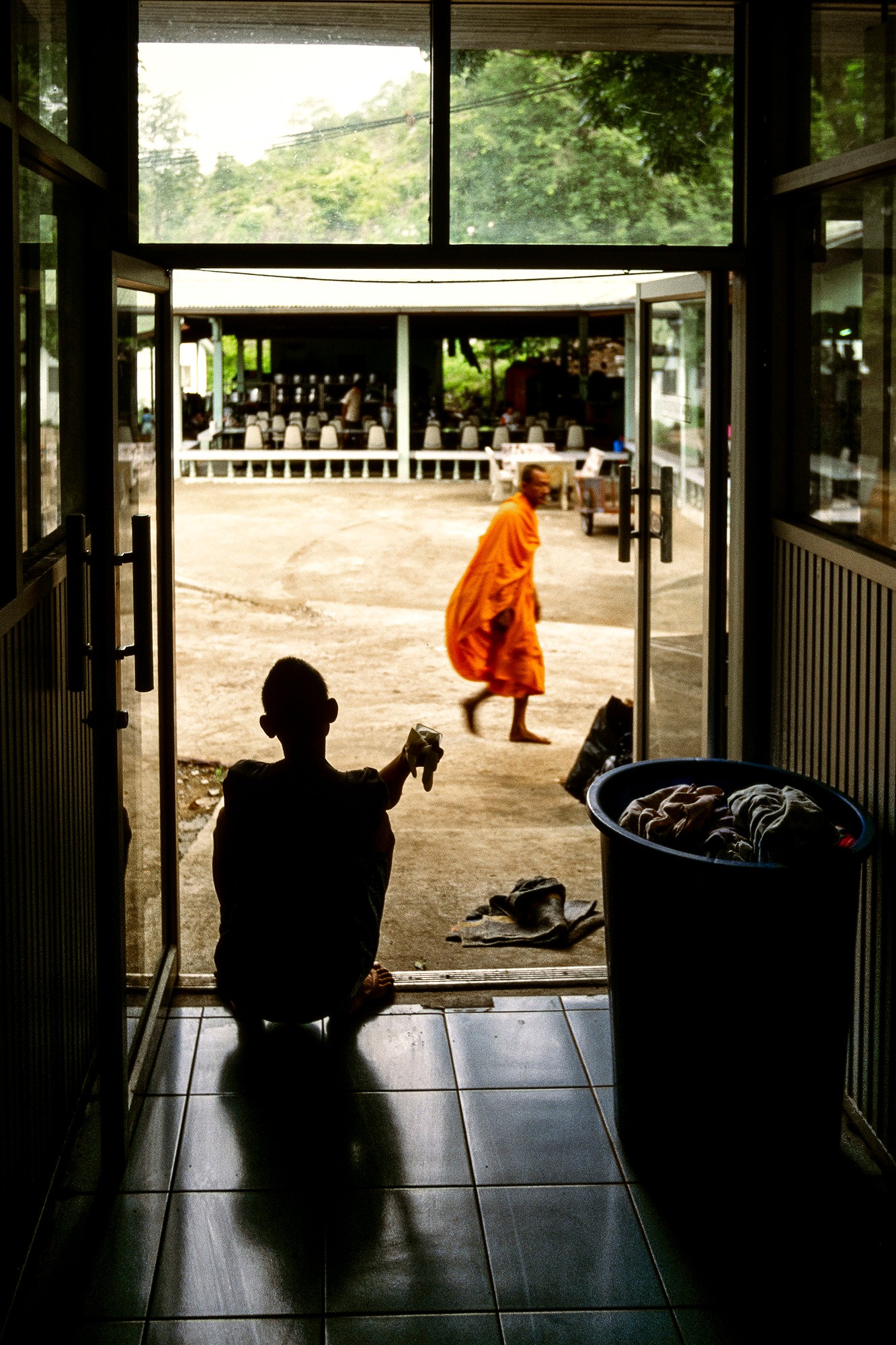
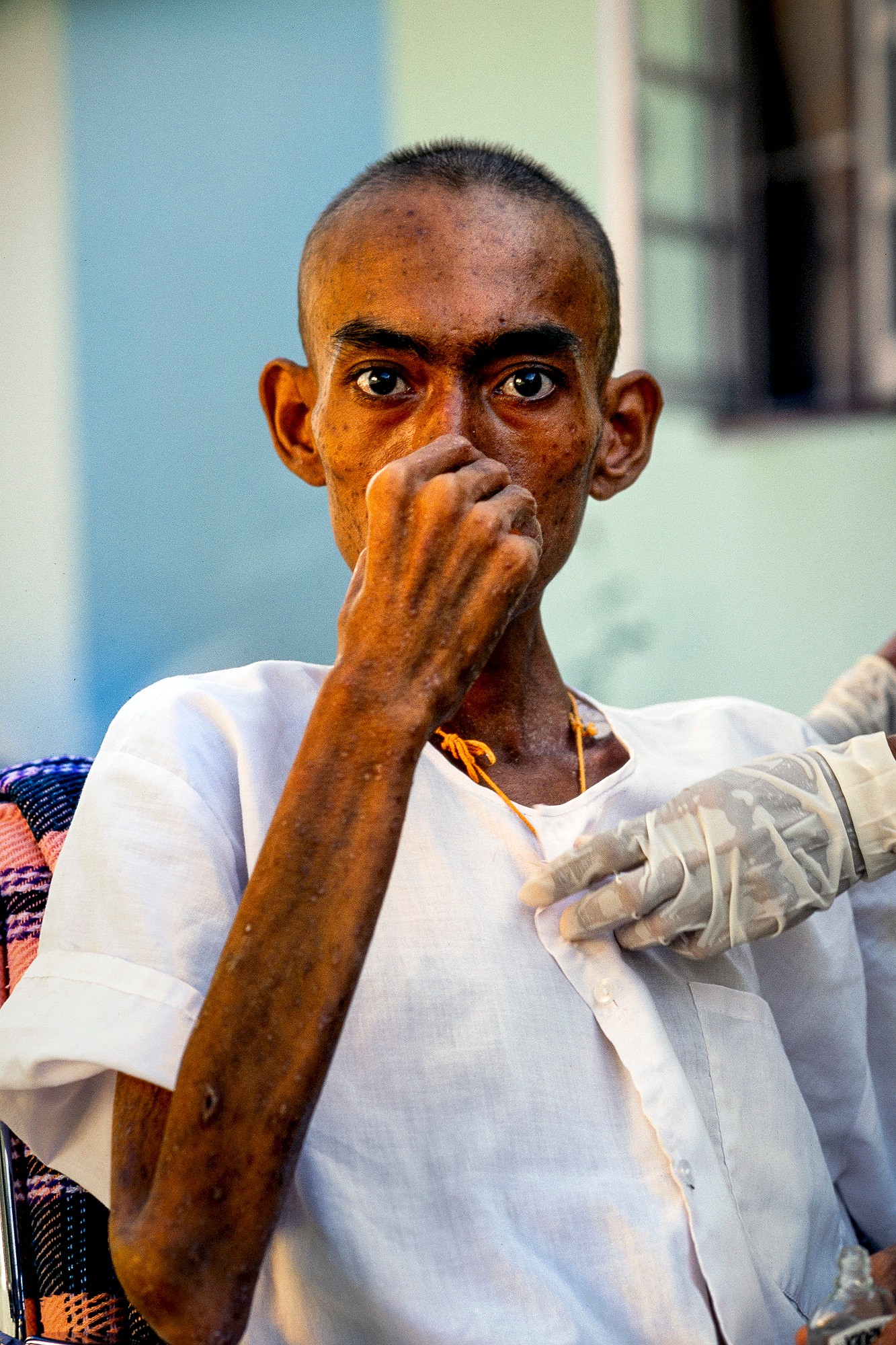
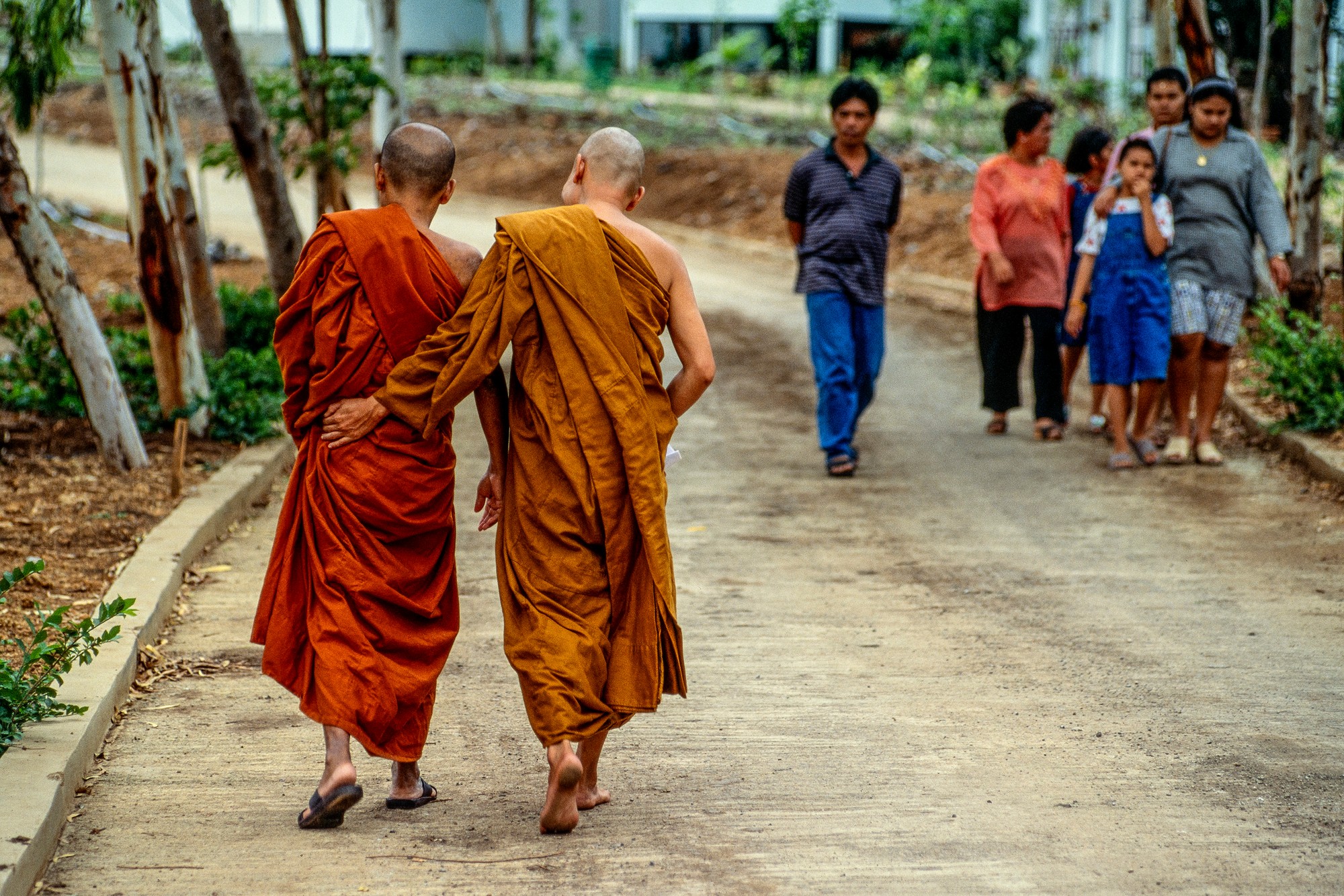
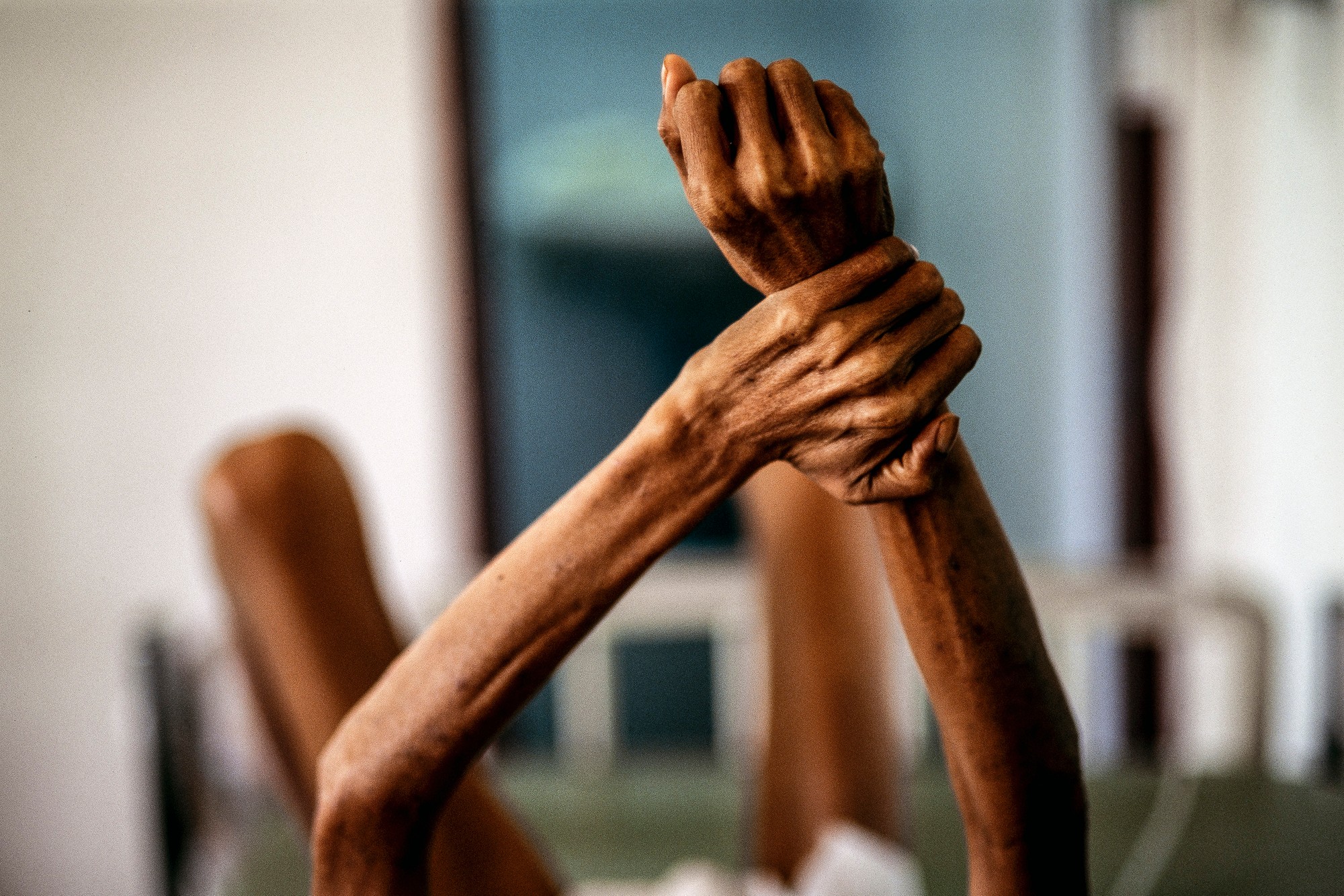
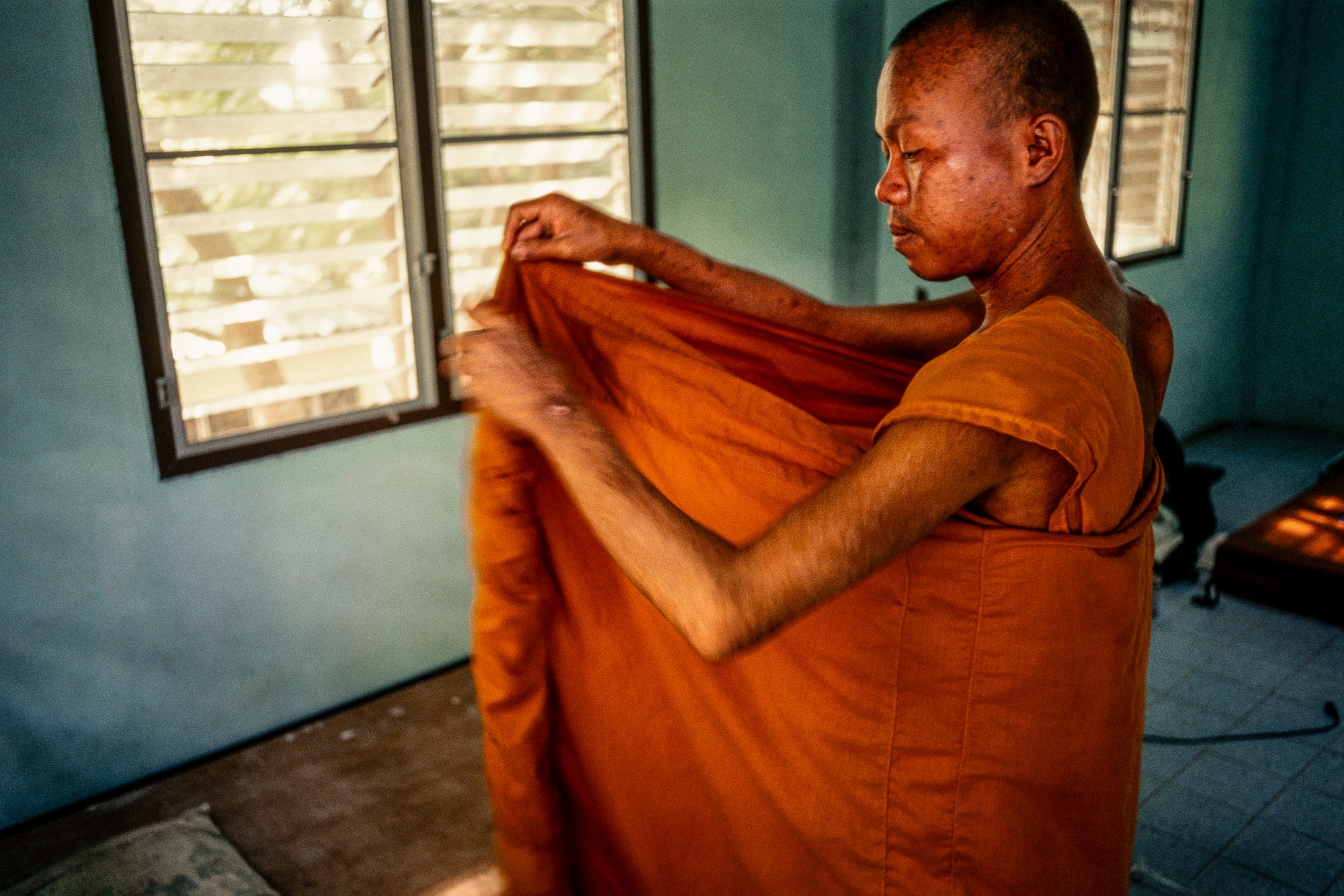
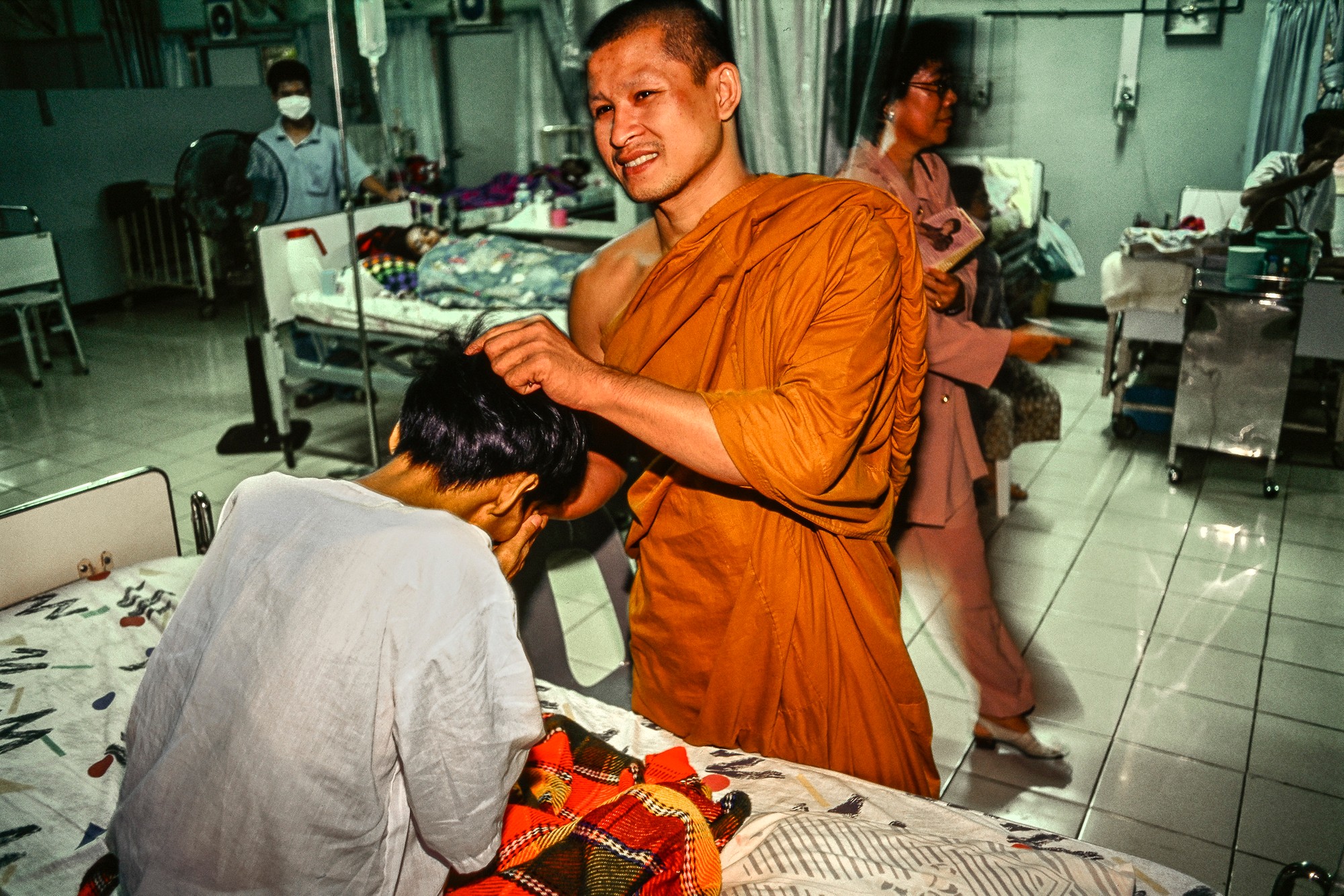
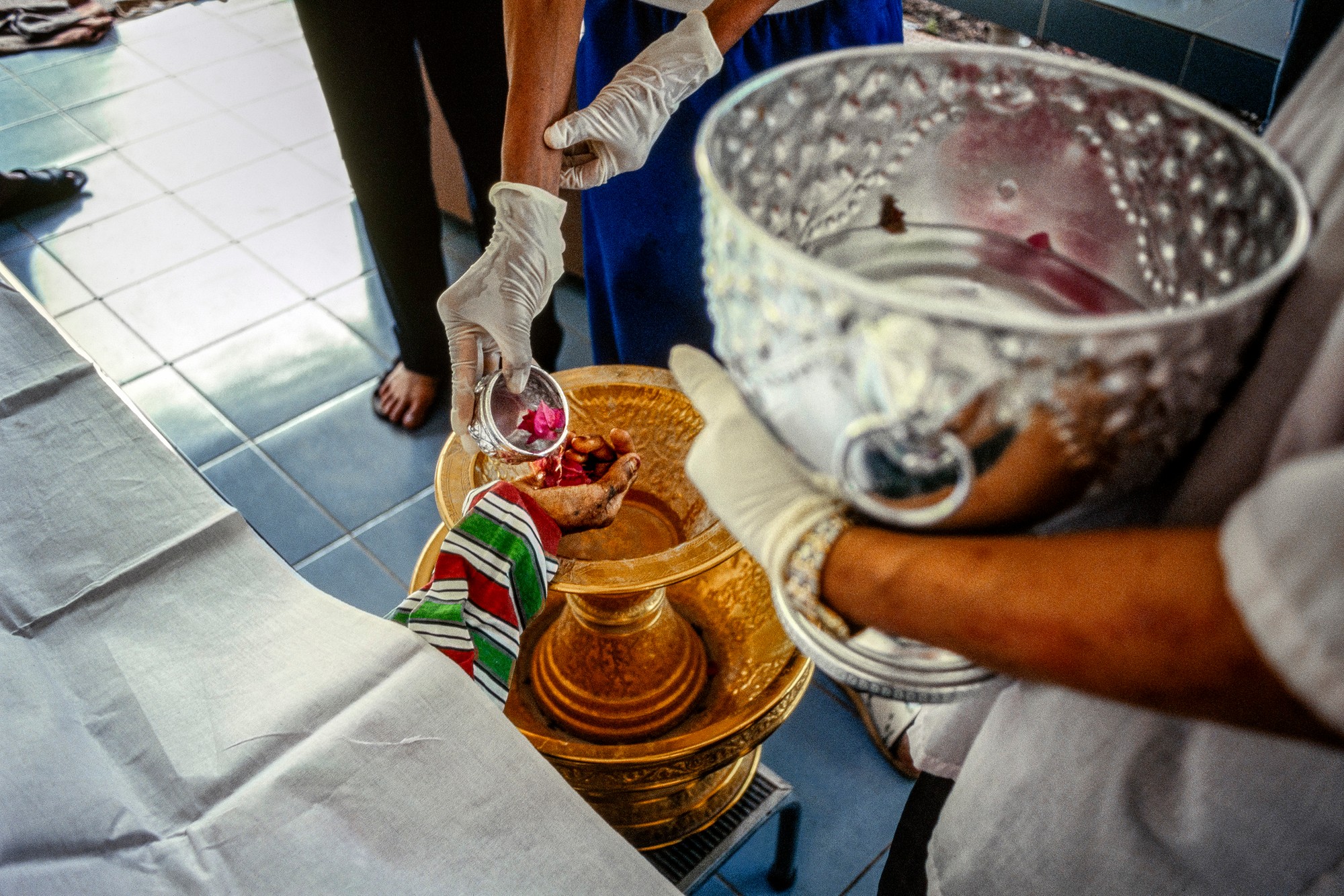
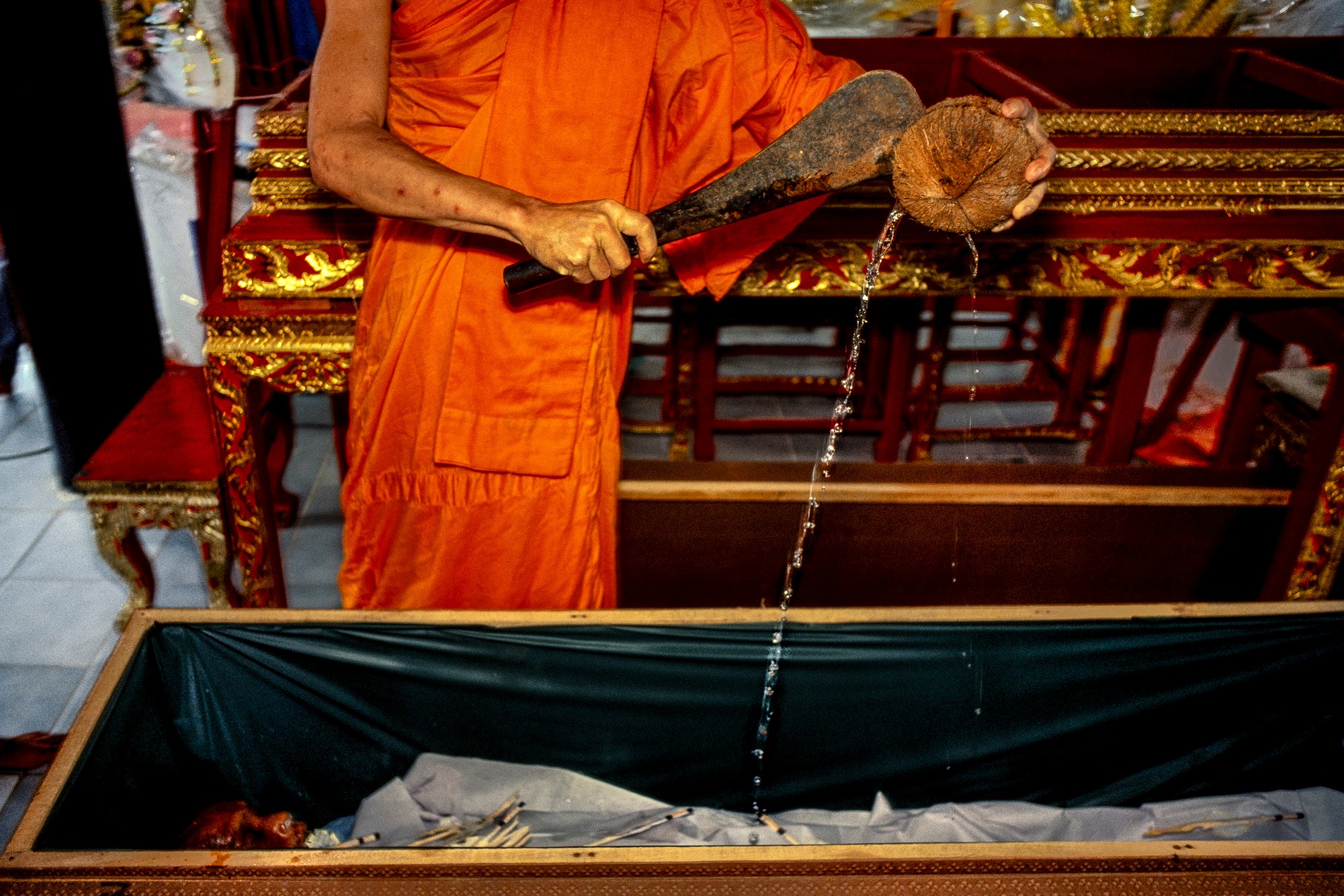
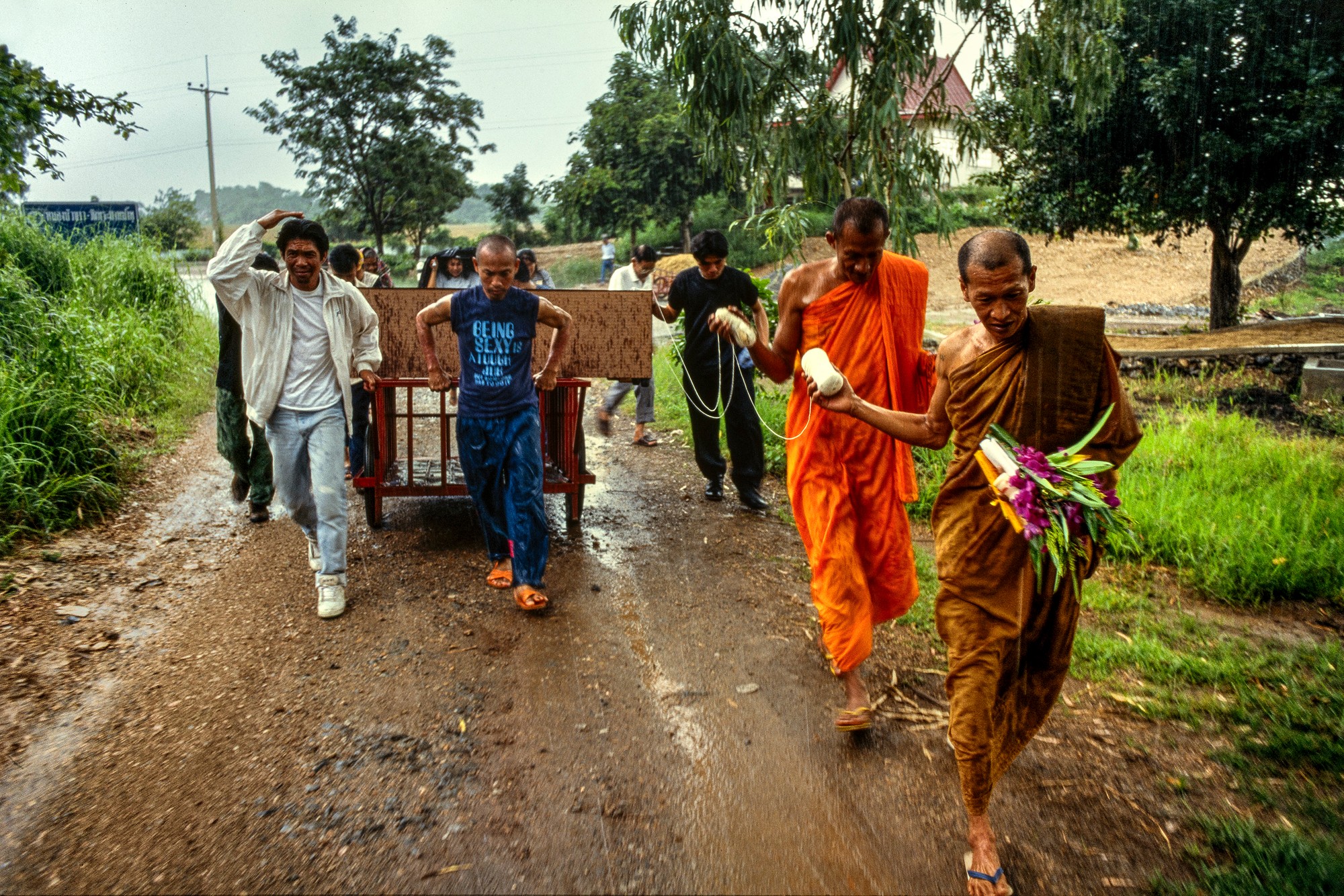
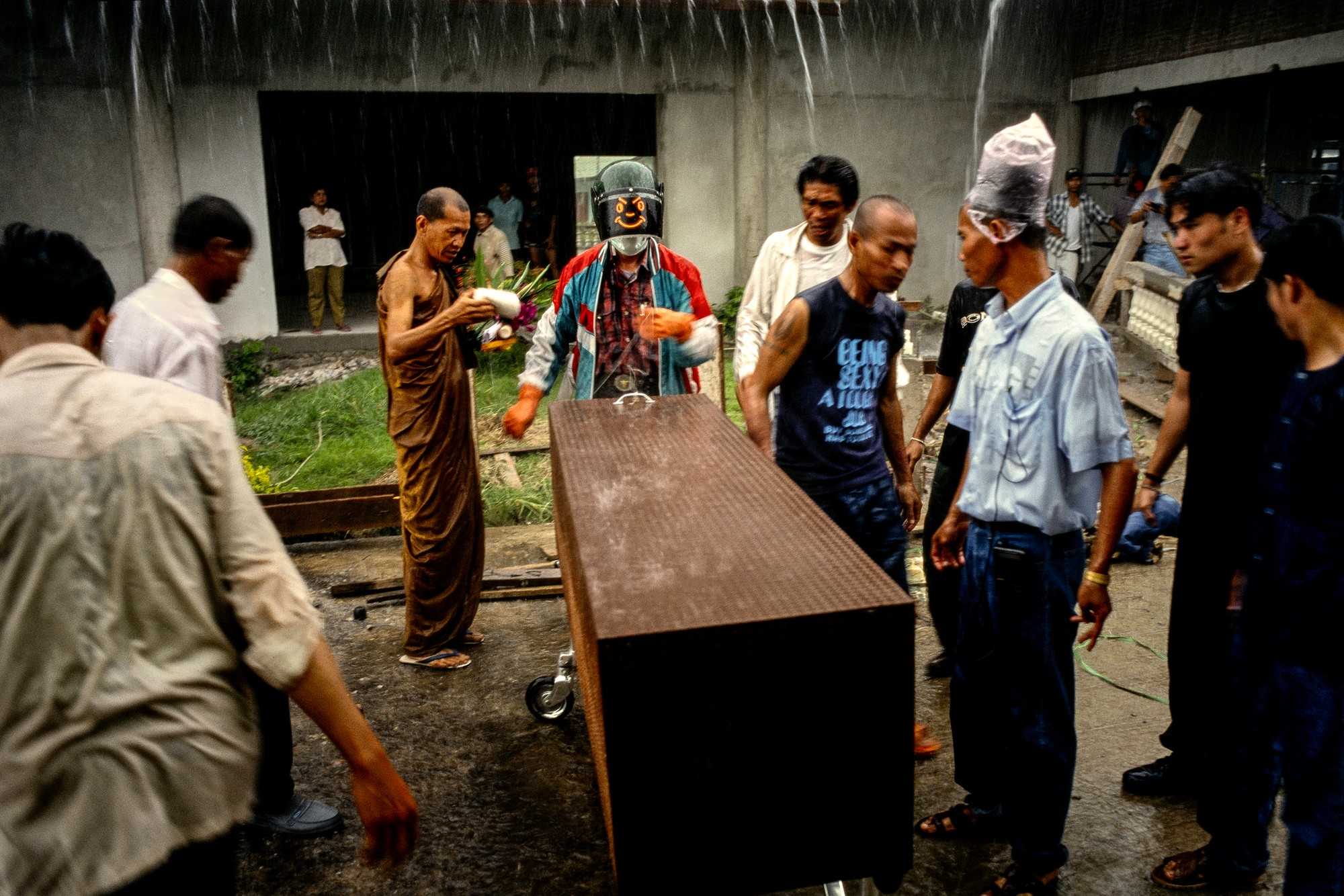
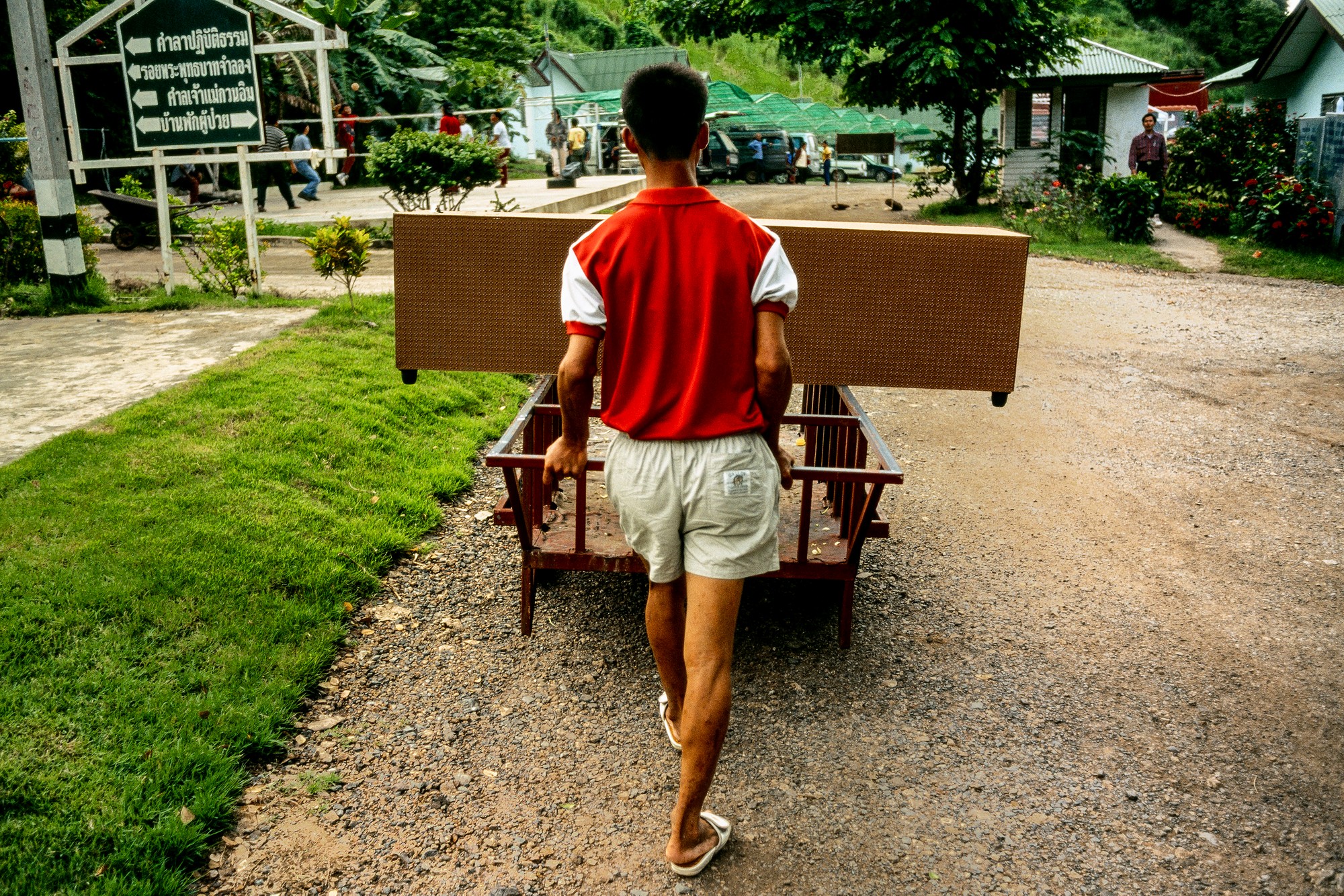
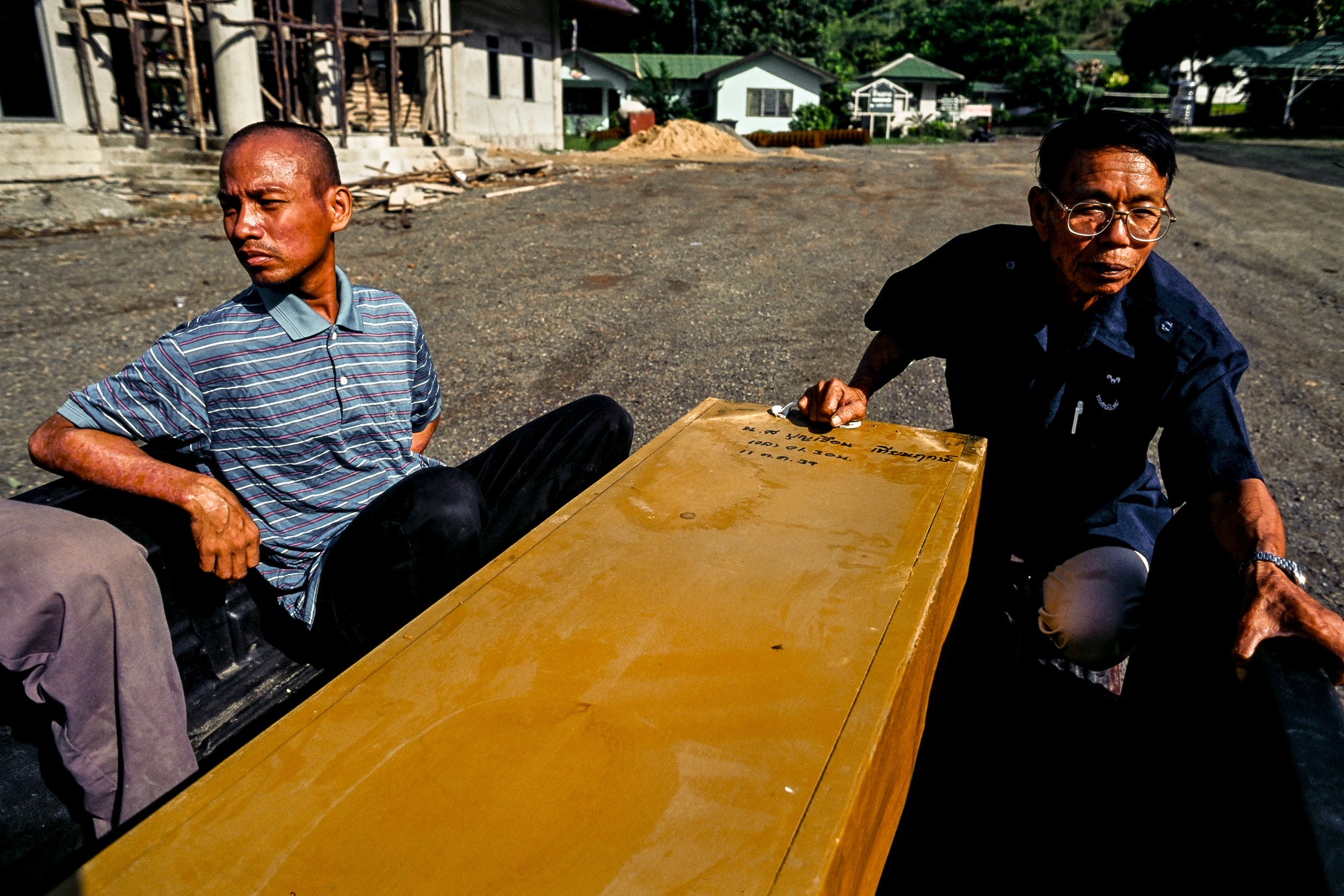
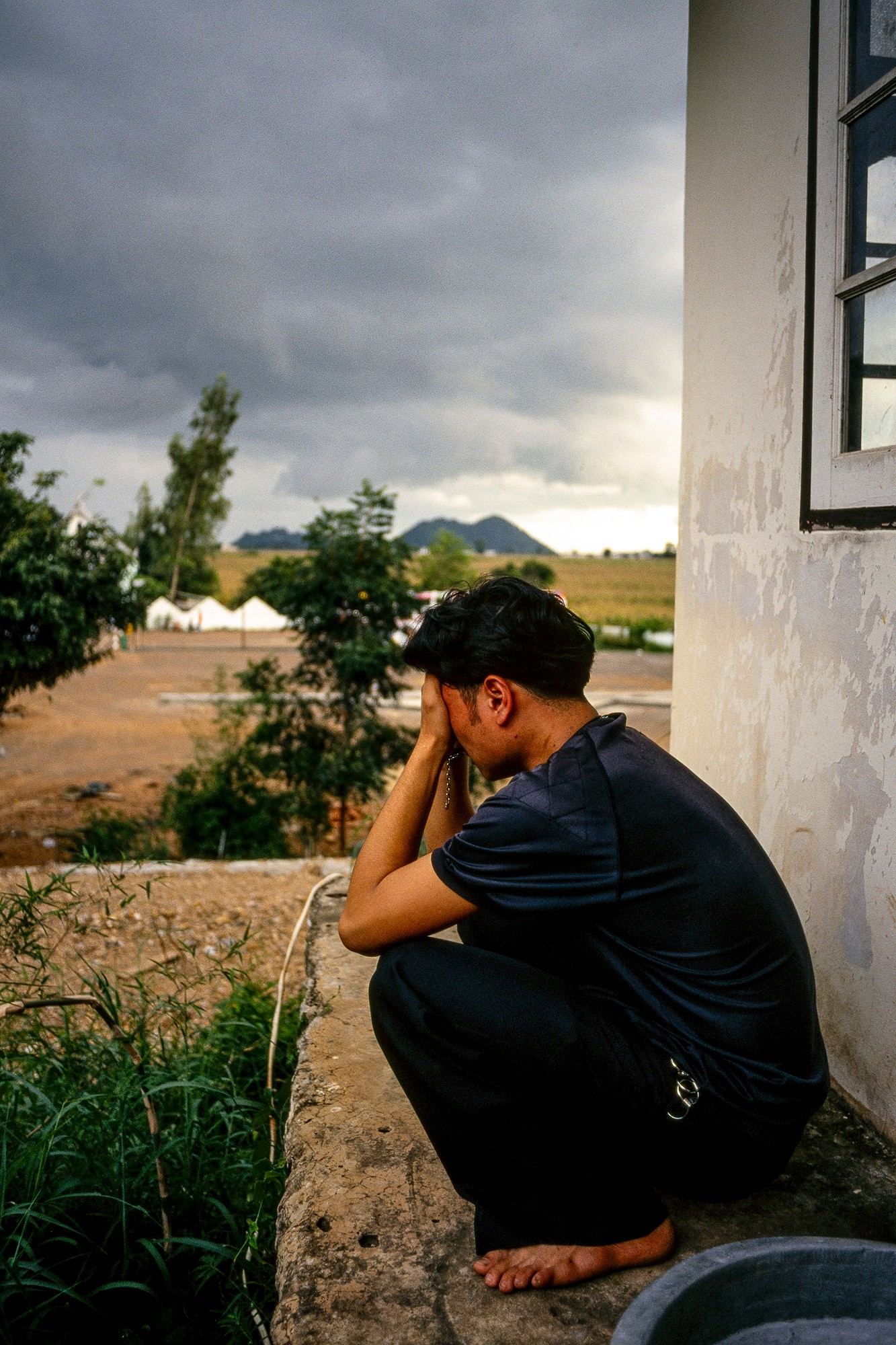
Three or four times a day Phra Pramote can be seen leading funeral processions through the grounds of Wat Phrabat Nampo in central Thailand. The coffins he leads to the crematorium all carry patients from the temple who have died from AIDS and Pramote knows that one day he will also make this final journey. Phra Pramote was diagnosed with AIDS three years ago. “Walking up this hill many times every day is hard because I’m very sick,” says the frail looking monk. “But I know someone here will do this for me when it’s my turn and that makes this temple so good.”
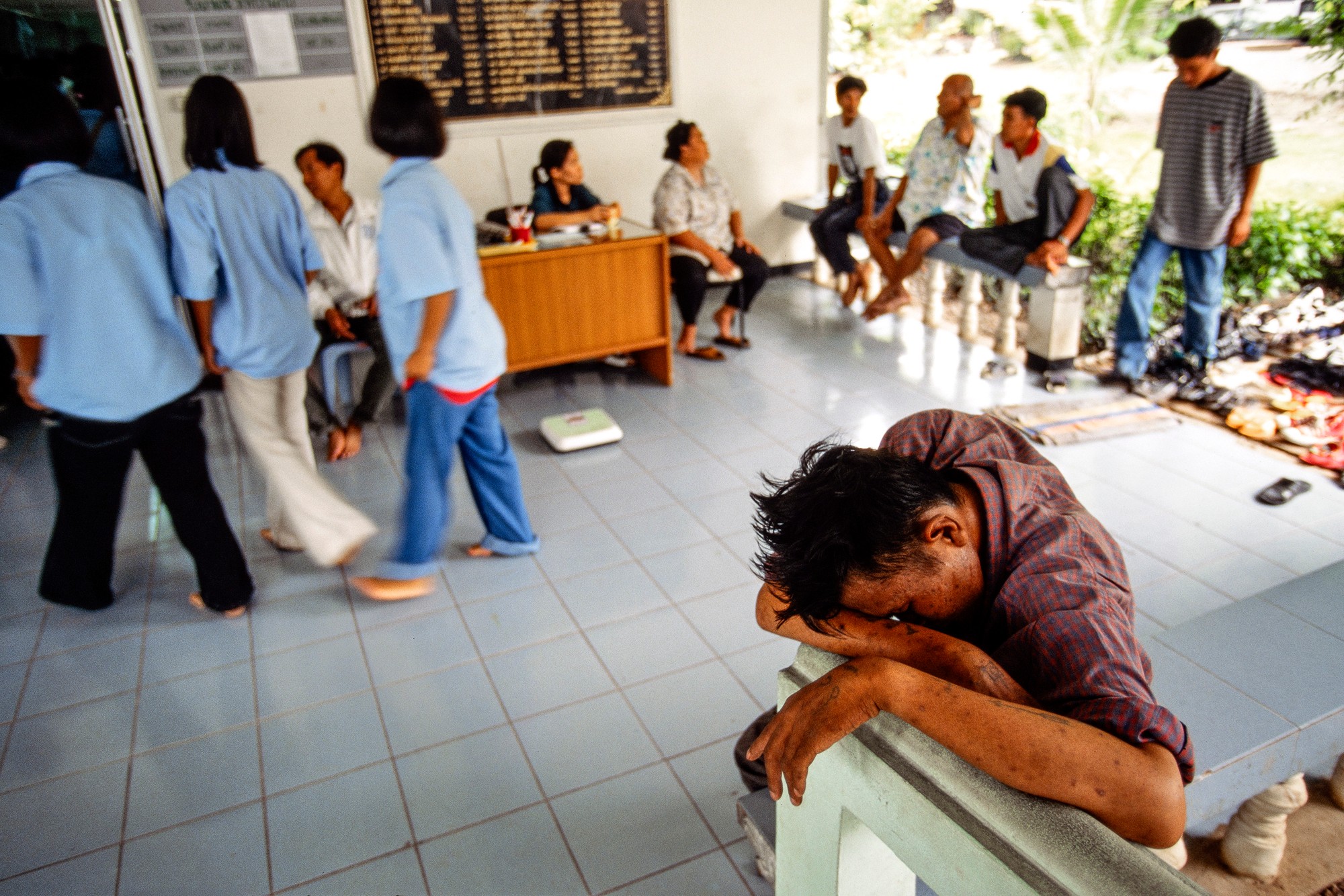
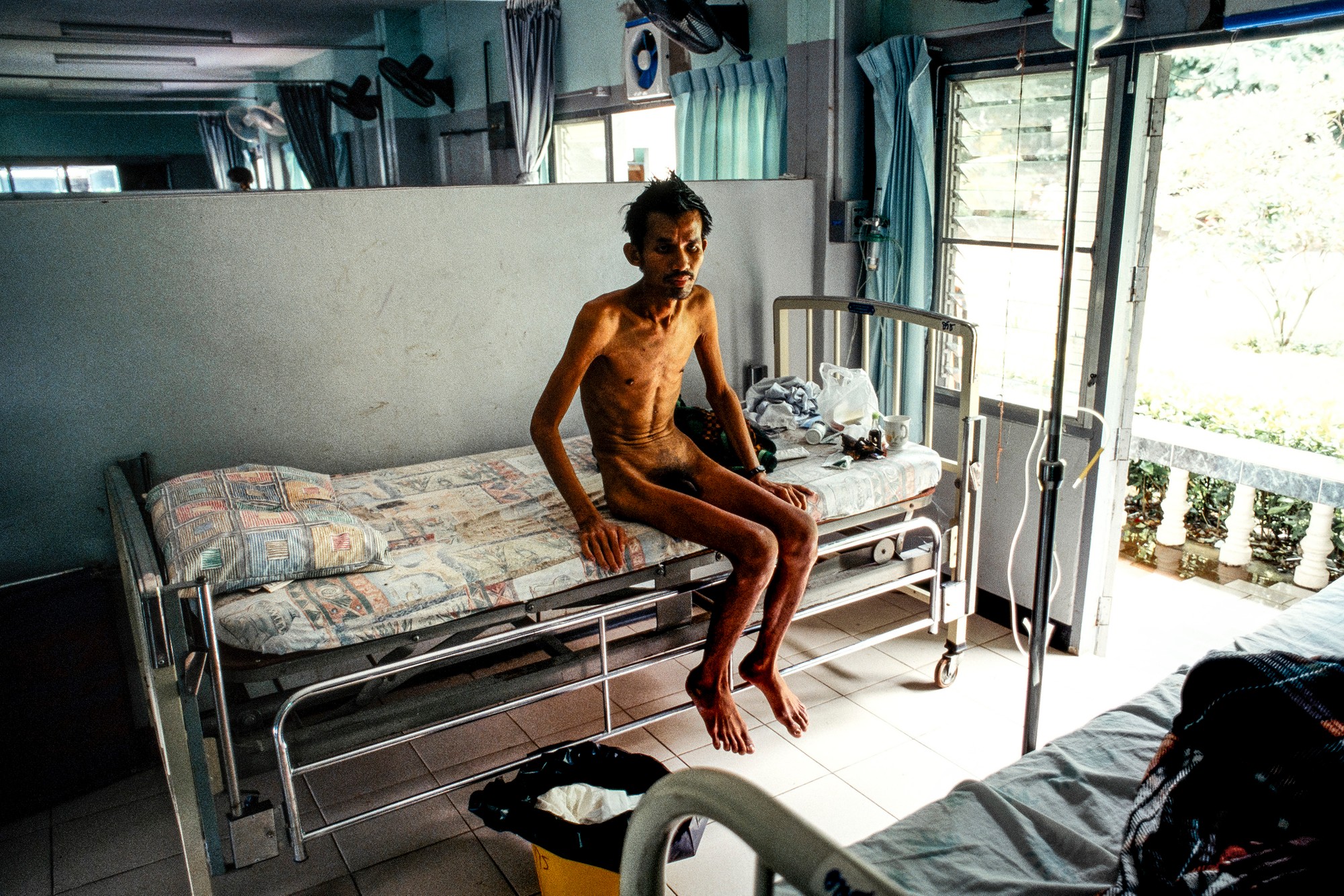
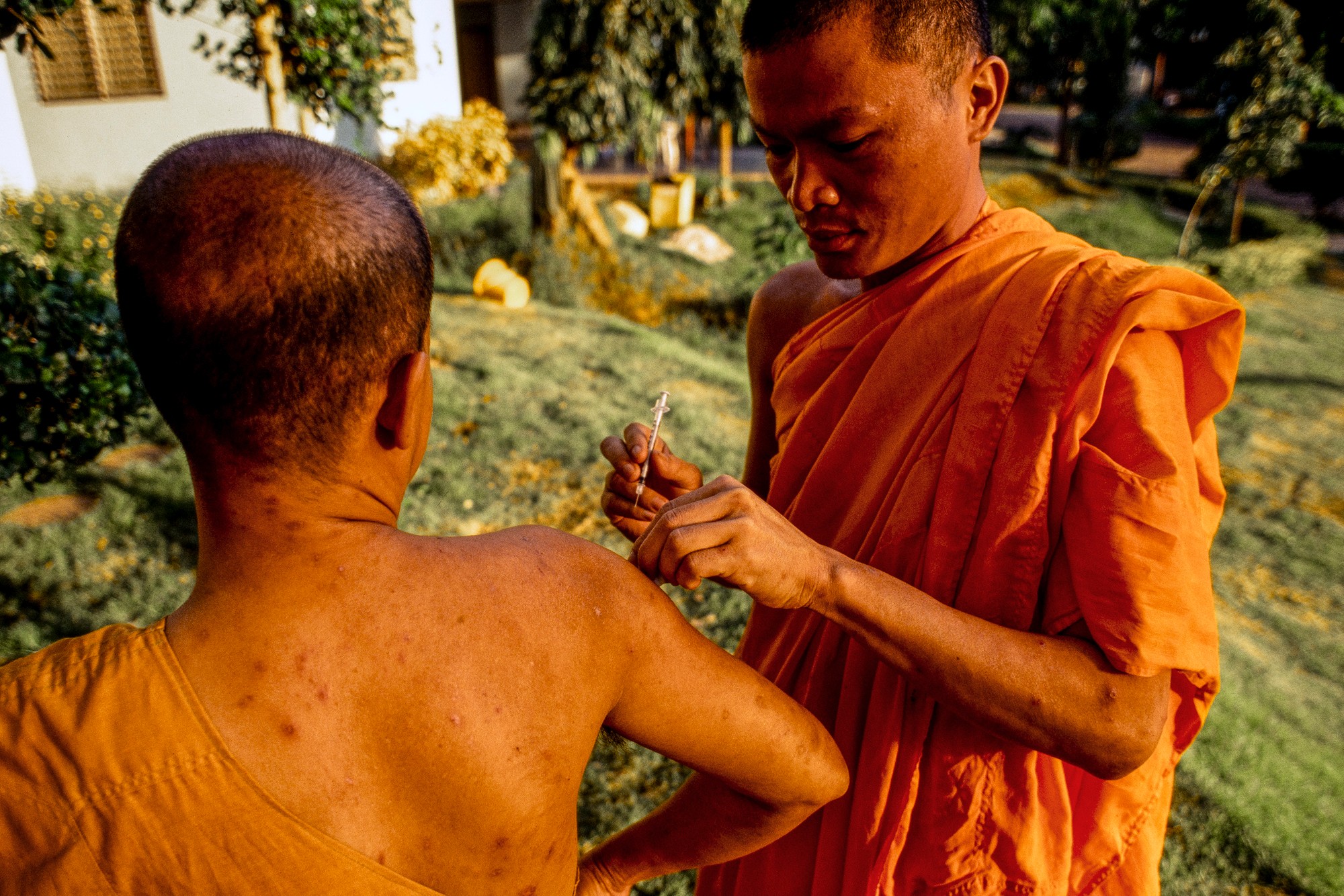
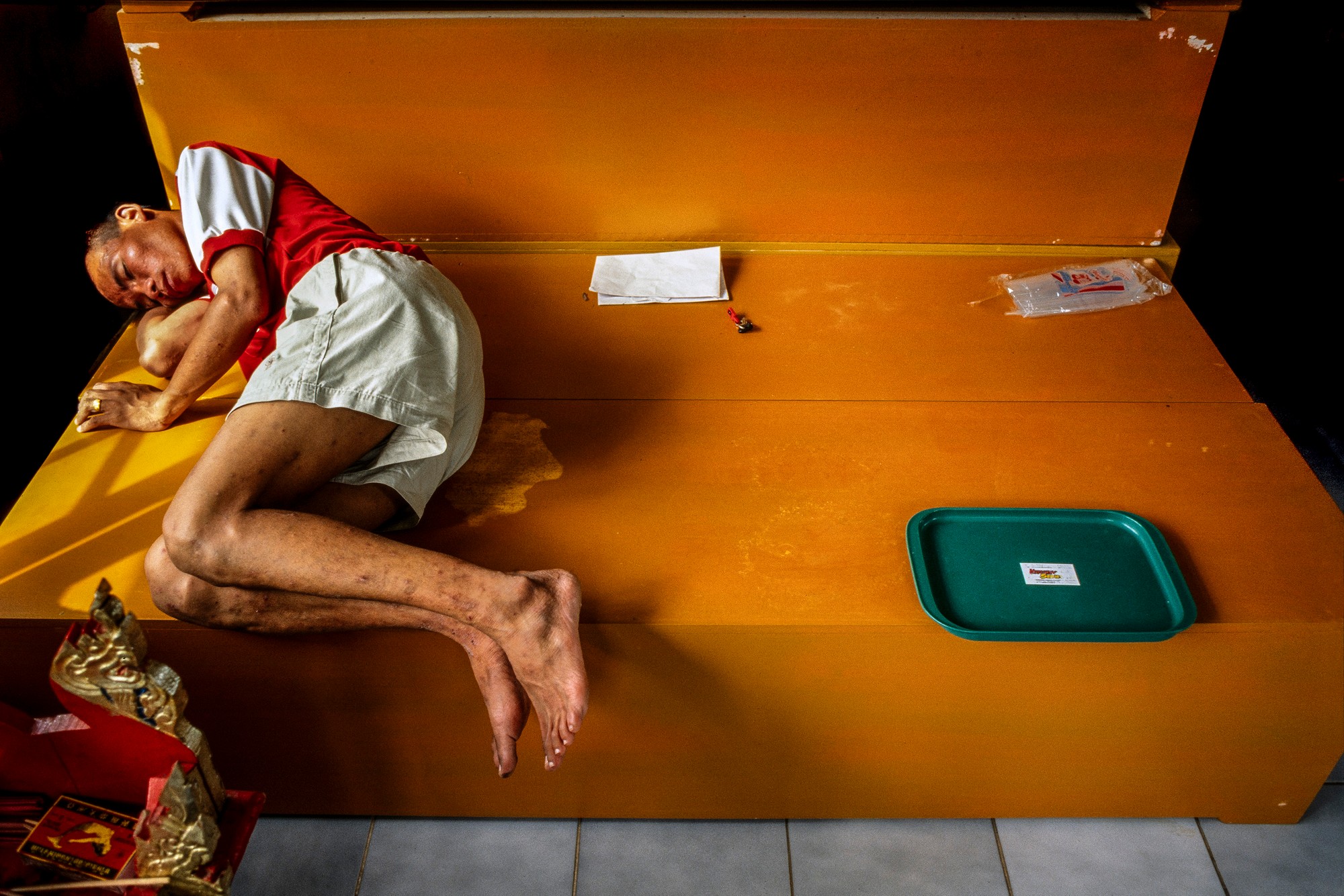
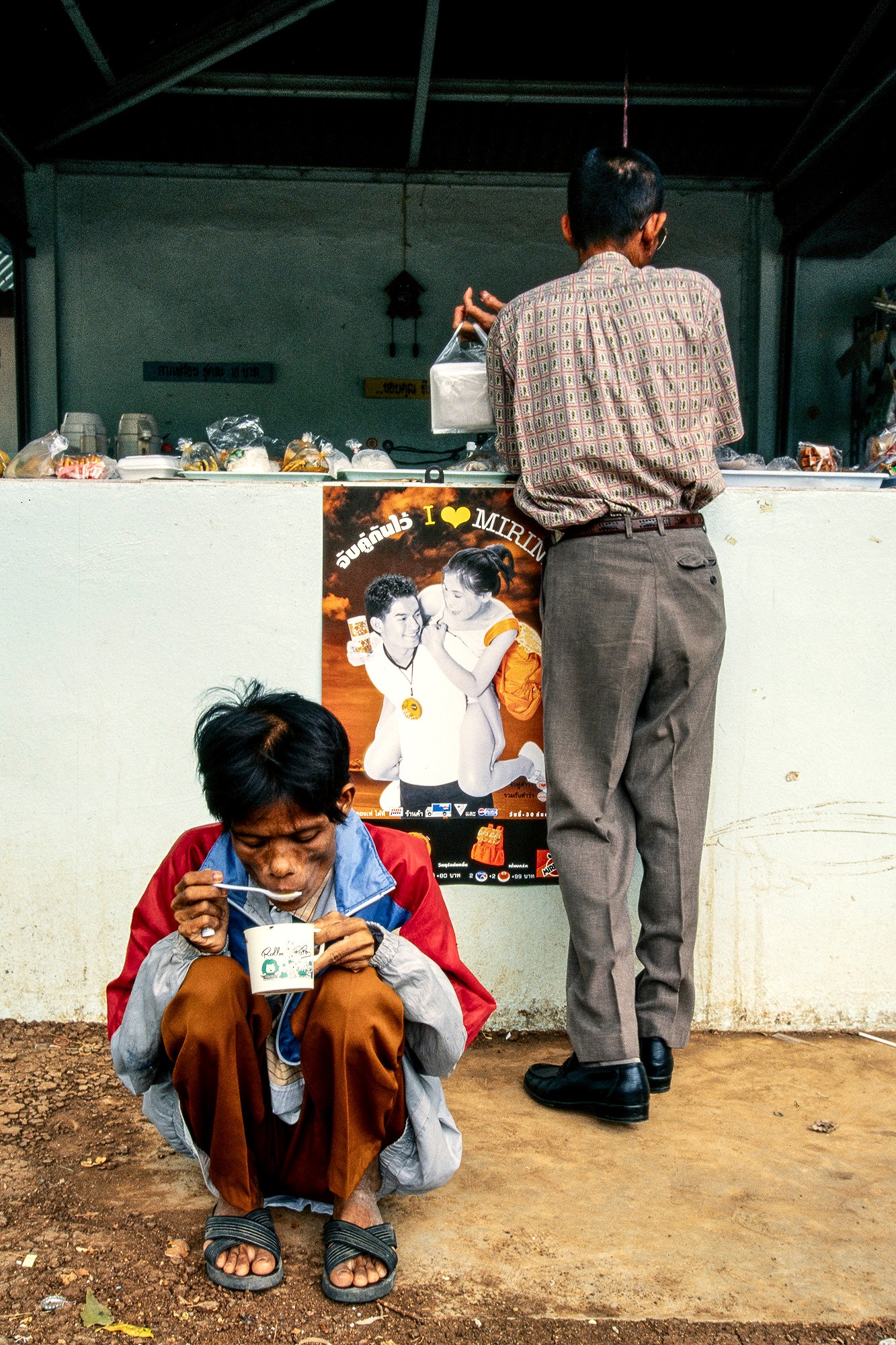
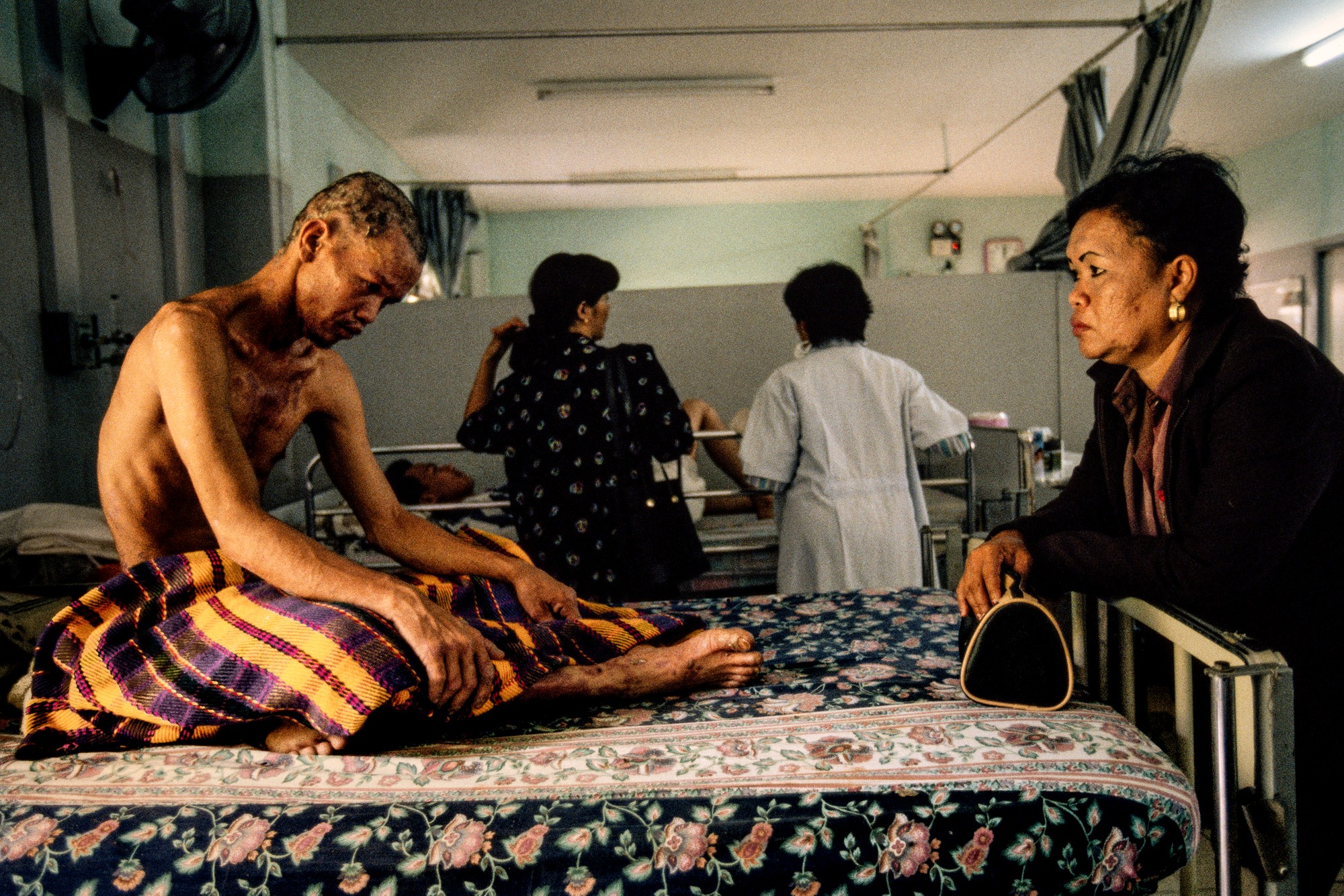
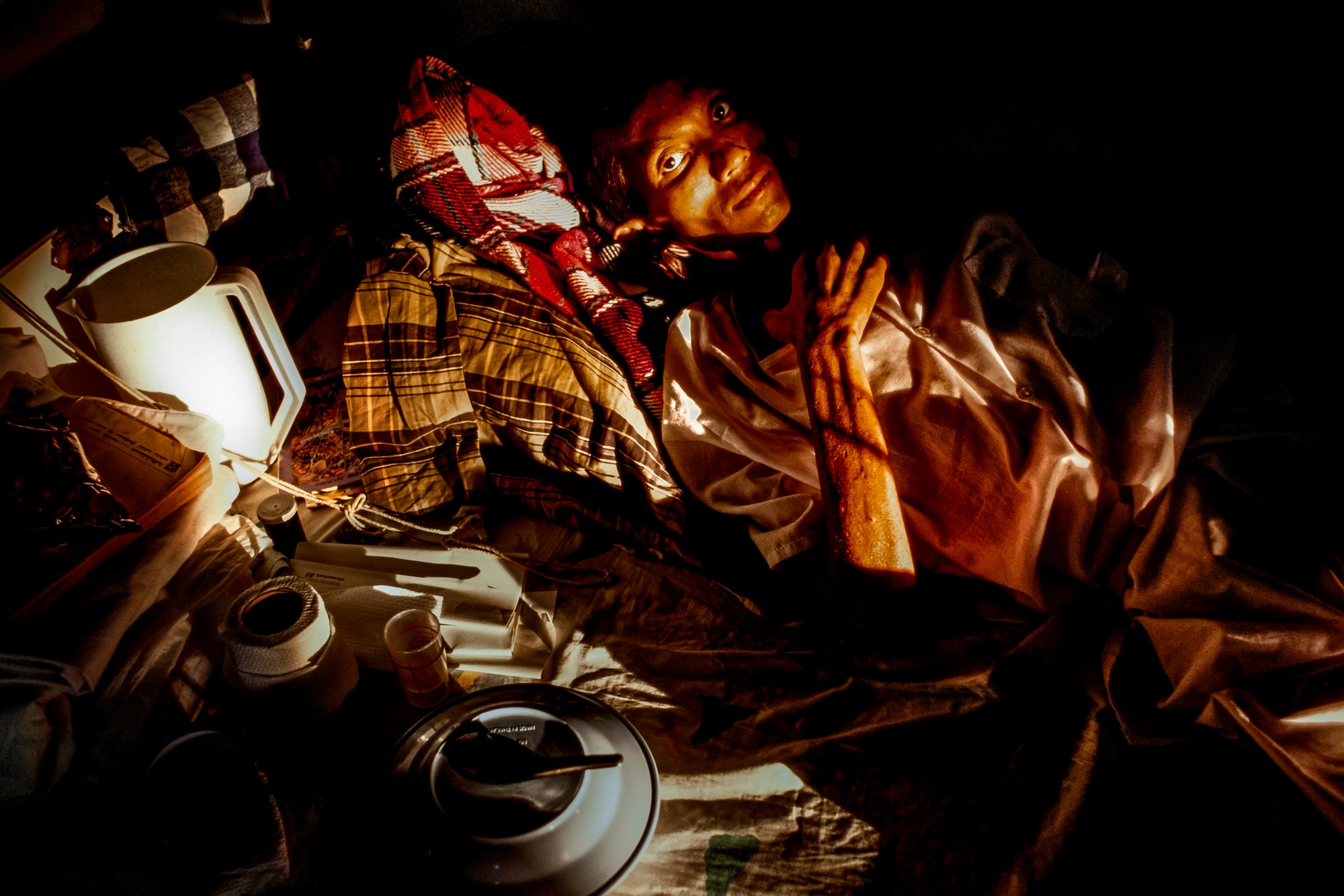
Wat Phrabat Nampo is unique in Thailand because nearly all the monks who live there are HIV+ or have AIDS. The temple, isolated in the hills of Lopburi Province, has become a sanctuary for hundreds of patients from around the country who flock to the temple for the care provided by the monks and nurses. Often rejected by their families and friends, the temple offers a sense of community but everyday new patients are still abandoned at the guard house near the entrance of the temple which has become the country’s largest AIDS hospice.
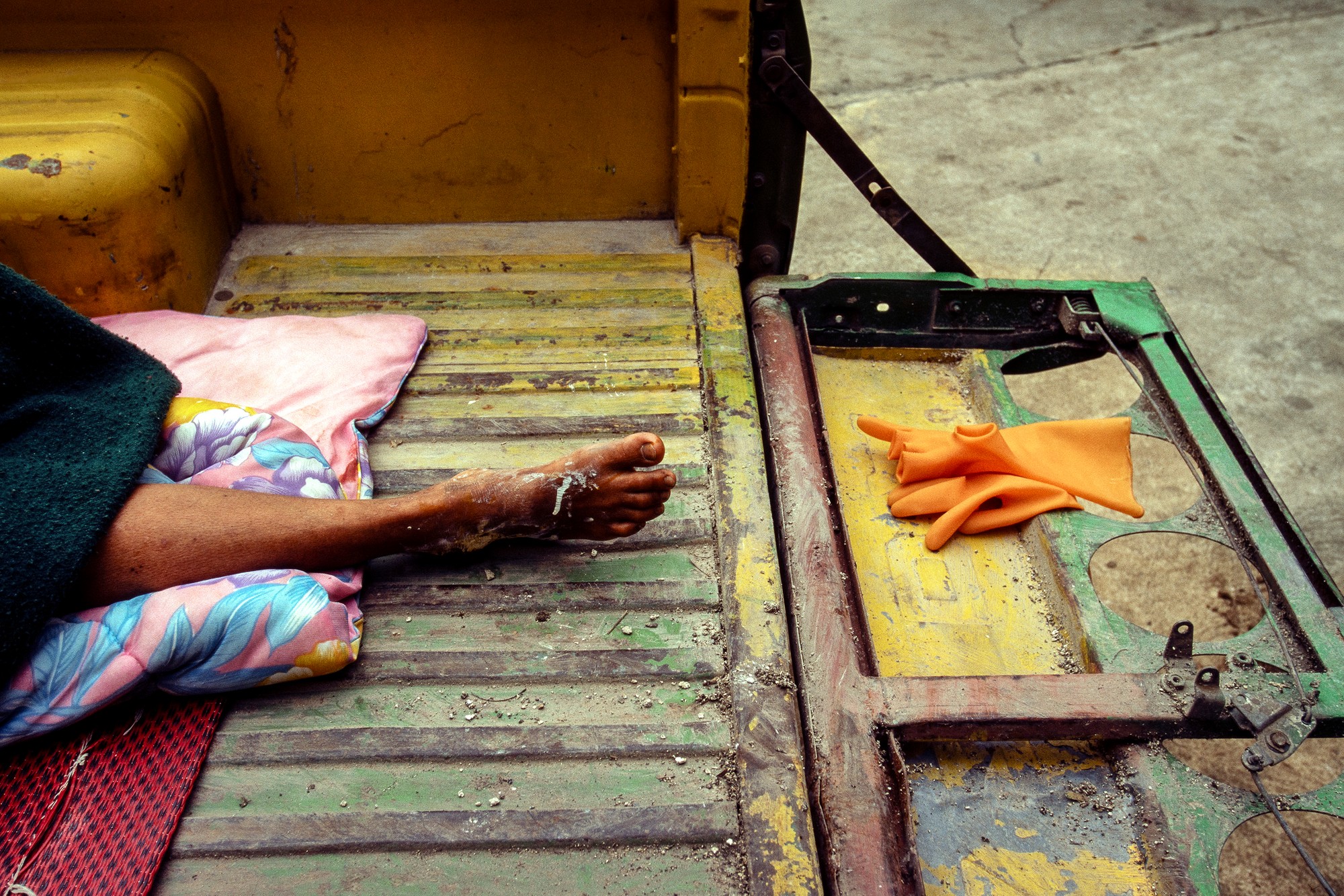
For Phra Pramote, the temple was his last chance. After monks at his former temple discovered he was HIV+, he was expelled by the abbot. “My family told me about this place and brought me here by truck when I was very sick. They’ve never come back, they’re too scared.”
Wat Phrabat Nampo was founded over four years ago by Phra Alongkot Tikhapenyo. Originally a monk in a nearby temple, Alongkot was expelled from that temple when he first began caring for AIDS patients. Starting with only a few patients, word of his new ‘AIDS temple’ quickly spread and nowadays the temple houses and cares for up to 150 patients.
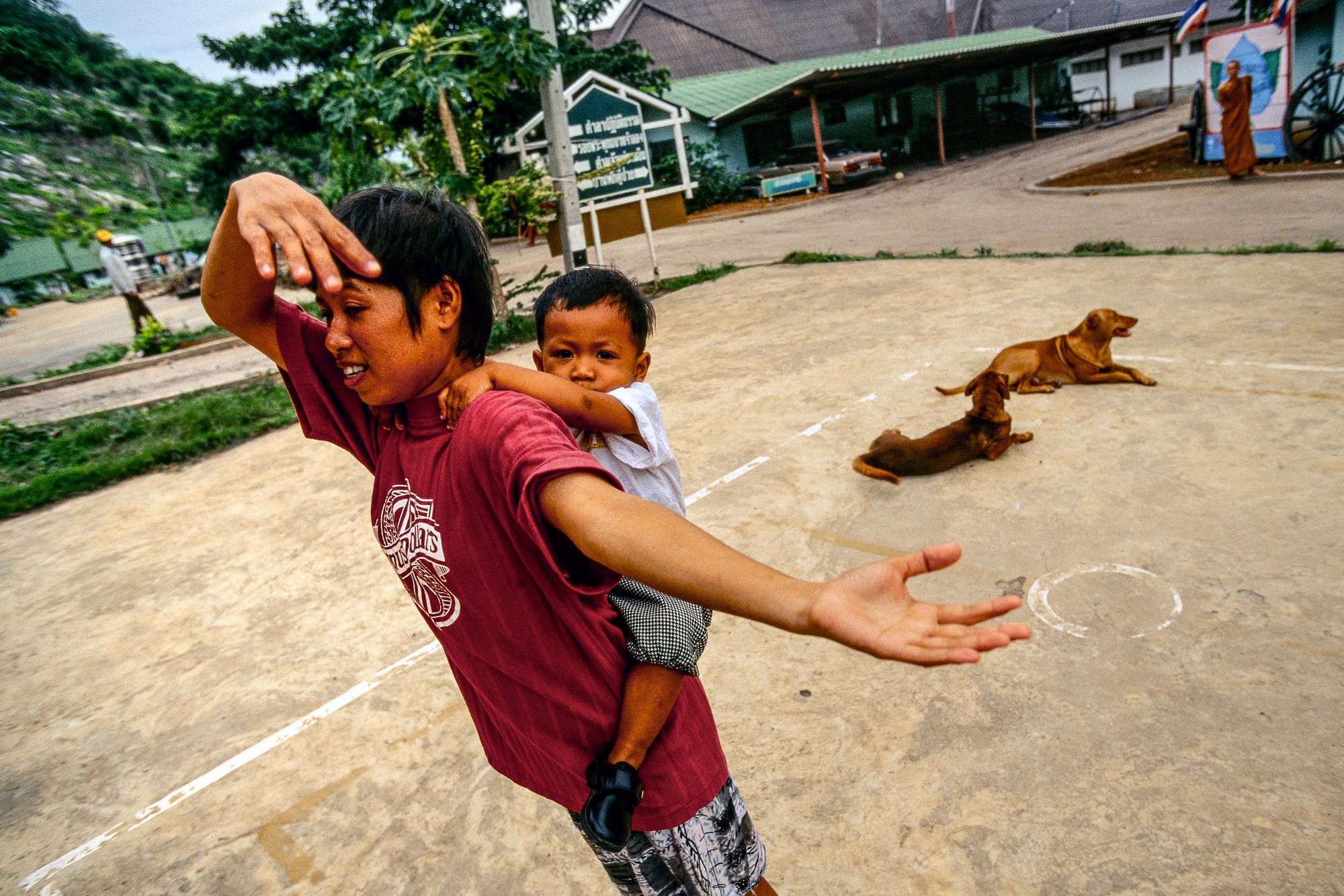
Patients at the temple live in small apartments and help out by cooking, cleaning or caring for those too sick to care for themselves. Some patients become monks in the hope that the deed will earn them enough karma to ensure a better rebirth. With an estimated one million Thais infected with HIV, Wat Phrabat Nampo will have no shortage of new patients and construction workers can be seen busily building new housing all over the temple’s grounds. The temple, though, still has a waiting list of over 4,000 people, forcing the monks to only accept those in the final stages of the disease.
In a country where AIDS patients are frequently thrown out of hospitals because they are unable to pay bills, Wat Phrabat Nampo provides free basic medical care for those accepted. Although nearby villagers at first shunned the temple and stopped making traditional donations, regular tour buses now bring hundreds of visitors eager to contribute to the now famous temple. In nearly four years, the temple has managed to raise over US$4 million and has expanded it’s facilities to include an auditorium where school children are brought to receive AIDS education and hear testimonials from HIV-infected monks. But for many Thais the idea of monks with AIDS is still a difficult one to accept - Thai Buddhism has been rocked by scandals in recent years, so the presence of HIV+ monks only further undermines the image of the monkhood.
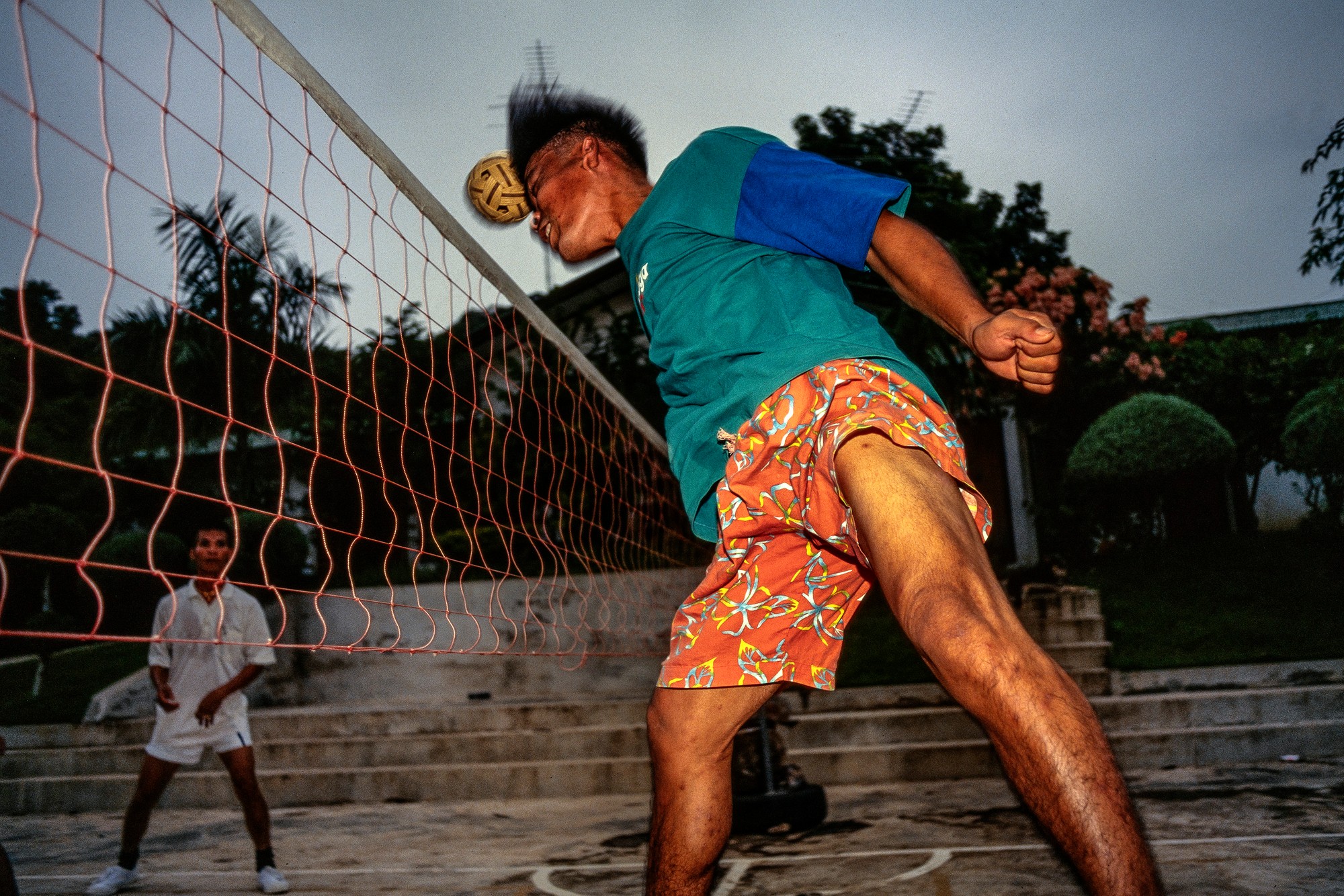
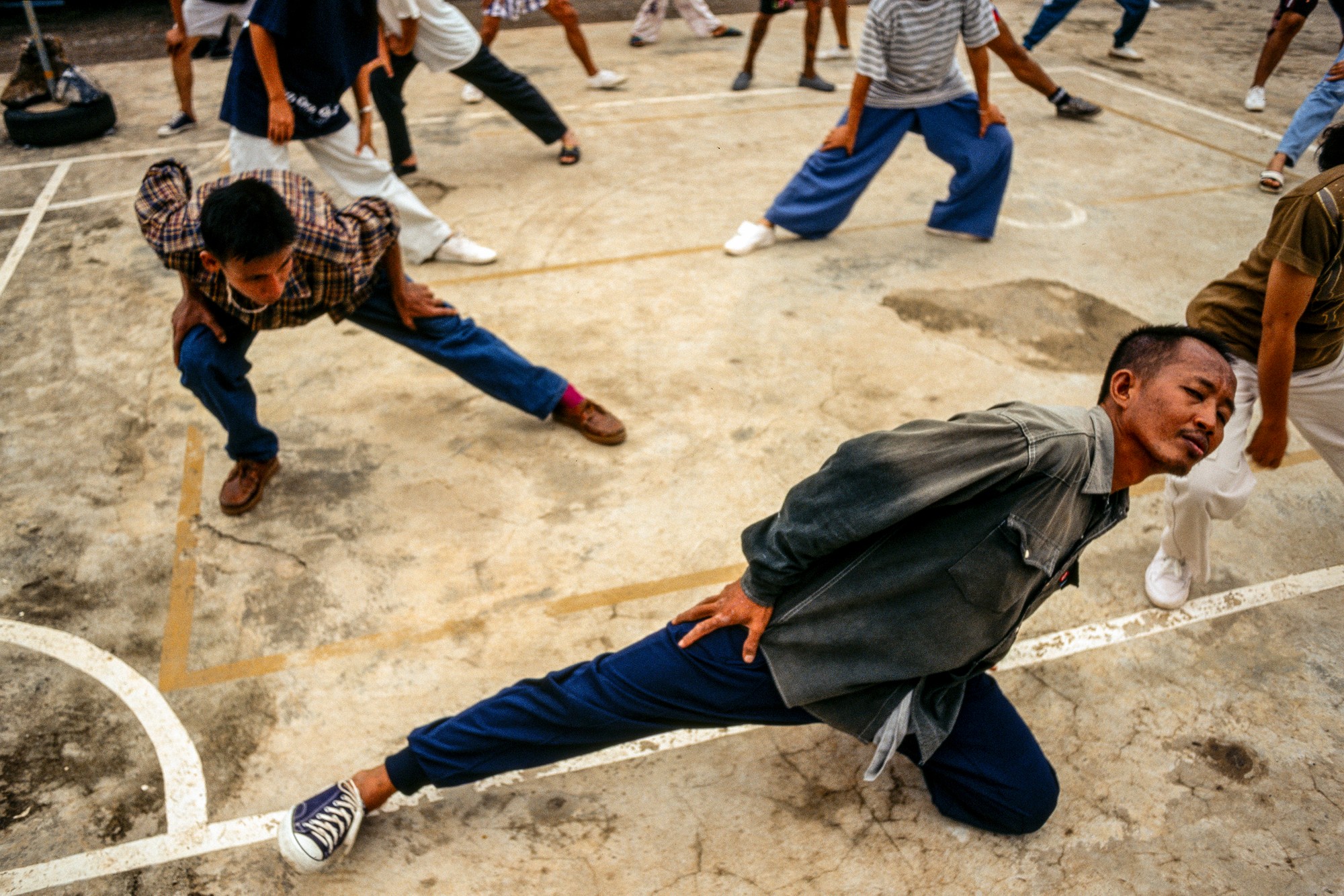
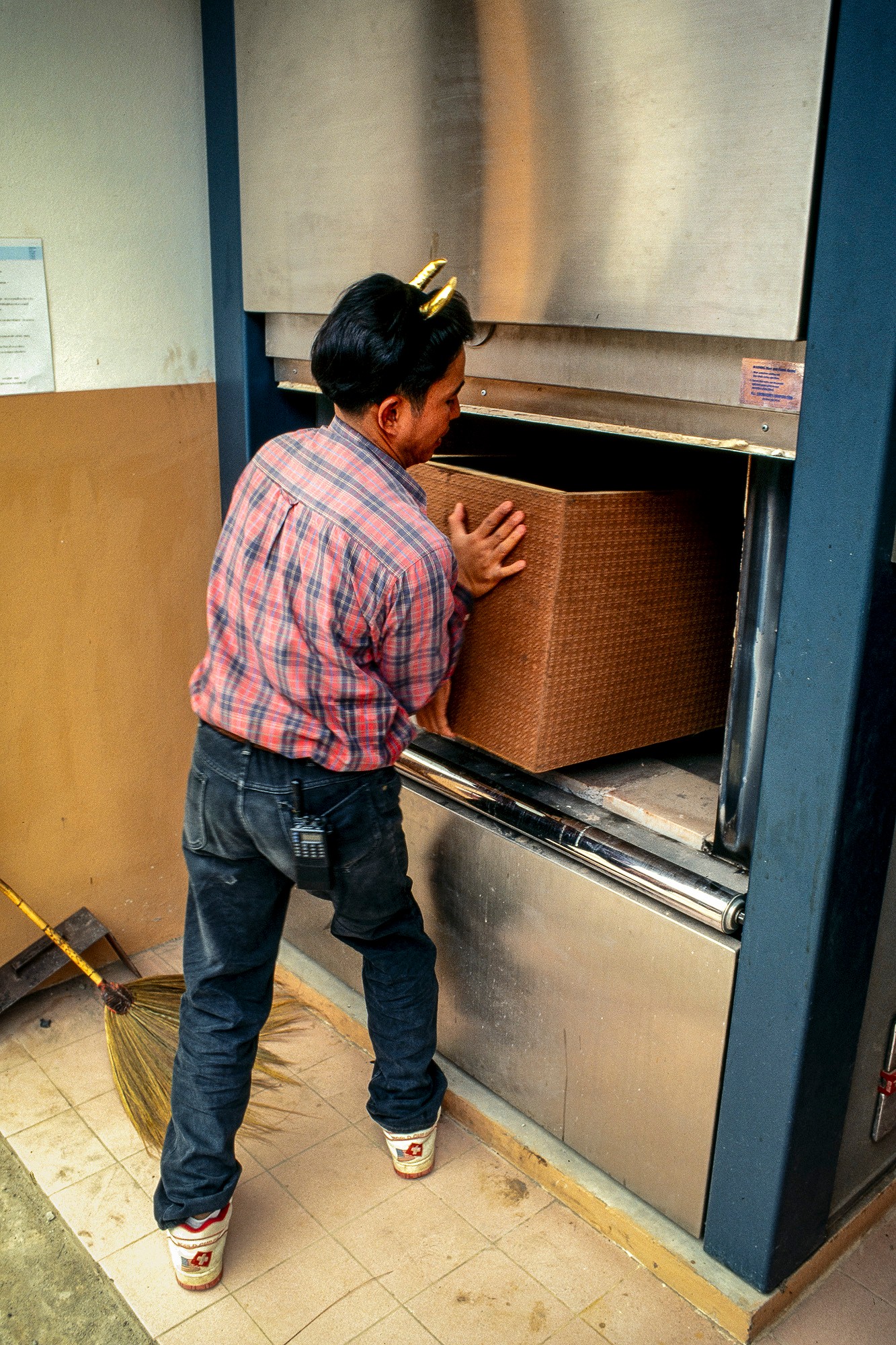
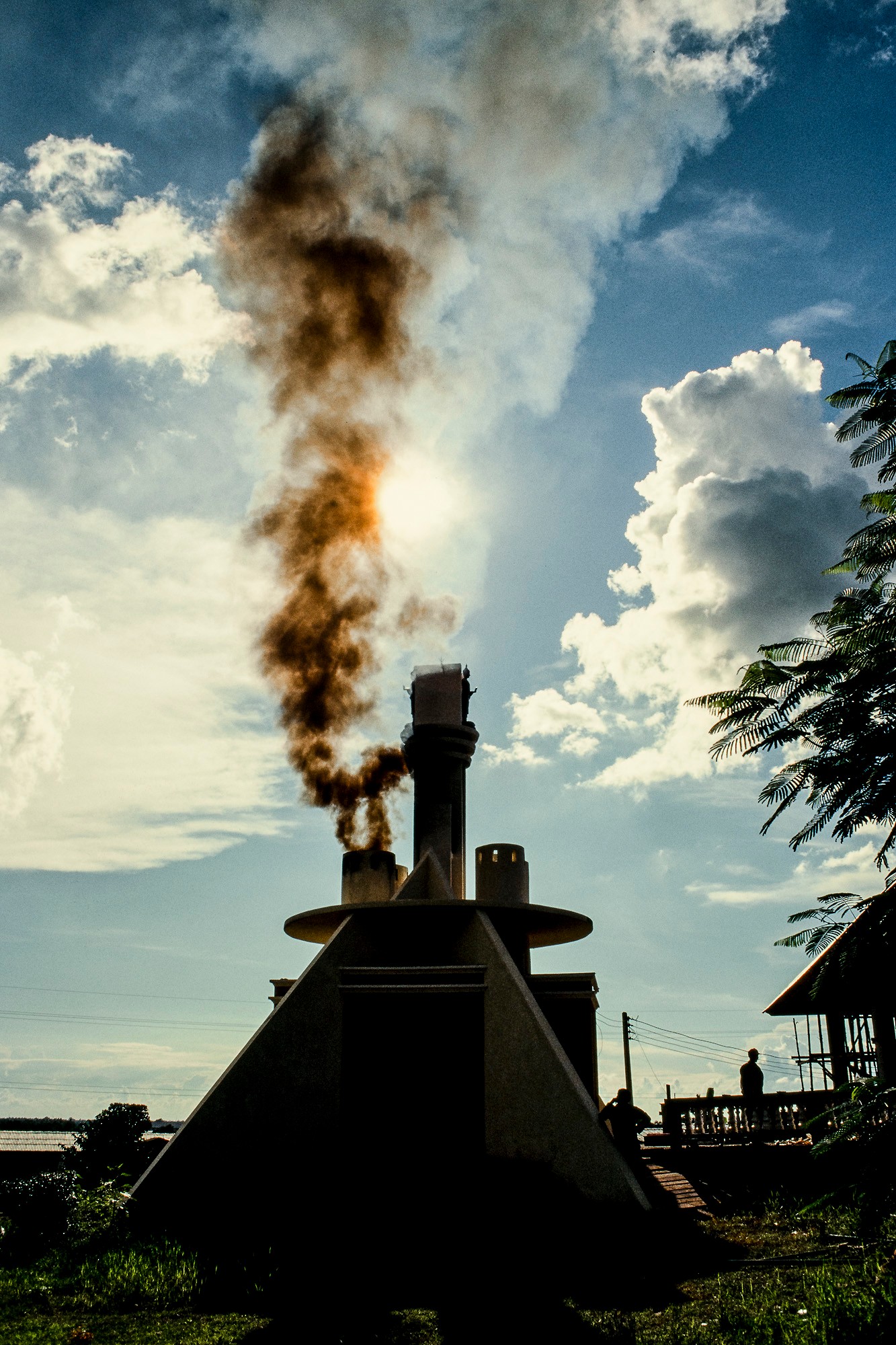
Part of the temple’s $4 million went to provide for the new, more efficient crematorium, imported from the United States. As AIDS patients take part in daily exercise and work, smoke from the crematorium’s furnace can be seen rising above the temple. It would seem like an ominous cloud to the patients but most have accepted the finality of their condition. “I don’t worry about dying,” says Phra Pramote. “I only worrying about suffering but that is an important part of Buddhism. I know when I die I will come back and I want to be a monk in my next life,” he says. “I don’t like going into the ward where everyone is dying. I prefer helping people leave this world which is why I do so many funerals.”
The 31 year old monk worked for the government in the Ministry of Agriculture in Northeastern Thailand before he became infected with HIV. “I used to make 10,000 baht a month (US$400) at the ministry. It’s a lot of money, so I used to get drunk and visit massage parlors all the time. Many people in my town are infected this way.”
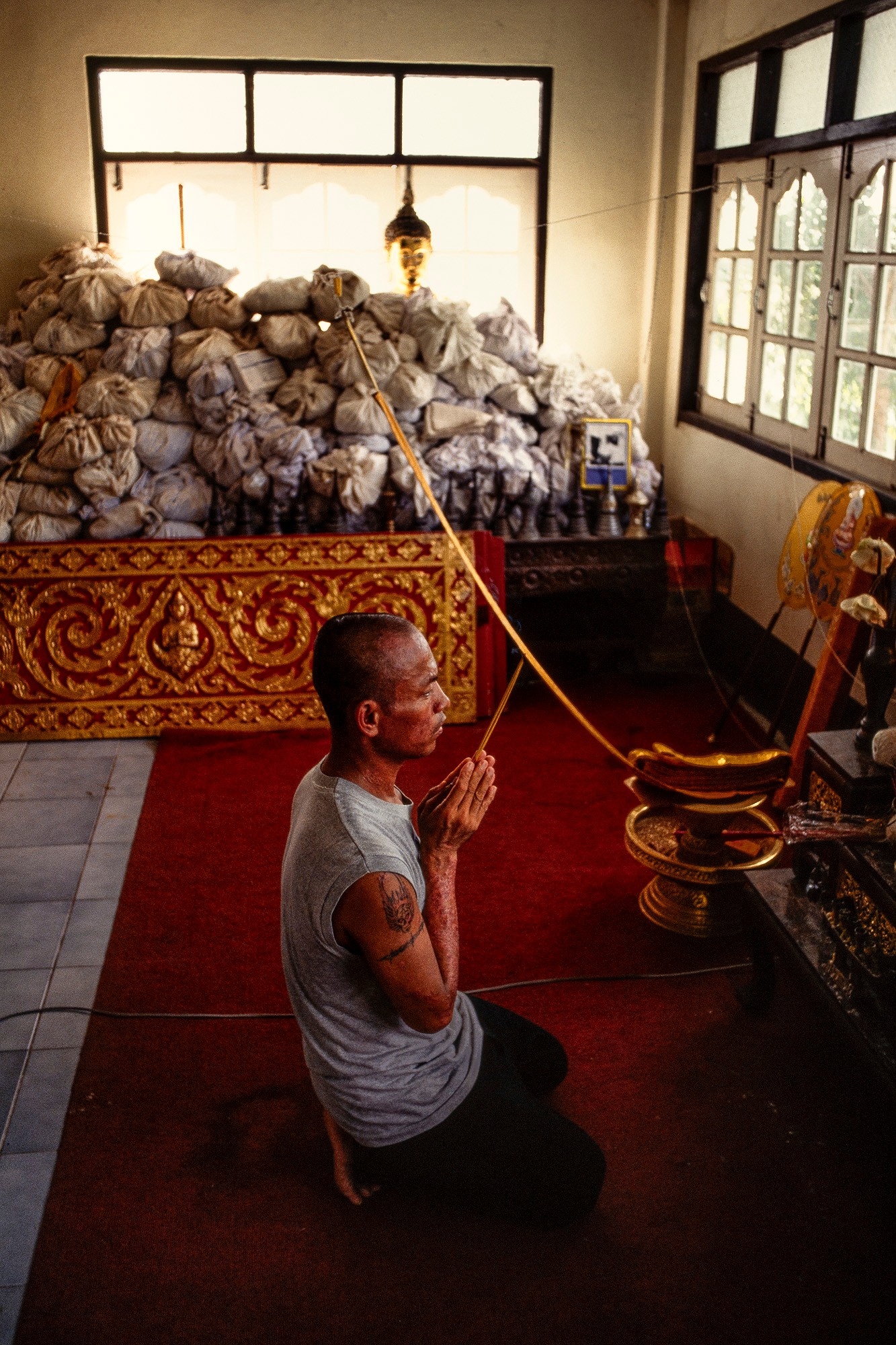
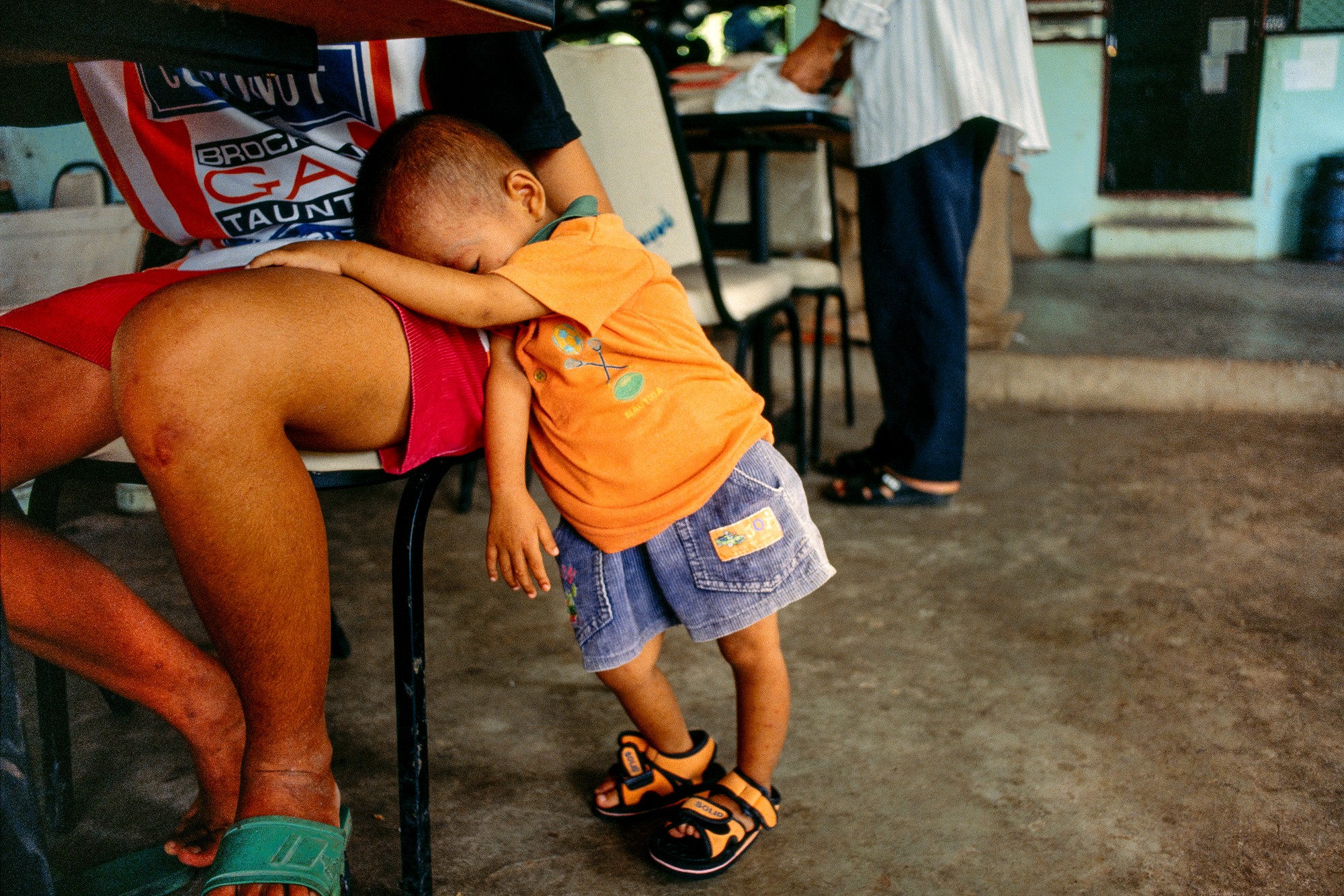
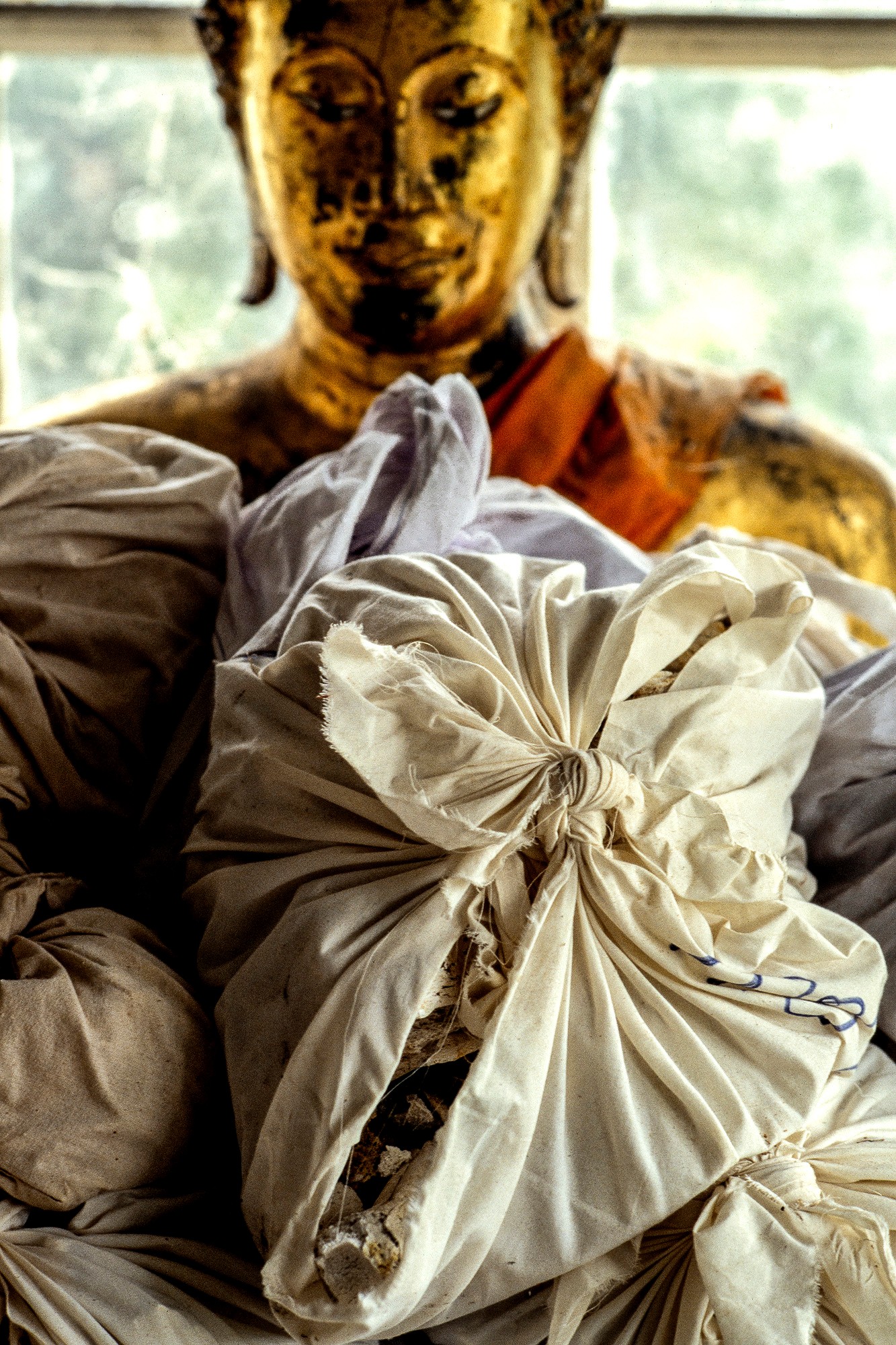
So many are infected because of Thailand';s large sex industry, that over 2 % of Thais aged 15 to 40 are HIV+. It is one of the highest rates in the world and while the impact to the economy is potentially devastating, the epidemic has also started to erode traditional family and community values. The piles of uncollected ashes in the temple’s funeral hall are testimony to the hundreds of families unwilling to care for their dying relatives.
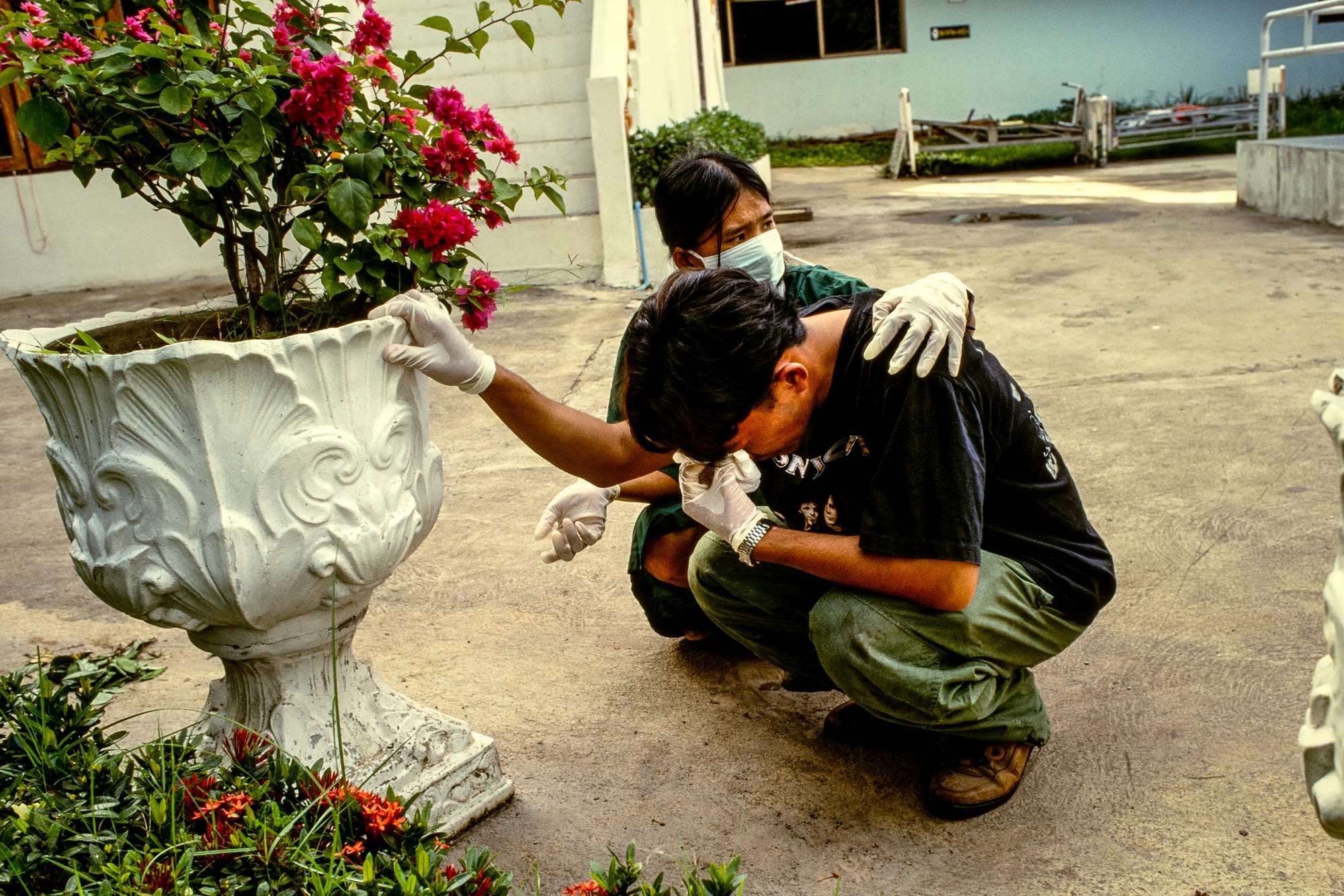
Thanyaporn Kunsombat, a nurse who has worked at the temple for 3 years, came, she says, to care for those outcast by society. She recognizes that while the need to find a cure is important, caring and providing a sense of dignity for those destined to die is equally important. “It is like a family here. Everyday I see the patients helping each other and sometimes they work so hard they kill themselves because of exhaustion,” says the 25 year old nurse. “It’s hard making friends here. Nobody stays too long.”
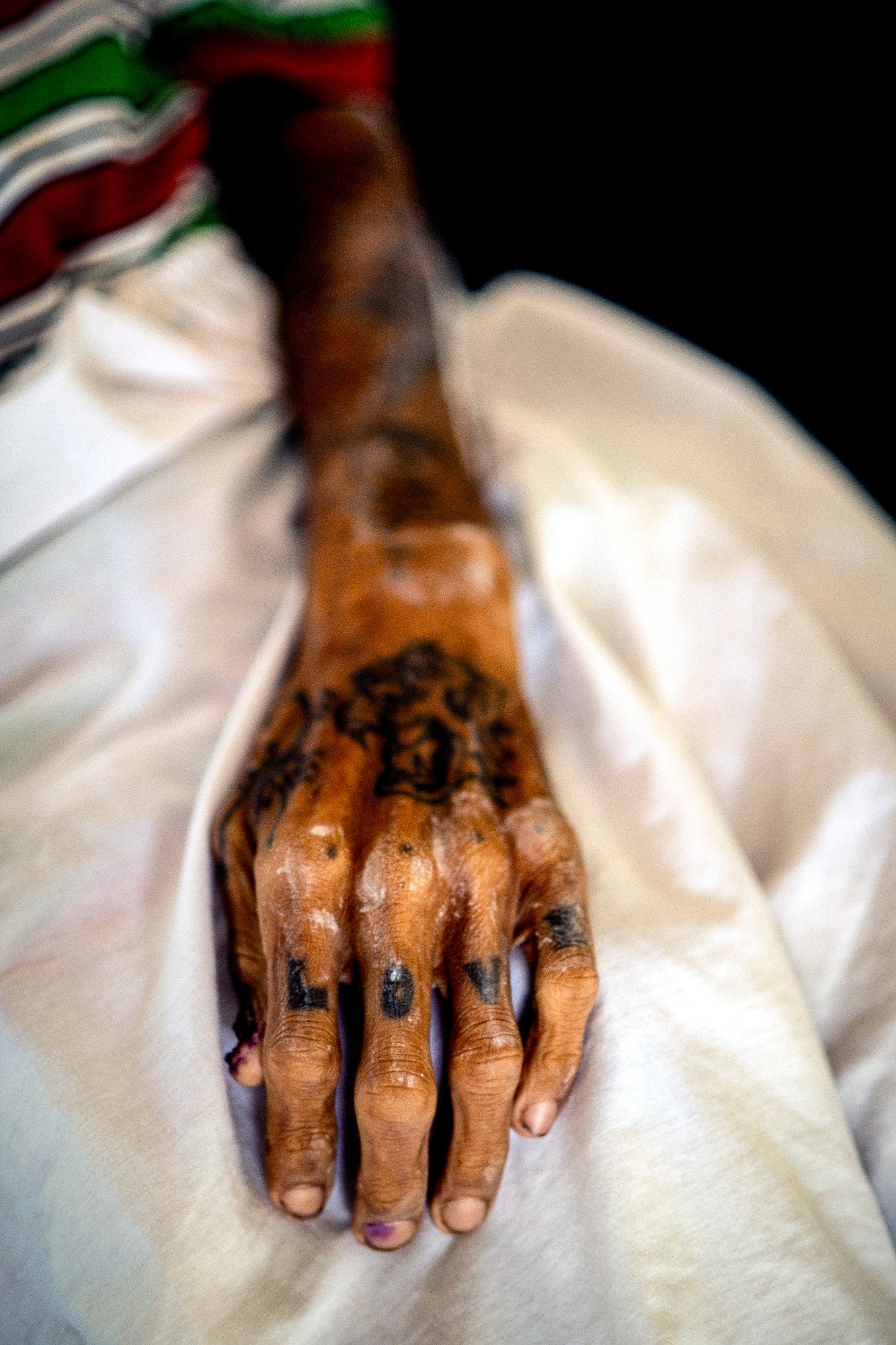
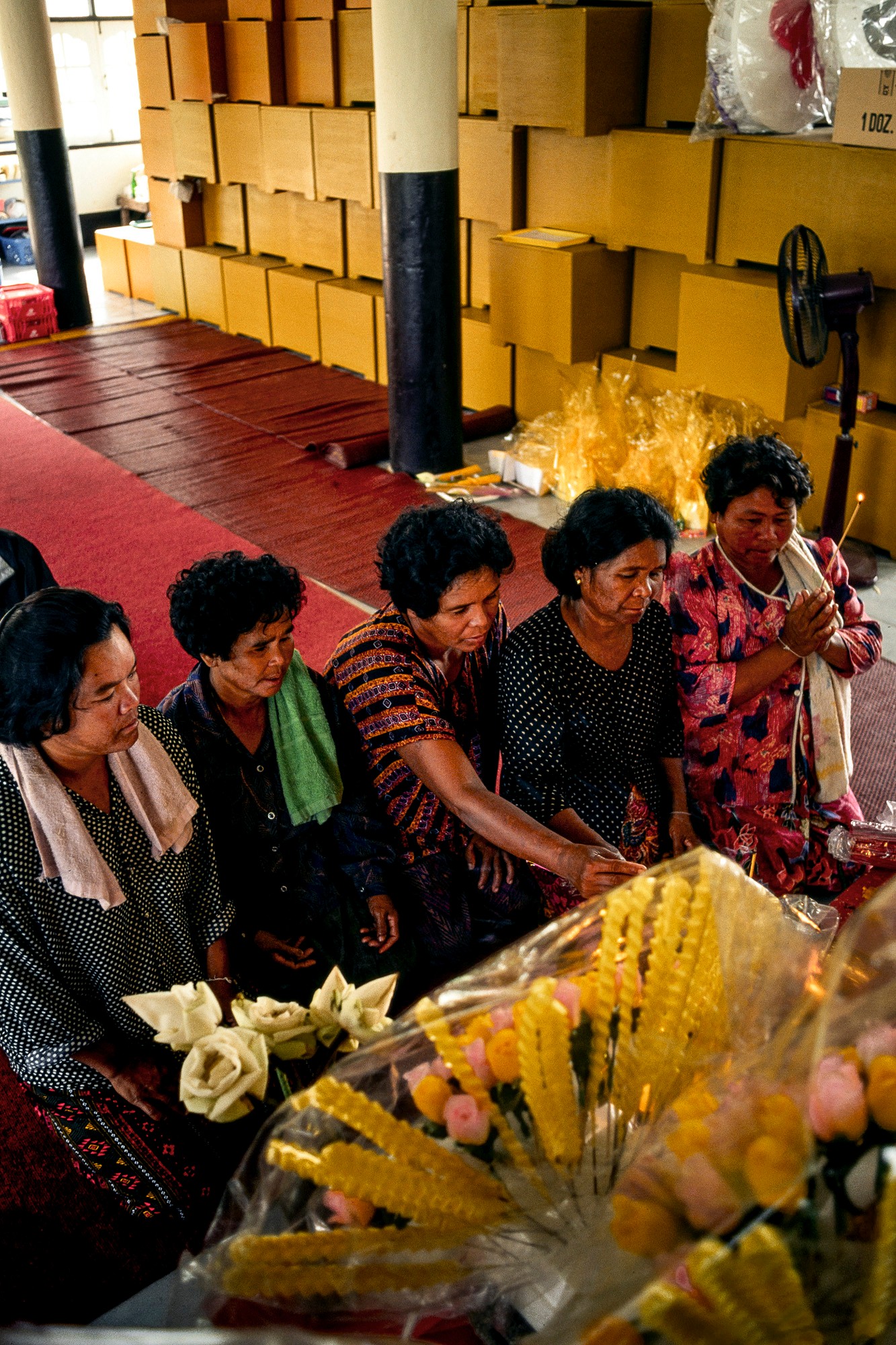
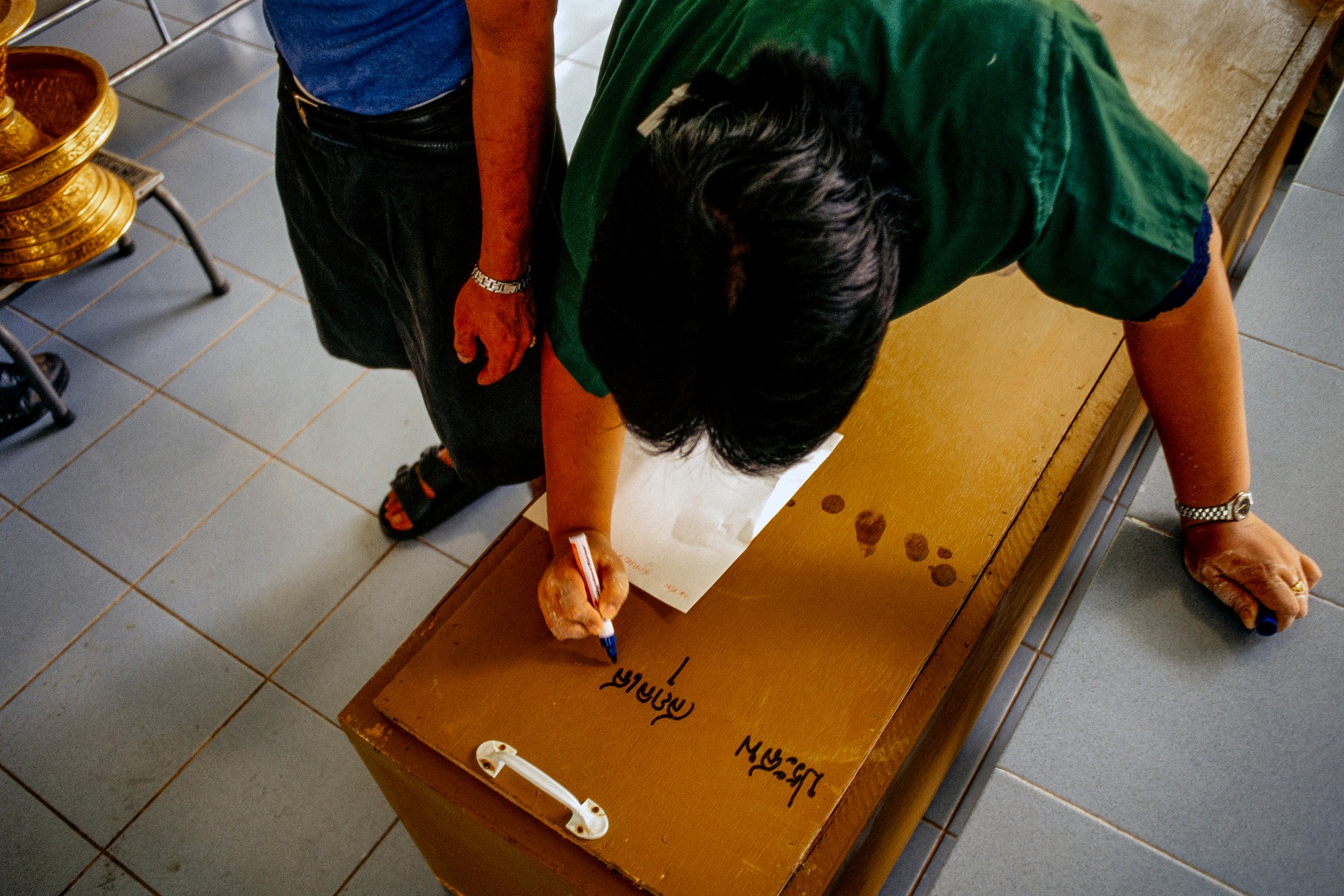
On this day the crematorium is kept busy. Five patients have died over night, and only two patients had families willing to come and attend funeral services and collect the remains. The remaining patients are mourned by those waiting to die. The ashes of the two men and one woman abandoned at Wat Phrabat Nampo join the growing pile.
“I heard they have a cure for AIDS in America, I read it in a newspaper. Is it true?” Phra Pramote asks as he slowly walks back home after the final funeral of the day. When it’s explained that no cure has been found, Phra Pramote simply shrugs his shoulders. “Even if they had a cure I doubt I would have enough money for it anyway,” he says.
SHOT ON SLIDE FILM: