
BLOG
Recent work, old work & professional musings
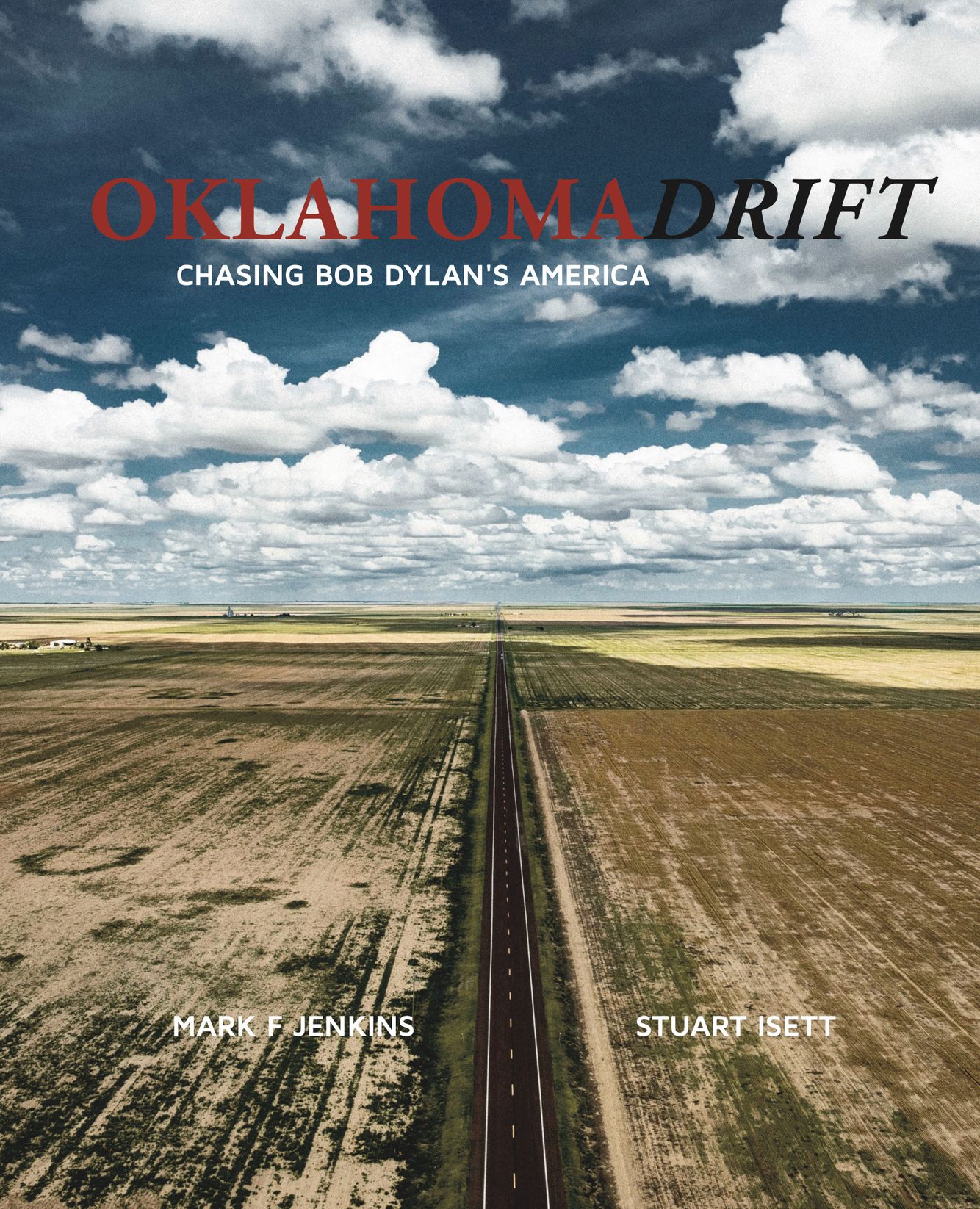
Oklahoma Drift - Update
Happy to announce that Mark Jenkins and I have signed a contract to have This Land Press in Tulsa, Oklahoma publish “Oklahoma Drift”, coming in the Fall of 2026. We couldn’t be happier to find this great publisher to back the project, especially one based in Tulsa and steeped in the history and culture of the state. Over the next 4 months we will be editing the book, traveling back to Oklahoma to work on two more stories that fill some holes, re-writing, re-editing images. It will be a busy 6 months.
OKLAHOMA DRIFT - CHASING BOB DYLAN’S AMERICA
When singer and songwriter Bob Dylan turned over his lifetime archives to a small museum in Tulsa, Oklahoma, we, like countless other fans, asked, Why Tulsa and why Oklahoma? The two of us - Mark as a professional writer/dramatist and Stuart as a professional photographer - set out on a journey to discover the answer. Three years and thousands of miles later, the answer to that question is this book with its blend of photography and essay that was consciously inspired by the classic Let Us Now Praise Famous Men, with writer and photographer working as equals, along with the chance encounters of Saint-Exupery's flying days, as well as Steinbeck's Travels With Charley. Stylistically, we attempted to emulate the vivid elegance of Joseph Mitchell's chronicles in The New Yorker of that city's characters and outliers, such as "Mazie," the ticket booth attendant at The Venice Theater.
more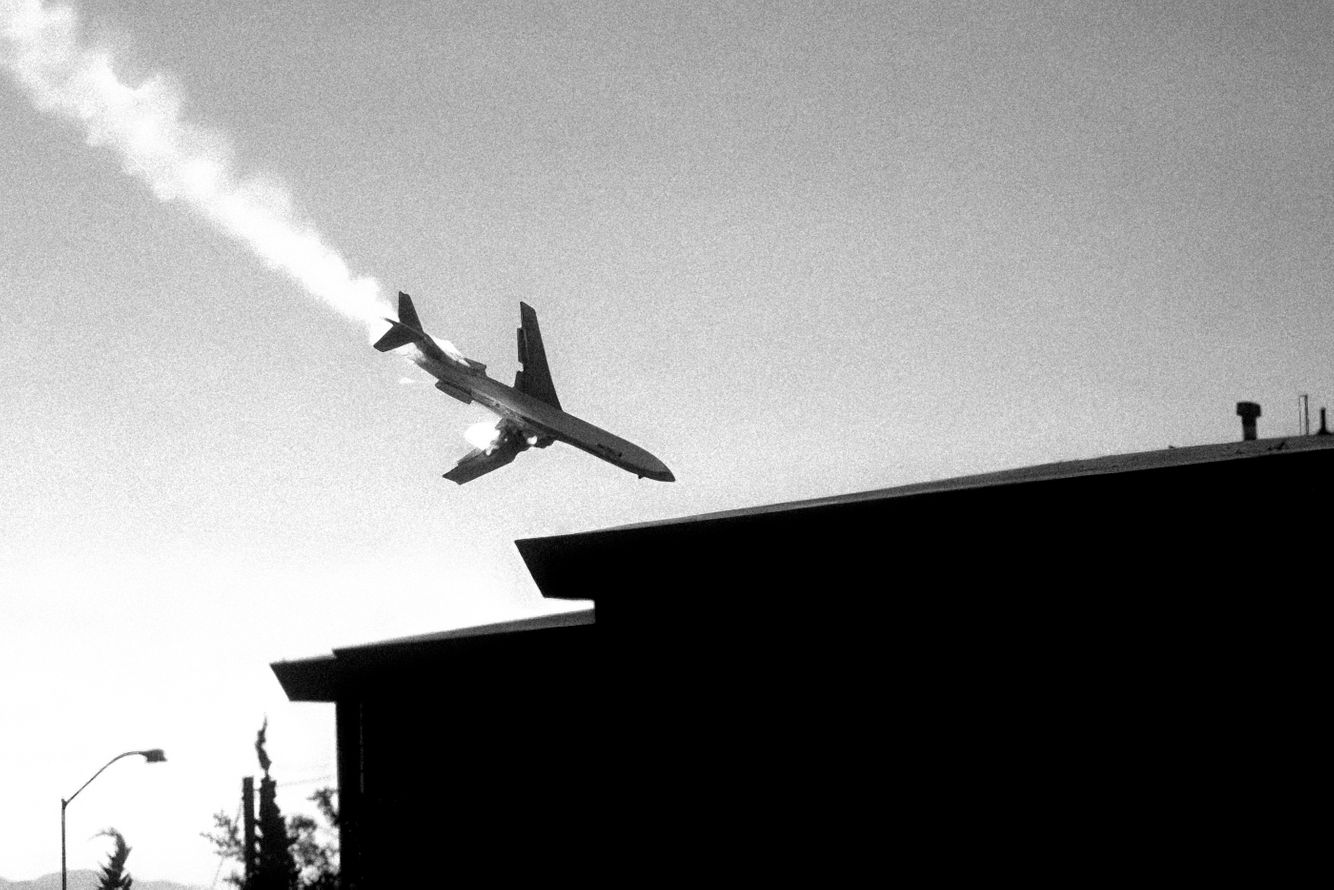
Fear of Flying
The impulse for these photos below comes from when I was just 12 years old, in the fall of 1978. On holiday with my family, the home we stayed in had the latest issue of Time Magazine with the photo (right) from the terrible crash of PSA Flight 182 in San Diego, taken by Hans Wendt, a staff photographer for San Diego County. The fact that in a few days we would be flying back to our home in London probably didn't help my young, impressionable mind.
I obsessed about that magazine the whole trip, constantly sneaking peeks at the incredible image of the aircraft plunging to the ground, wing and engine on fire. A crash the year before in Tenerife of two 747s, with images also published in Time Magazine, all helped feed an obsession with planes and plane crashes as a kid. Luckily there's far fewer crashes today, but in the 1970s and '80s there were numerous large plane crashes every year. I still get a thrill from flying, and have a strange fear of it, but luckily I understand statistics and probability.
The photos here were all taken in Seattle between 2014 and 2017. A period I often call the "peak-parenting" period of my career, which meant it was hard to focus on long term photo projects but I could easily slip down to one of the three major airports in and around Seattle to take photos of planes coming and going for a couple of hours. Sometimes creative inspiration comes from strange beginnings.
more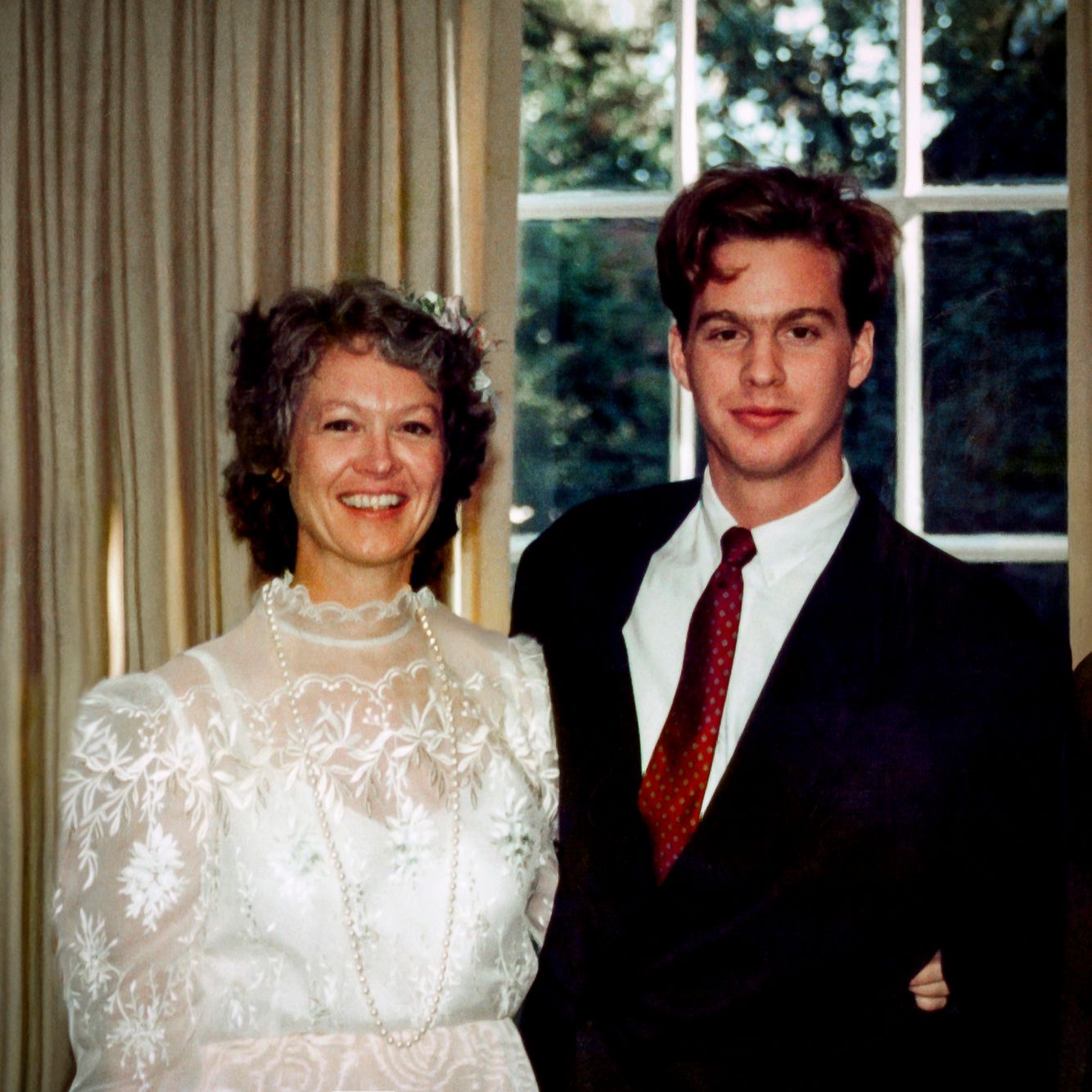
The Best career advice I ever got
The best career advice I ever got was from my mom in 1989, when this photo was taken. It was a year after I finished college and after a year studying in Thailand, and I was unsure what to do with my life:
Mom: "You should be a photographer!"
Me: "Mom ... that’s my hobby."
Yep, she never let me forget that one.
Thanks mom, miss you.
PHOTO: Chicago, Illinois. 1989, when my mom married my stepdad Tom.
more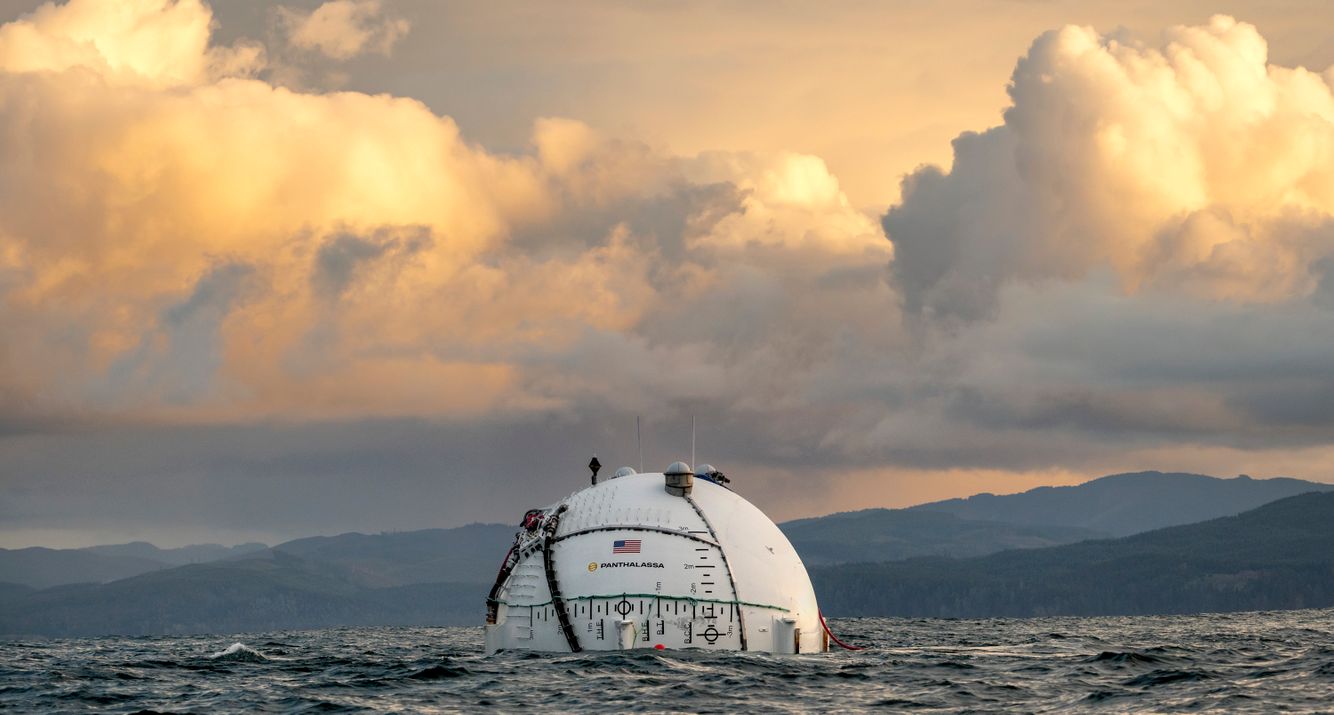
Panthalassa Energy
I'm finally able to share some of the images I've made over the past 4 years of the amazing work being done at Panthalassa, who are literally working on a moon-shot renewable energy project in the deep, deep ocean. From Panthalassa's website, "The open ocean is Earth’s largest and most power-dense renewable energy resource. We’re harnessing that resource to produce the cheapest energy on the planet for clean compute at sea and renewable fuels to shore."
more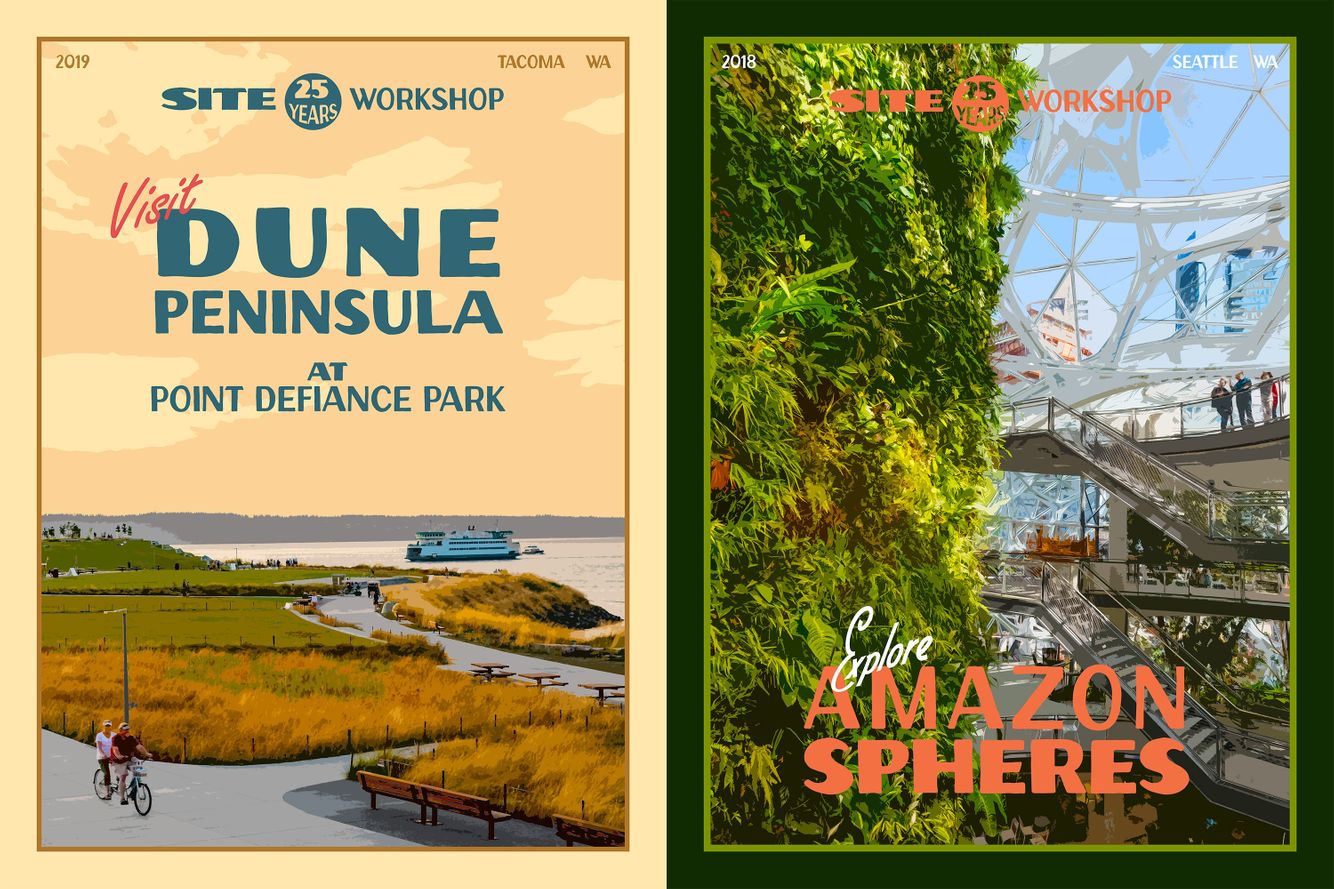
Site Workshop Posters
One of my favorite clients, Seattle-based landscape designers Site Workshop, recently converted some of my work into these cool National park style posters. Love it! You can see more of my landscape work here.
more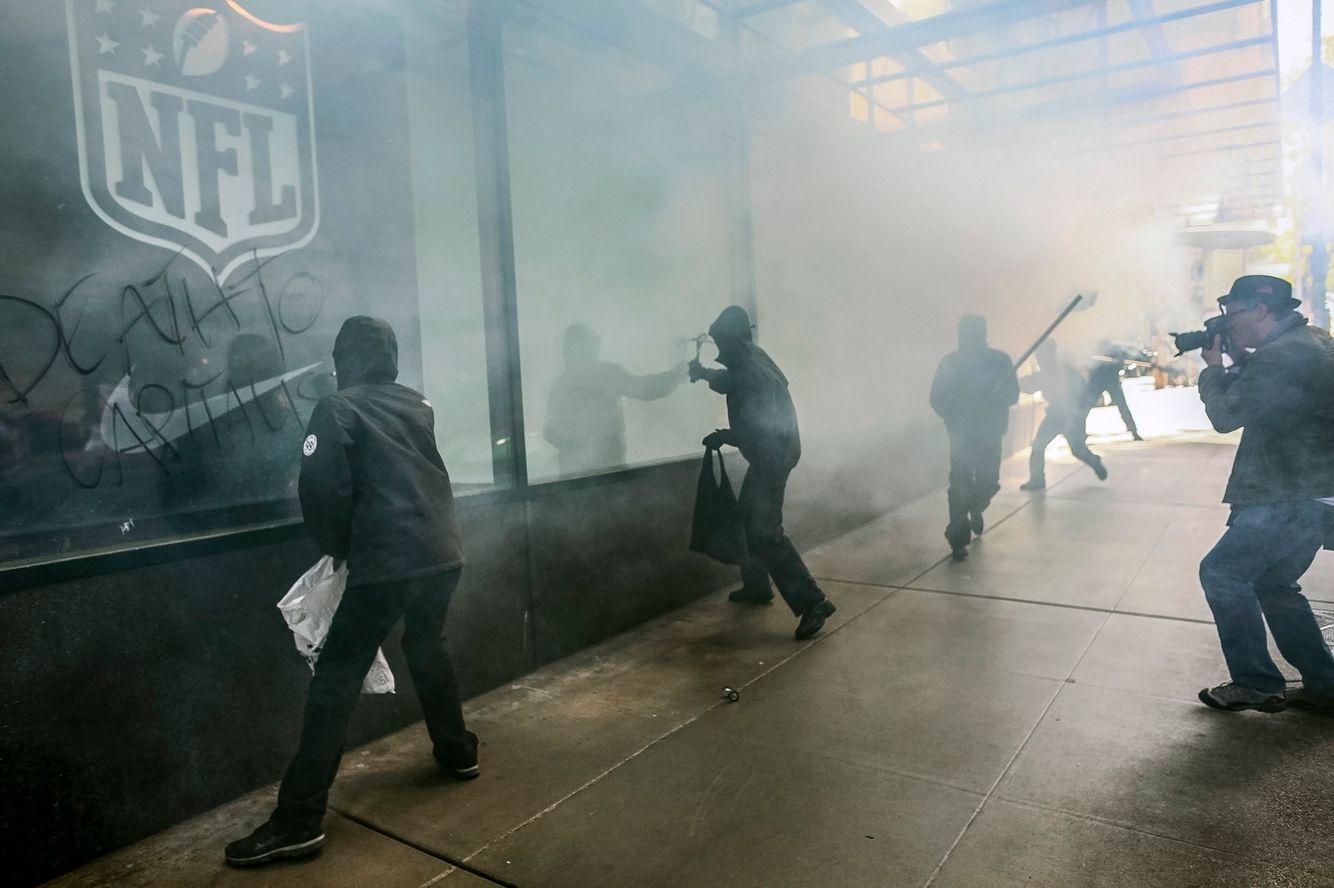
"Don't photograph protests"
I still remember an editor in New York once telling me not to include a protest image in my portfolio. I understood their point - protests can be too easy to document, access is easily given (just show up) and the editor wanted to see longer term photo stories that showed a "greater commitment to storytelling" . Plus I imagine every other photographer editors saw after 2011 had portfolios filled with protest images, all pretty much the same.
On the flip side, though, I've known plenty of amazing photographers who have made incredible work covering protests over the past decade, Rian Dundon's work in Portland and Yunghi Kim's work in NYC, being some of the best. So take all advice with a giant grain of salt.
2011 was also the time I started to notice there were as many cameras at protests as protestors, and the lines between journalists, police and protestors pretty much vanished, as evidenced the day I was clubbed by an anarchist right after the photograph of me here was taken; it was the first, and only time, I’ve been assaulted doing my work. The images here were taken during what I call ‘the great unwinding’ - the Occupy Protests, in 2011, in Seattle.
more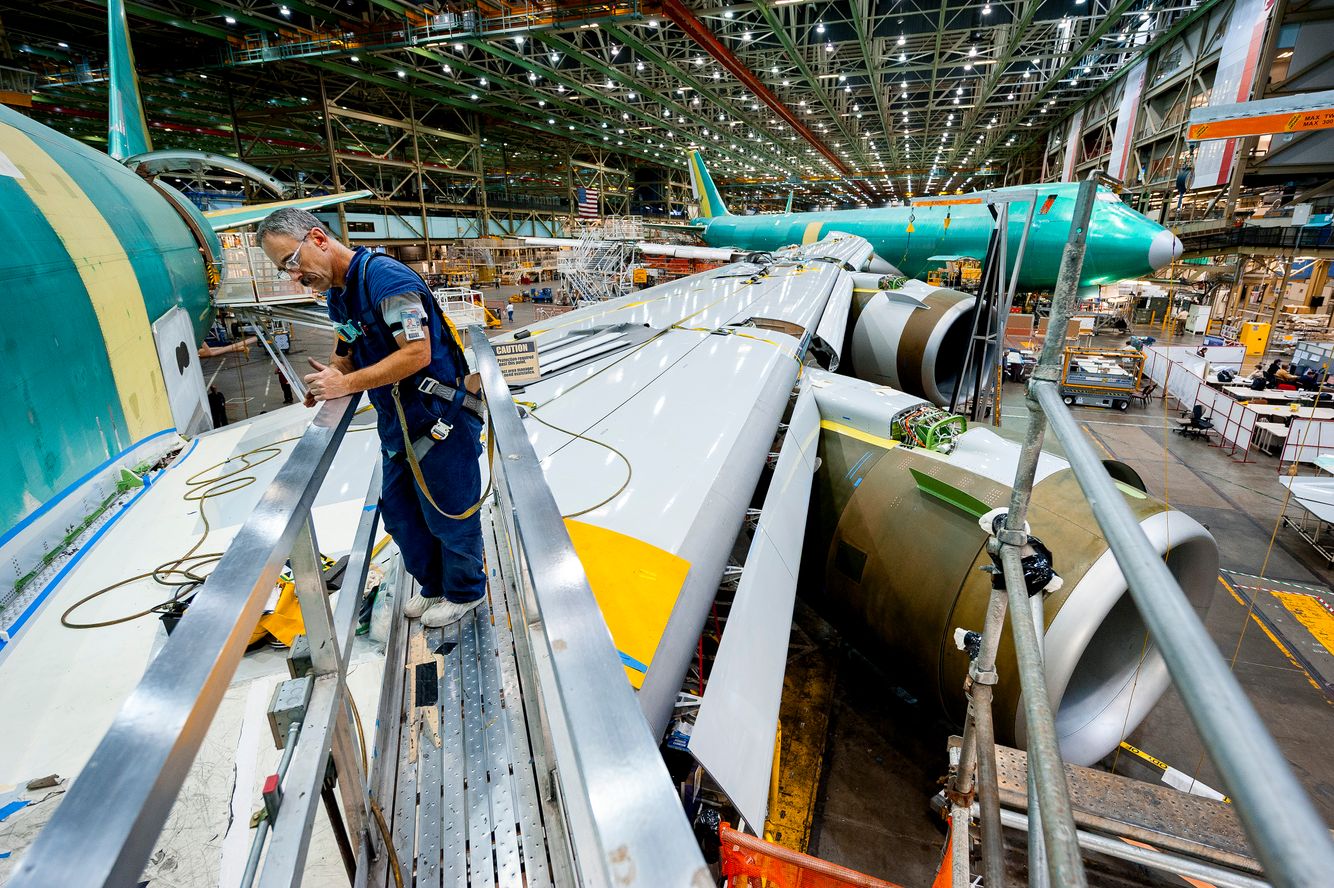
Unpublished Work
Talk to any photographer and they will tell you their "unpublished work" is usually far better than their published work - it's mainly our bruised egos talking, though, wondering why some photographs never got the attention we think they deserve. Taken from 2011 until 2021, the images below show the final years of production of Boeing's iconic 747, in its final iteration, the Dash 8. None of these images ever got published, even though I pitched them all over the place, from The New York Times to aviation magazines to online galleries. Boeing doesn't often give this kind of access to their factory floors to outsiders and when they do, it's usually brief and well supervised, so navigating around the Everett plant while trying to get interesting images is a huge challenge.
I'm particularly proud of this work, especially since as a 6 year old I flew on the original Pan Am 747 Clipper from London to New York and the plane fascinated me from then on. Maybe one day these images will get published.
more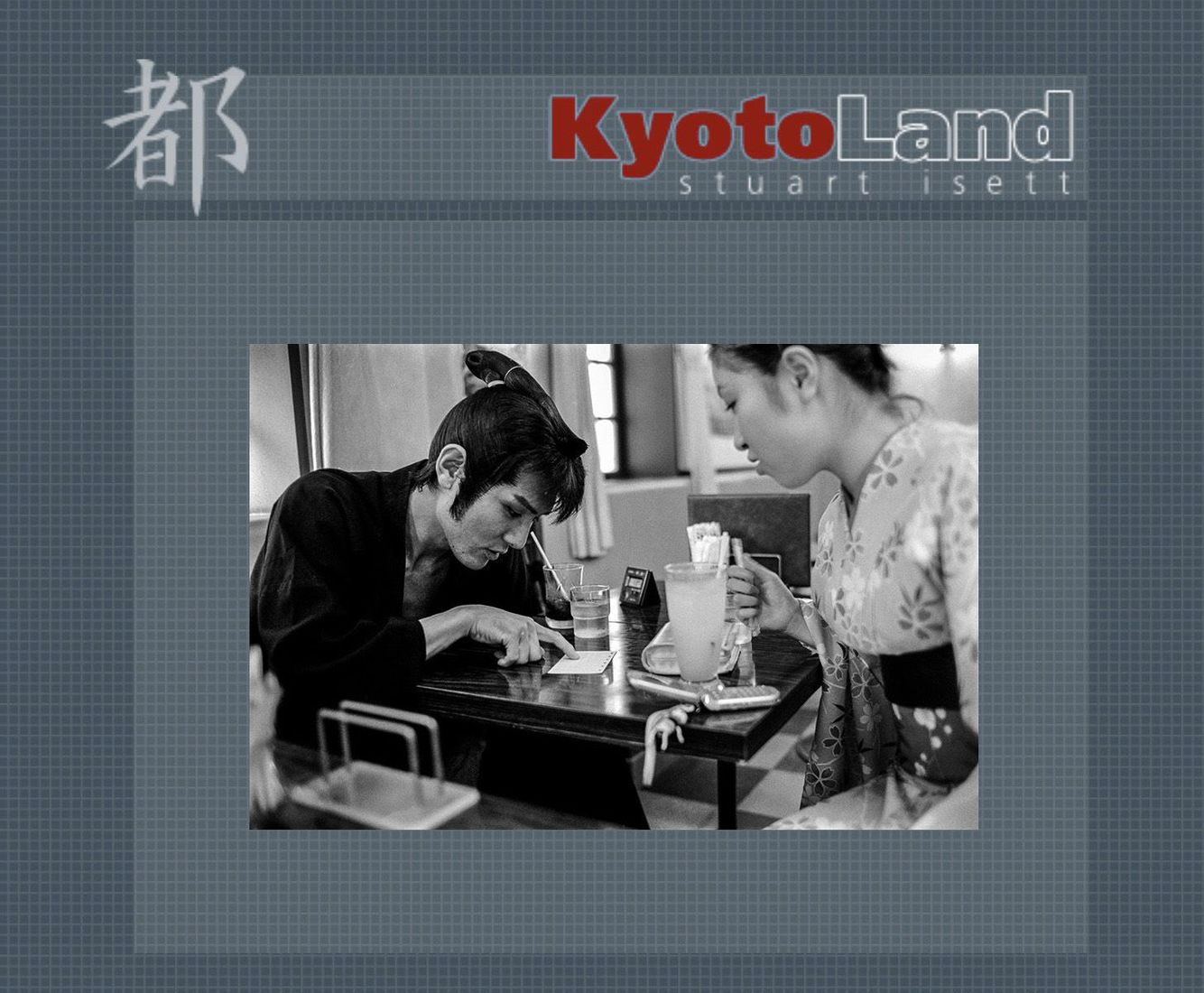
Ye Olde Internet
I try to avoid showing my age, just because I don't think it's relevant to my work. But then I realize it is very relevant to my work, and the foundations it was built upon, so finding 25 year old work is still up on the internet is one such moment.
Imagine my happiness when I recently discovered one of my first online exhibits is still up nearly 25 years after it was posted? With the tiny file sizes and basic design and fonts that only worked in the age of dial-up Internet? Zone Zero was one of the earliest portfolio websites, created by Pedro Meyer in Mexico, and that's still going strong today. The work he showed was from a 3 year project photographing Kyoto called KYOTOLAND, a project I plan on self publishing soon - the edit shown in 2001 was from the earliest stages of the work and only a few of the images have made the final book design.
I built my first website in 1997 shortly after moving to Japan, using HTML 1, uploading to the Japanese web service GOL - I was, in the world of photojournalism, a pioneer! That site has been lost in time, I always wished I'd saved it, but my URL and email have remained the same for 28 years now. One of the great things about freelancing is you often get weeks, sometimes months, with little to no work so web design, and some self-promotion, often filled those hours. It's something I wish more editorial photographers understood - most commercial photographers understand design and the need to promote themselves beyond their little bubble but such concerns are often anathema to many editorial photographers.
more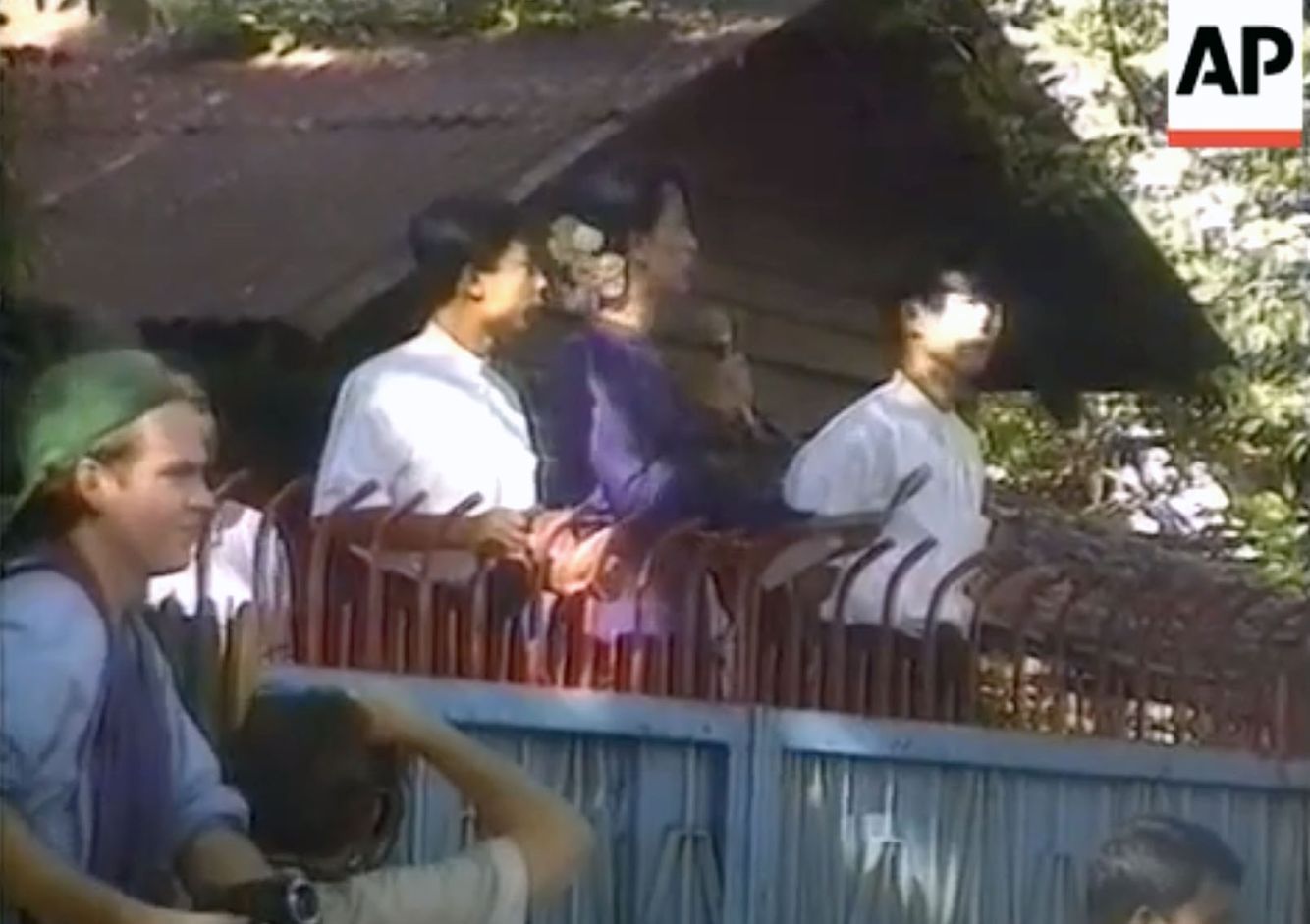
Blast from the Past
Recently found footage of me at work in Rangoon photographing Burmese opposition leader Aung San Suu Kyi. So odd seeing this after 28 years. We spent many days outside Daw Suu's house, in the sweltering heat, crushing crowds, juggling rolls of film and racing to make deadlines transmitting or shipping film out to New York.
Even though I don't do this kind of photojournalism work anymore (I still work on long term documentary projects), it was an excellent training ground for the work I do today.
"Ah, but I was so much older then, I'm younger than that now"
- Bob Dylan, "My Back Pages".
more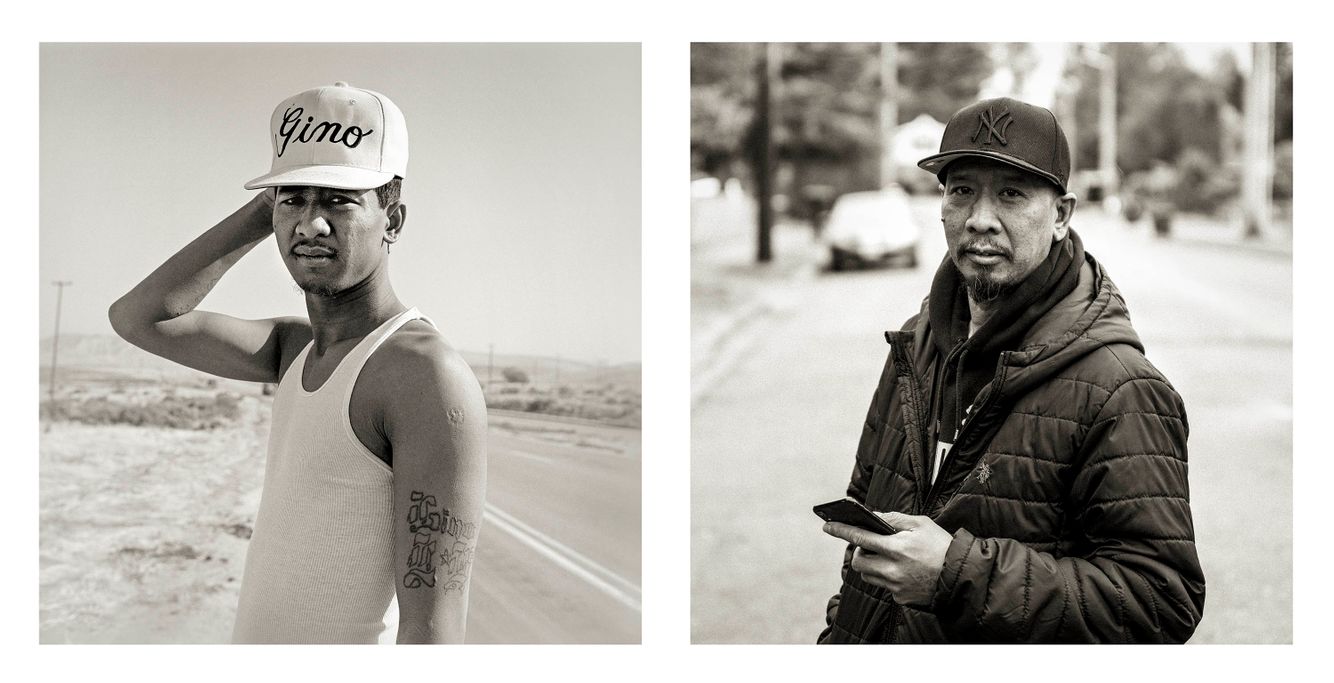
The survivor - Gino's story
Sapeoun, aka Gino, posing (left) on the side of a road outside Bakersfield, California in October, 1993. In the photograph on the right, Gino stops briefly to let me take his portrait in Tacoma, Washington this week, almost exactly 30 years later. Stories like Gino's are why I became a photographer - a survivor of America's war in Southeast Asia, the Khmer Rouge genocide, a refugee, a member of some of the toughest Cambodian street gangs in the US. Someone whose life was shaped by war, genocide and trauma, but who has survived despite the odds stacked against him. Continues below.
more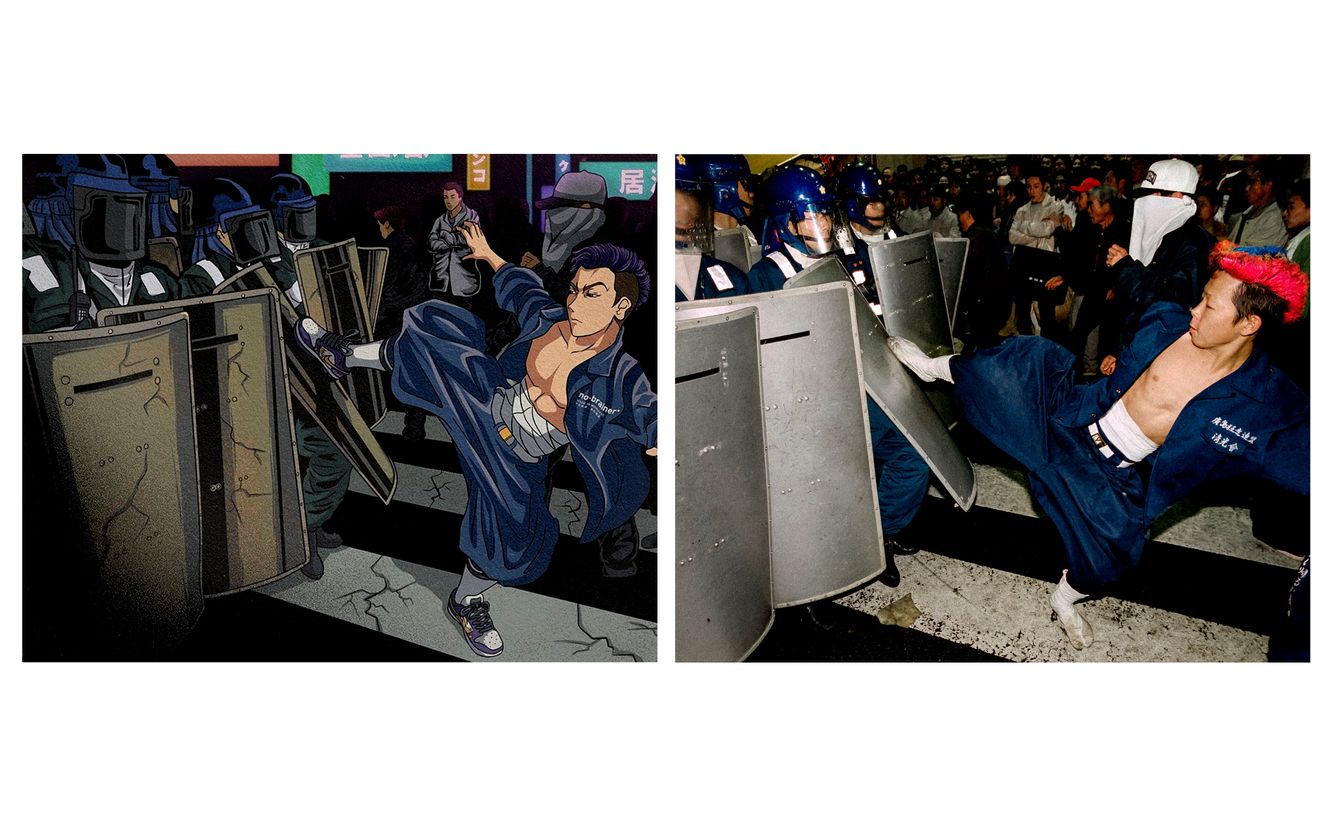
Immortalized in Manga
When your work gets immortalized in manga! Singapore based sneaker customization artist Bob Ng at No-Brainer*, recently turned one of my images from a 1999 bozosoku biker gang riot in Hiroshima into a manga. Needless to say, my 13 year old kid (and a manga fan) is impressed! read more about Bob's design work here.
more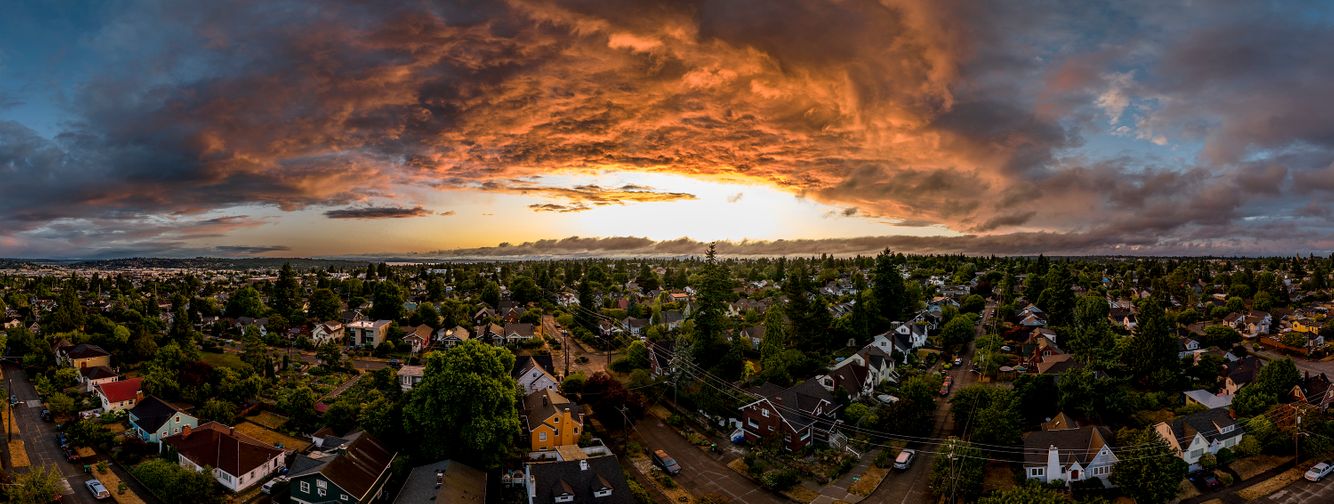
The View from Above
The view 100 feet above my home in Seattle after rains passed through. I am loving my new Mavic 3 Pro drone - greatly improved file size and tonal range, good colors. Manually stitched panorama, shot with RAW files and assembled in Lightroom. Onwards and upwards!
more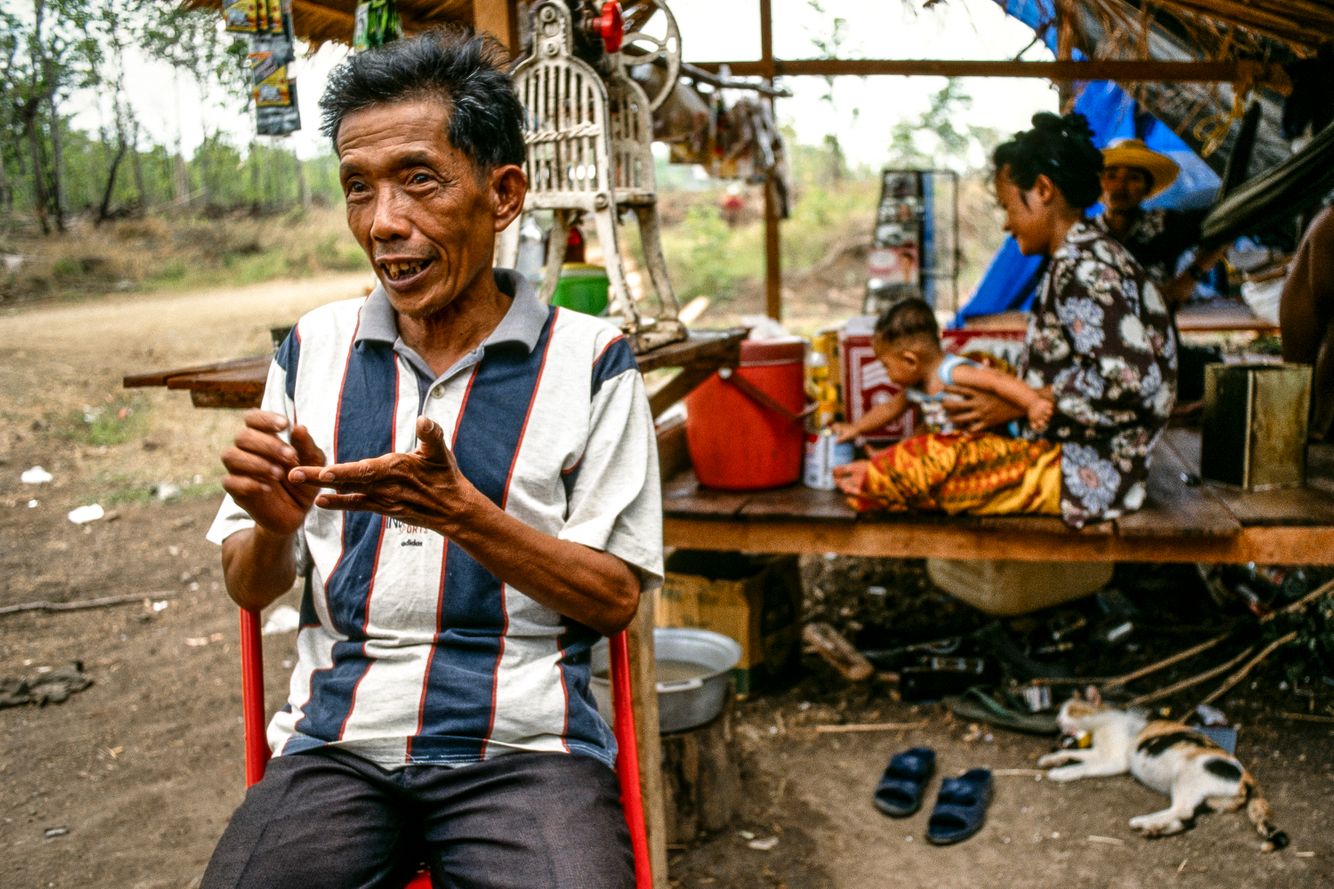
Comrade Duch
From the Yale Genocide Studies program: Duch, head of the Tuol Sleng prison complex [S-21], was a former schoolteacher named Kang Kech Eav. Duch oversaw a precise department of death. His guards dutifully photographed the prisoners upon arrival and photographed them at or near death, whether their throats were slit, their bodies otherwise mutilated, or so thin from torture and near starvation that they were beyond recognition. The photographs were part of the files to prove the enemies of the state had been killed. Duch even set aside specific days for killing various types of prisoners: one day the wives of “enemies”; another day the children; a different day, “factory workers.”
–Elizabeth Becker, When the War Was Over
My photograph of Comrade Duch taken in 1999. Duch's real name was Kaing Guek Eav and he served as the Khmer Rouge's chief executioner from 1975 until 1979 at the Tuol Sleng prison, or S-21, before fleeing Phnom Penh and going into hiding after the Vietnamese invasion. When I photographed him he was still living freely under a pseudonym in the Khmer Rouge controlled village of Samlot, in western Cambodia. I was traveling in Pailin Province at the time, working on a story on the Khmer Rouge with my friend, writer and photographer Nic Dunlop. Nic recognized Duch and asked that I travel to the village of Samlot to confirm it was indeed him; Nic was simply couldn't believe his own eyes. It was, and still remains, one of the few times doing my work I truly feared for my life. Duch was surrounded by Khmer Rouge soldiers who no doubt knew who he was, and the secrets he still held, while we sat and had lunch with him.
more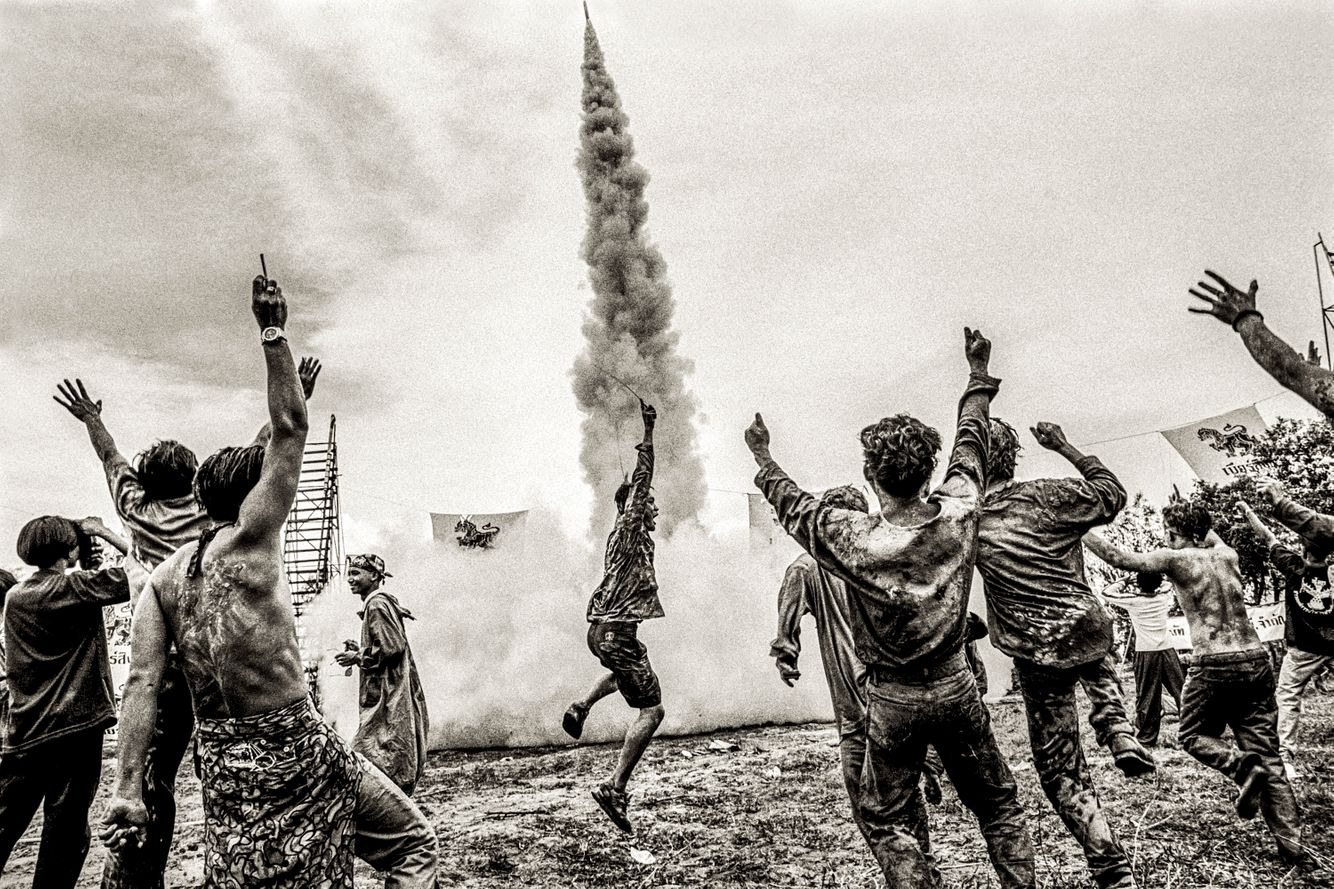
HOW THE Rocketmen of Yasothorn SAVED MY CAREER
By the spring of 1995, I was already a year into my so-called photography "career". I had started well apparently - fresh out of a photography graduate program in 1994 in Chicago, my first assignment was a three week assignment with the legendary editor Kathy Ryan at The New York Times Magazine, hired on the basis of a project on Cambodian gangs I did in the US. By June of 1994 I had moved to Bangkok with my then girlfriend, and now my wife, Jennifer, and I had plans to base myself there and learn the ropes. Within weeks I had assignments with The New York Times in Malaysia, Thailand and Burma. Wow, this is easy!
Then the phone stopped ringing. For a year.
I had to sell my workhorse 80-200mm lens to pay rent. I went back to teaching English at the same school I had worked at in Bangkok in 1988 when I lived there as a student studying Thai. I did a few random assignments for the Associated Press but had no clue what they needed or how to deliver the work and was clearly not cut out for wire work. Even though our rent was only $160 a month, by May of 1995 I was close to quitting photography when a friend suggested I go to northeast Thailand, often called Isarn, and photograph the rocket festival they have there at the beginning of every rainy season. I had so little money, I had to take the cheapest, non-air conditioned bus from Bangkok, the one that stopped at every village along the entire ride, which was close to 14 hours. But the bus was filled with Isarn farmers returning home, drinking, singing and reveling the whole time. I was on the right track, and on the right bus. I was also part of the whiskey-bottle-and-fork rhythm section while my traveling companions sang and did ramwong folk dances in the aisle for most of the journey.
more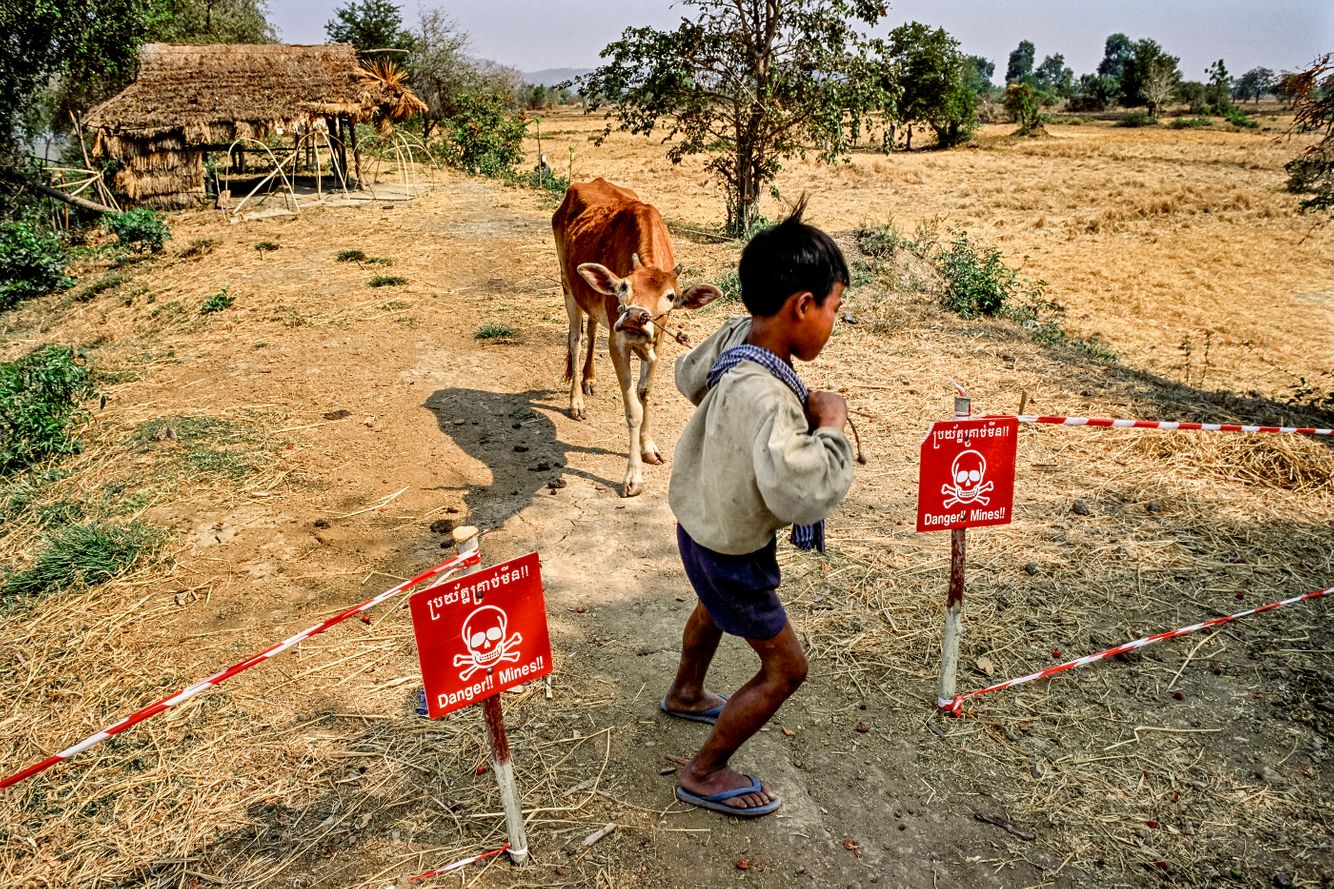
Landmines in Cambodia
JANUARY, 1996. ONE LIMB AT A TIME.
Arriving in the back of a motorcycle-drawn cart at the gates of Battambang hospital, 16 year old Seang Rin laid quietly in a bed of straw, drifting in and out of consciousness, seemingly unaware of what had happened to him. His mother stood by his side holding an IV (intravenous) drip as his uncle and father cradled the young schoolboy’s shattered leg. Only 4 hours before, Seang was just another young boy returning from school in this northwestern Cambodian province—now, he was one of the thousands of land mine victims found throughout the country.
As he was brought into the hospital’s examination room Seang passed rooms filled with fellow mine victims from the day before. As his mother stood in the corner washing blood from her child’s clothes, two doctors arrived to quickly examine Seang’s wounds—10 mine victims had arrived already that day so the doctors were pressed for time. After a few seconds one of the doctors raised his hand and held it above Seang’s right knee to show where they would have to amputate. Seang watched but showed little emotion to a decision that would no doubt shatter many of the his dreams.
“When you cut off a leg you cut off a family. A leg feeds a family—it’s that simple”, Dr. Mads Gilbert preaches. A Norwegian trauma surgeon training Cambodian field medics to care for mine victims, the doctor understands the devastation caused by land mines from his years of work in Angola, Afghanistan and now Cambodia. “Land mines are not meant to kill people, they are there to terrorize and impoverish people. Any farmer who steps on a mine can no longer help his family, he becomes a burden pulling the family and community further into poverty”, he continued, “they are truly the weapons of cowards”.
more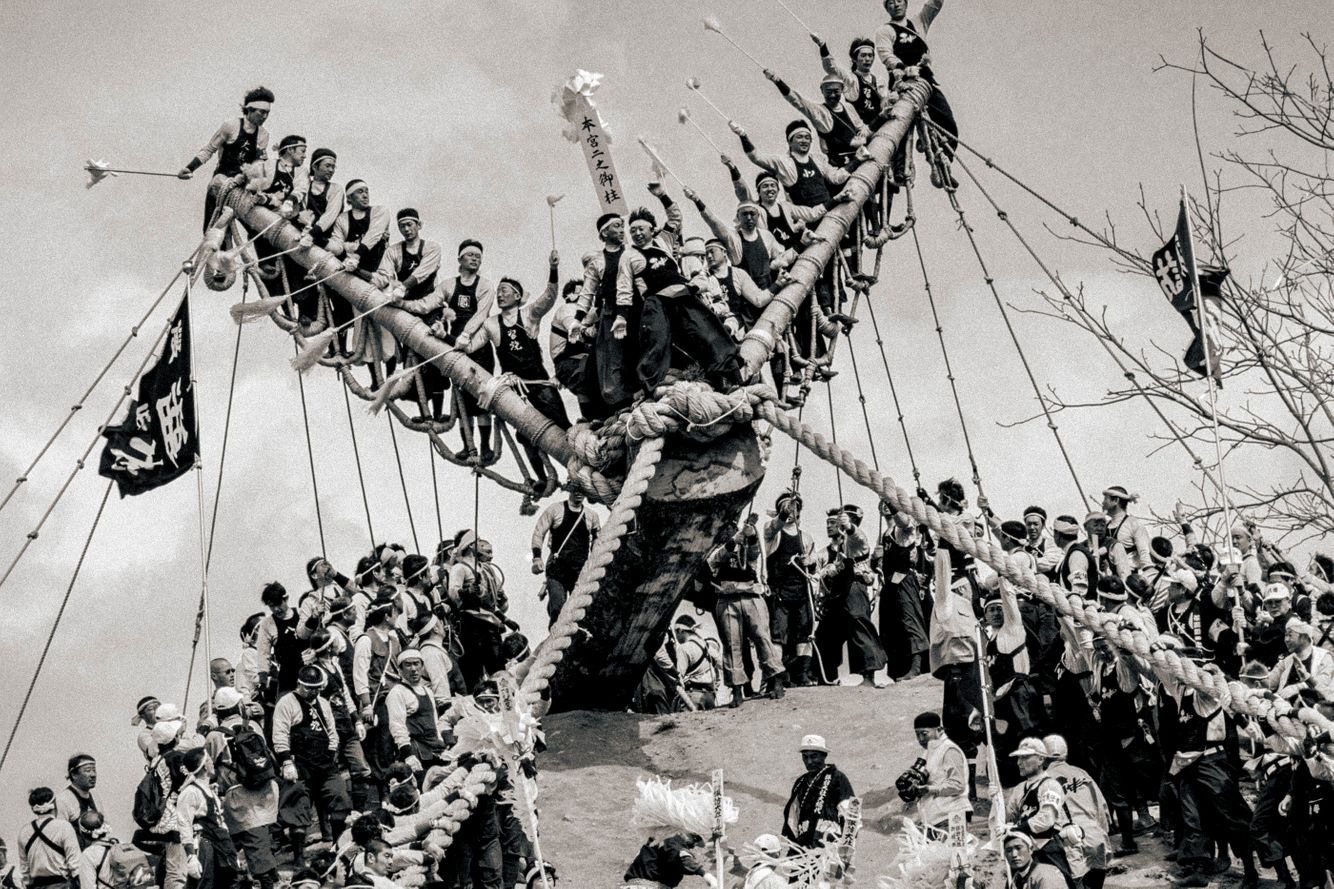
Onbashira Festival
The Onbashira Festival, held every six (sometimes seven) years at the Suwa Taisha Shrine in Nagano, Japan, is a dangerous, centuries-old tradition and festival. Participants fell and transport 16 massive fir logs, often weighing ten tons, to local hills and then ride them down steep slopes, symbolizing a renewal of the shrine. Every year sees participants taken off to nearby hospitals and, rumor has it, over the past 50 years some 10 participants have been killed.
The next one is planned for 2028 so book your tickets now. Photographs here from the 2004 festival. Plan early, arrive early, find a team willing to let on the mountain (drinking copious amounts of sake for a few nights before hand helps), and learn how argue with Japanese cops (i.e. politely).
more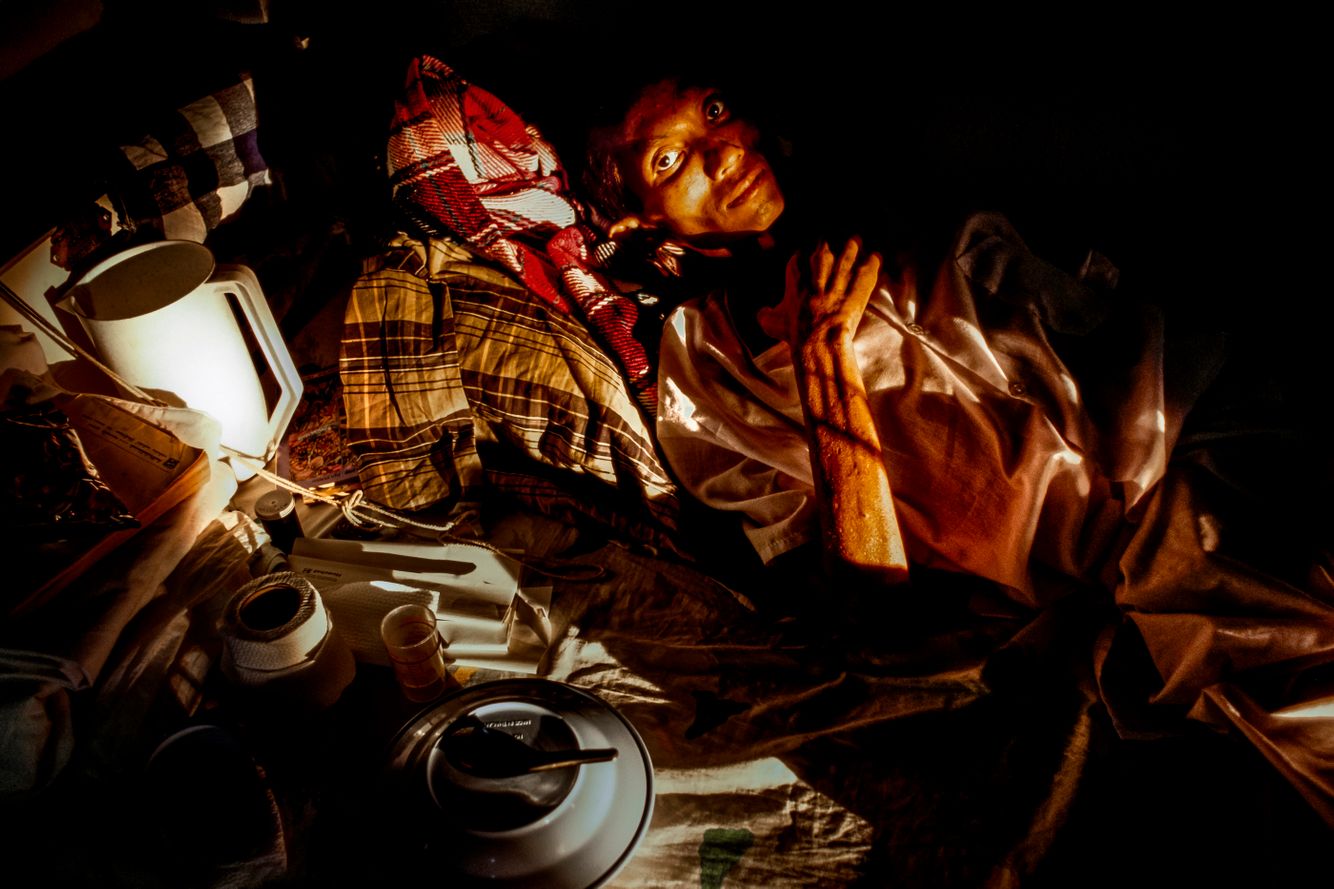
The Last Temple
OCTOBER, 1996. IN THAILAND, AIDS PATIENTS TURN TO A TEMPLE FOR REFUGE.
Three or four times a day Phra Pramote can be seen leading funeral processions through the grounds of Wat Phrabat Nampo in central Thailand. The coffins he leads to the crematorium all carry patients from the temple who have died from AIDS and Pramote knows that one day he will also make this final journey. Phra Pramote was diagnosed with AIDS three years ago. “Walking up this hill many times every day is hard because I’m very sick,” says the frail looking monk. “But I know someone here will do this for me when it’s my turn and that makes this temple so good.”
Wat Phrabat Nampo is unique in Thailand because nearly all the monks who live there are HIV+ or have AIDS. The temple, isolated in the hills of Lopburi Province, has become a sanctuary for hundreds of patients from around the country who flock to the temple for the care provided by the monks and nurses. Often rejected by their families and friends, the temple offers a sense of community but everyday new patients are still abandoned at the guard house near the entrance of the temple which has become the country’s largest AIDS hospice.
For Phra Pramote, the temple was his last chance. After monks at his former temple discovered he was HIV+, he was expelled by the abbot. “My family told me about this place and brought me here by truck when I was very sick. They’ve never come back, they’re too scared.”
more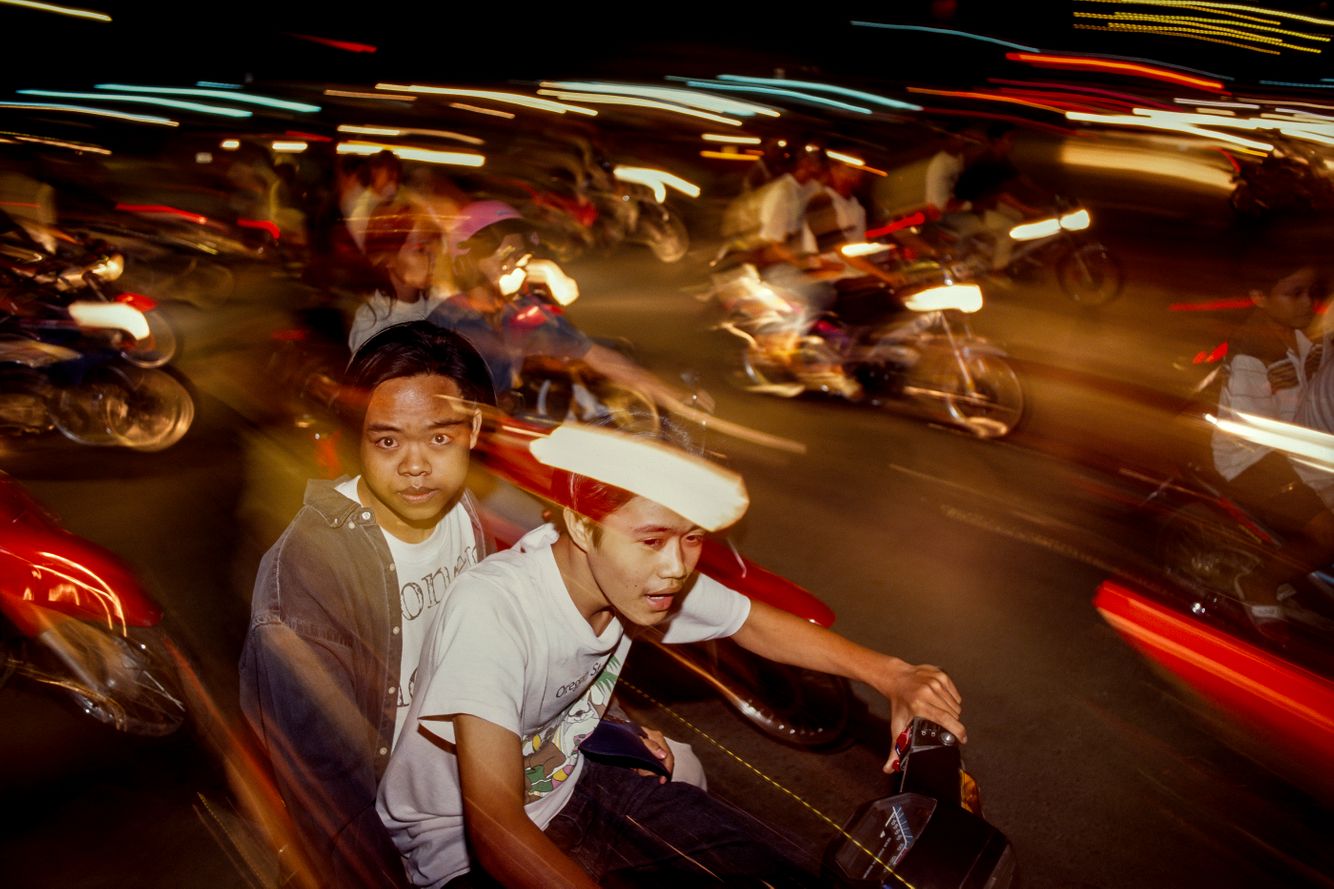
Bangkok Flies
JANUARY, 1995. The Thais call them maleang wan, or ‘flies’. You see the illegal motorcycle racers every day on the streets of Bangkok. Tearing through the traffic, weaving in and out of the city’s permanently stalled traffic, you can hear the distinctive high pitch screams of their modified 75 & 125cc engines. By day they are dispatch riders, delivery boys, motorcycle taxi drivers or just bored teenagers out cruising the streets but at night they are Bangkok’s infamous racers—daredevils whose exploits and accidents have become regular gristle for the pages of Thai newspapers.
Normally known for gridlock by day, Bangkok’s streets at night are not for the faint of heart as motorcyclists and drivers push the limits of their vehicles. After spending a day in traffic moving at an average of 7 kph, many Bangkokians see any open road as an invitation to race.
One of the cities older unofficial racetracks is Rathadaphisek Road—running for over 2 kilometers, the three lane road is ideal for racers. With few access roads and no lights or intersections it is the grand father of raceways in Bangkok and a favorite among the racers.
Text continues below ...
more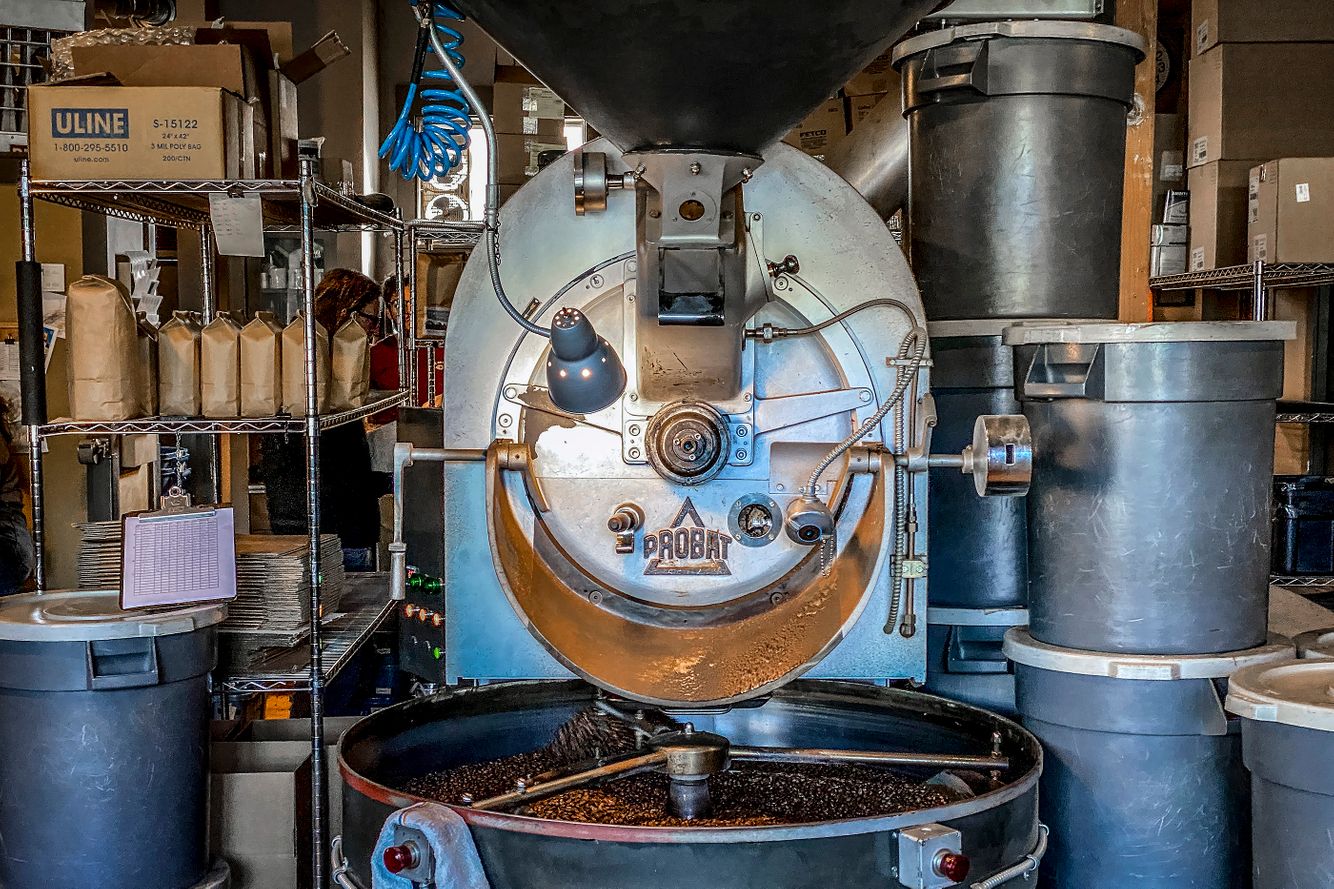
Herkimer - The lightstalkers coffee shop
Ode to our neighborhood coffee shop, Herkimer Coffee shop on Greenwood Avenue here in Seattle. We’ve been taking the girls there since we moved to the neighborhood in 2008 - nothing like a hot chocolate and a sweet treat for them to allow me to take a few photos.
It's a lightstalkers dream too - large windows facing west on the top of a hill. The space is flooded with light, I've even used for an occasional photo shoot. The girls are older now and the sweet treats aren't enough to get them to let me take photos, but I saw a young dad in there with a 1 year old, and went archive digging for some of the better of the hundreds of images I've taken there.
Herkimer also serves the best damn coffee in Seattle.
more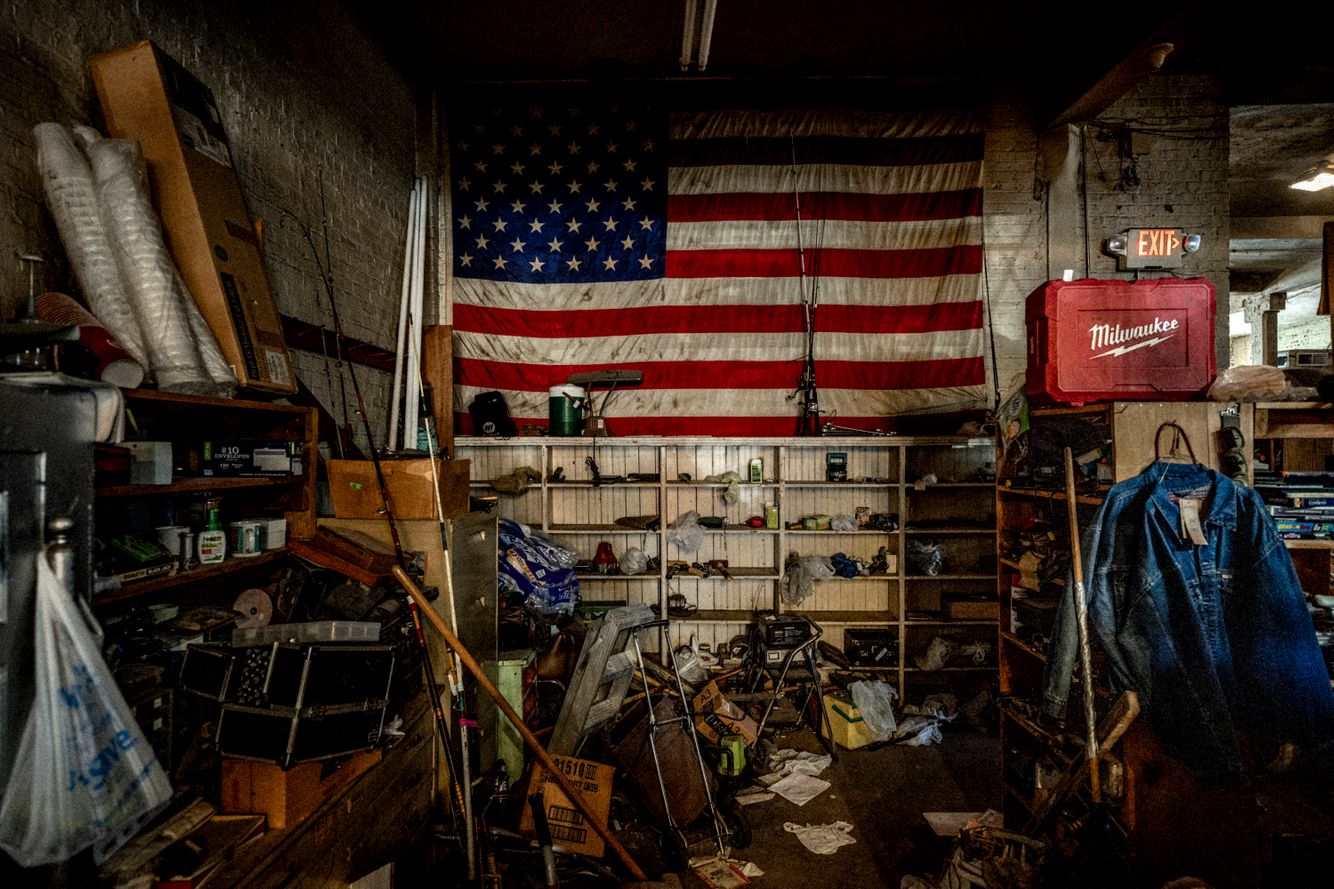
OKLAHOMA DRIFT - Chasing Bob Dylan's America
Starting in 2021, I partnered with the retired actor and playwright Mark Jenkins - who drove from his home in Laramie, Wyoming to see Bob Dylan perform in Denver in February, 1964 - to explore the new Bob Dylan Center in Tulsa. Two Seattle-based artists and Dylan enthusiasts, separated by a generation, Mark and I are traveling throughout Oklahoma exploring how Dylan's art influenced the way we see the world and what the state says about America. With Mark’s notebooks and my cameras, we will continue to wonder why Dylan agreed to put his personal archives in the state and through the voices and stories we find, seek out how the state reflects back on his uniquely American art.
- drift (noun): Being driven off course. Deviation from a course. Move in a casual or aimless manner. A natural course or tendency of events or actions. The underlying meaning, import, or purport of what is spoken or written.
- drifty (adjective): Full of secret aims, wily.
When asked why he agreed to send his archives to the state, Dylan reportedly said he preferred “the casual hum of the middle of the country”. As we roam Oklahoma, with Tulsa as one of America's best crossroads cities, we will search out themes of justice, civil rights, faith, inequality, crime and outlaws, beauty, love, folk life, protest, and of course, music. Oklahoma tells the American story probably better than any other state - a place where people came with their hopes and dreams, often only to discover its failures and injustices. Oklahoma is, in many ways, a mirror to America's lofty principles, a place where the country's long, often brutal history has been compressed, but still oozes to the surface like the sea of oil that once lay under the land.
more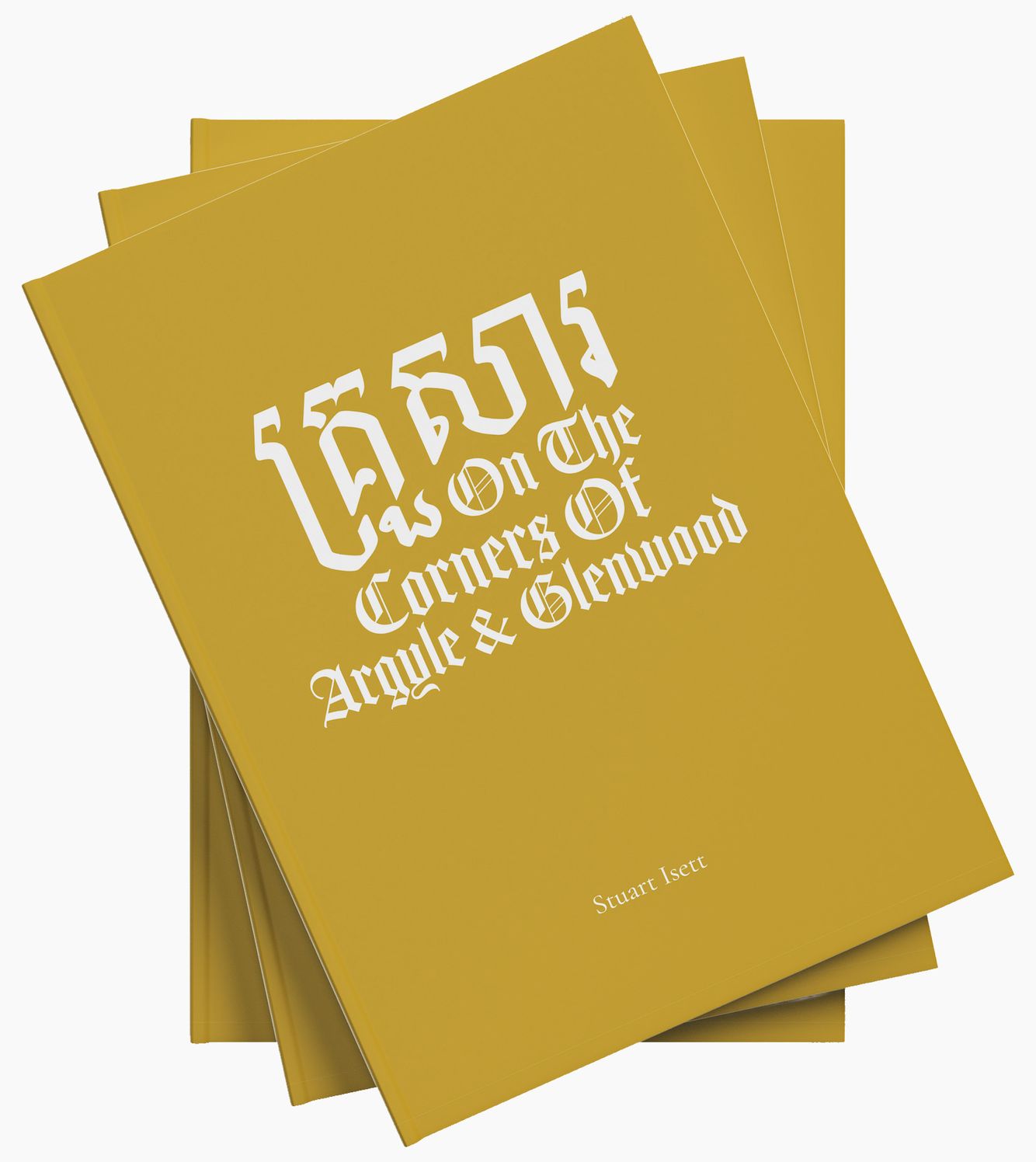
On the Corners of Argyle and Glenwood - Second edition
Happy to see Catfish books release a second edition of my book 'On the Corners of Argyle and Glenwood', this time with a beautiful yellow/gold outer sleeve! Order yours here.
"As a young graduate student in photography in the early 1990s, Stuart Isett found himself on the corners of Argyle and Glenwood streets in Chicago, photographing Cambodian refugees who had settled on the city’s north side near his apartment. Isett entered a world which would define his practice, spending much of the next 25 years working in South East Asia, often returning to work on issues affecting the Cambodian diaspora.
Nearly 30 years later, in collaboration with Cambodian-American activist Silong Chhun and Pete Pin, a Cambodian-American photographer, Isett revisited the Chicago work. Together they re-sequenced and contextualised the series. Chhun and Pin would have been the young boys in the back of the room in many of Isett’s images, watching their older siblings who were Isett’s main focus, as they struggled to adapt to life in America while burdened with the trauma of war and genocide.
more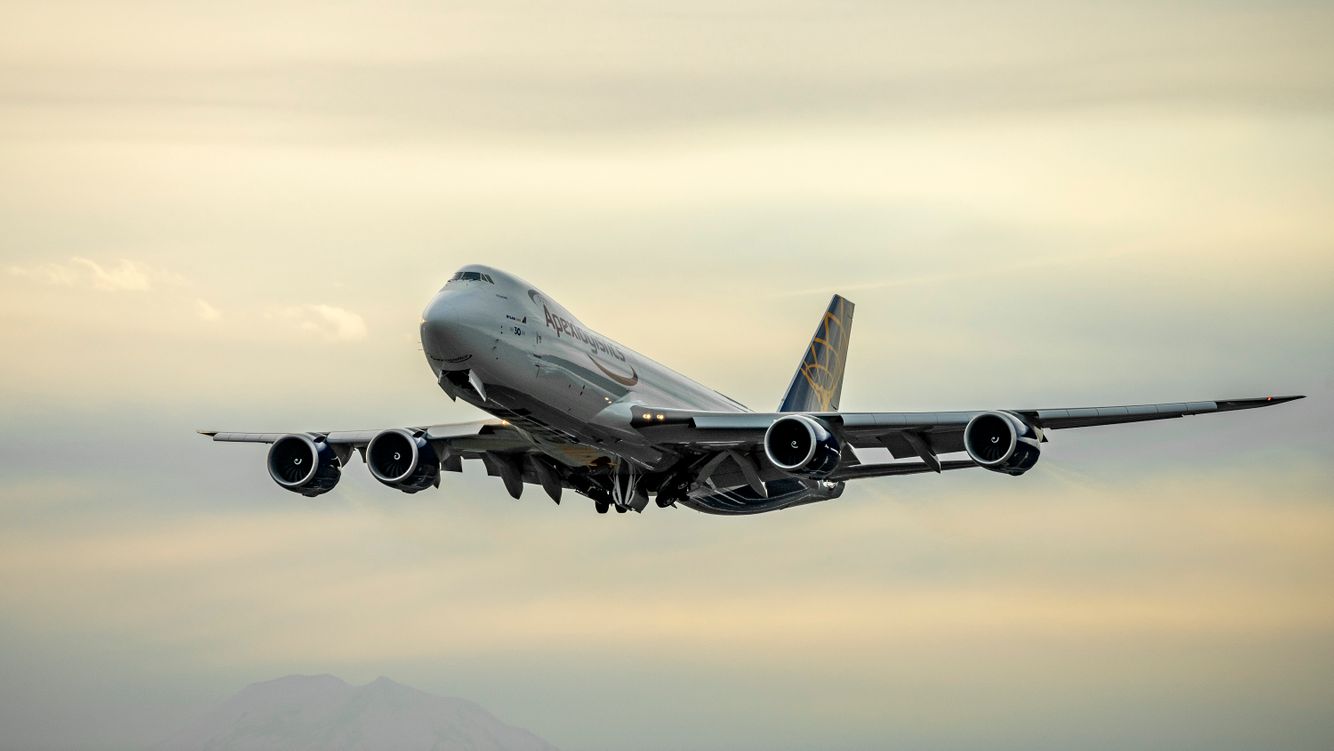
Bon Voyage
Boeing's last 747 jumbo jet took off today from Paine Field, next to the Everett plant where the first 747 rolled out in 1969. I've spent hundreds of hours flying around the world on them since I was a little kid. The last plane may be out the door but we'll get to see them in the air for many decades to come. Bon voyage!
more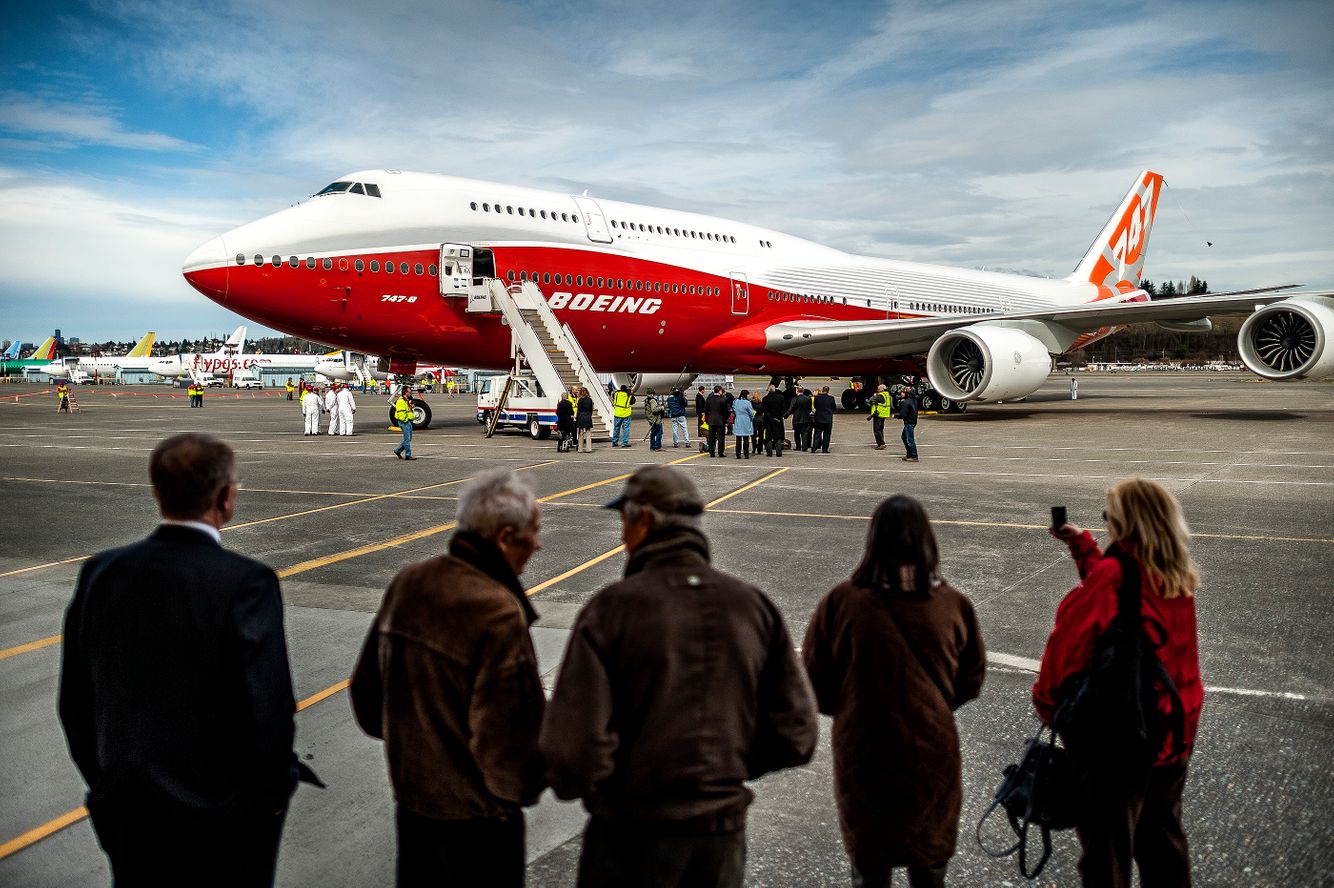
Queen of the Skies
As Boeing prepares to roll out and deliver its final 747, a cargo version of the plane's final iteration, the 747-800, here's some images I've taken of its construction, delivery and first flight over the past decade. It will always be the most beautiful plane ever built, sleek and elegant, unlike its rather bloated rival the Airbus A380 which I also photographed being developed and built.
The first flight I remember taking? The Pan Am Clipper from London to New York on a Boeing 747-121. It was a flight that led to a lifelong fascination with airplanes and has taken me to the manufacturing floors of the world's leading airplane makers, as well as airports around the globe where I've learned to safely capture powerful and creative images in the brief time photographers are typically given to work around aircraft.
I only realized later that Joe Sutter is second from the left in the image to the right. I still kick myself for not getting a portrait of the 747s legendary architect. Joe passed away in 2016.
To this day, I still get excited when I see a 747 roll by while I wait at an airport gate with my family - it's hard to explain to my kids! The final delivery of a 747 is not just an aviation moment, it's also a cultural moment. It's the end of the era when we imagined flying could be adventurous and romantic, not mundane. I'm lucky to have experienced it.
more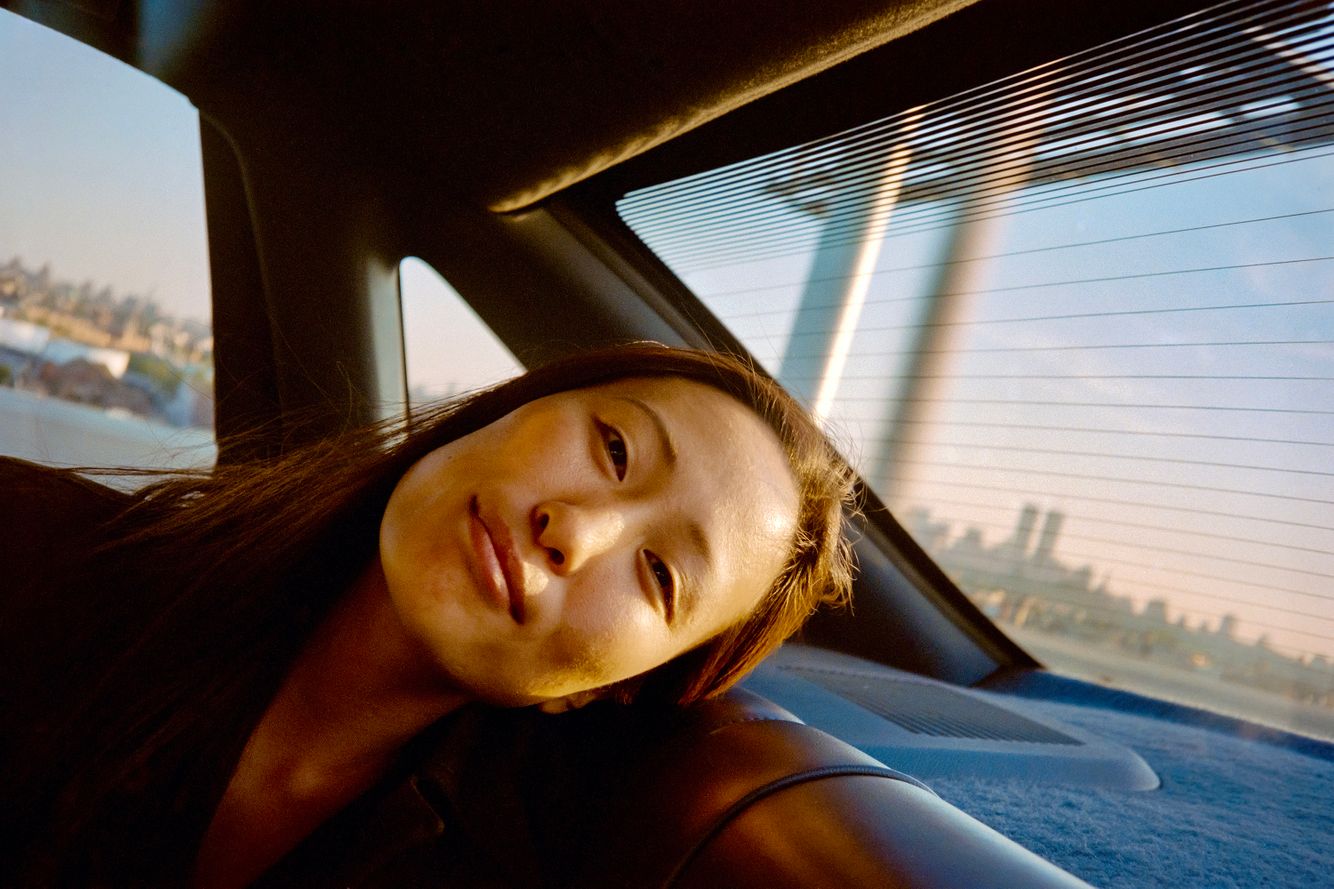
My love she speaks like silence
My new bride after our honeymoon in New York, June 1997. Jennifer and I headed to the airport and our return flight to our home in Bangkok; a few months the later we moved to Tokyo. I've always loved this image but only recently got a decent scan of it, and love it more. My love, the light, the Twin Towers; our lives totally in limbo as we prepared to take the plunge and live in Japan.
Now it's two kids, a cat, mortgage, college 529s, bed by 930 pm. But watching a dear friend losing his wife of 30 years to cancer this week, puts it all in perspective. Jennifer is still fearless though.
- My love she speaks like silence
- Without ideals or violence
- She doesn't have to say she's faithful
- Yet she's true, like ice, like fire
- Bob Dylan, Love Minus Zero
more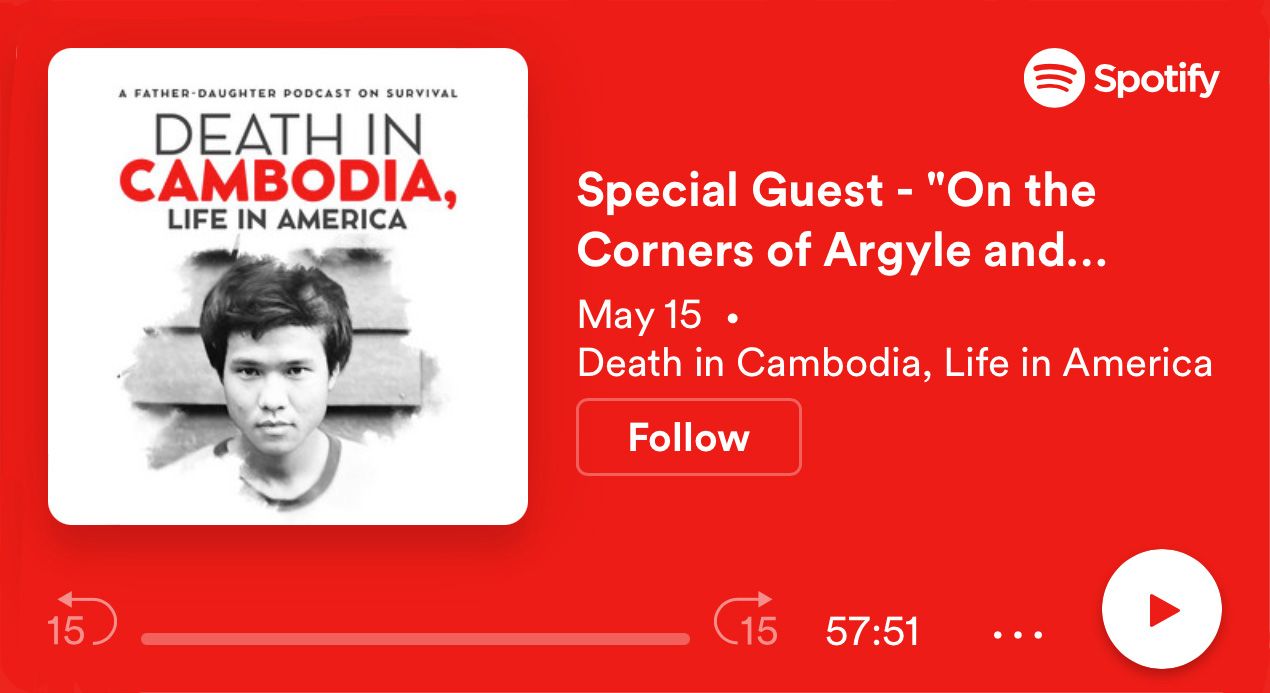
Death in Cambodia Podcast
Proud to have joined Dorothy Chan on her podcast "Death in Cambodia". Dorothy created the podcast to interview her father and talk about his experiences under the Khmer Rouge during the Cambodian genocide, exploring issues of trauma among Cambodian refugees in the US. It was in that context she wanted to talk about my work on Cambodian refugees in the early 1990s, along with Pete Pin and Silong Chhun who both helped create my book "On the corners of Argyle and Glenwood".
more