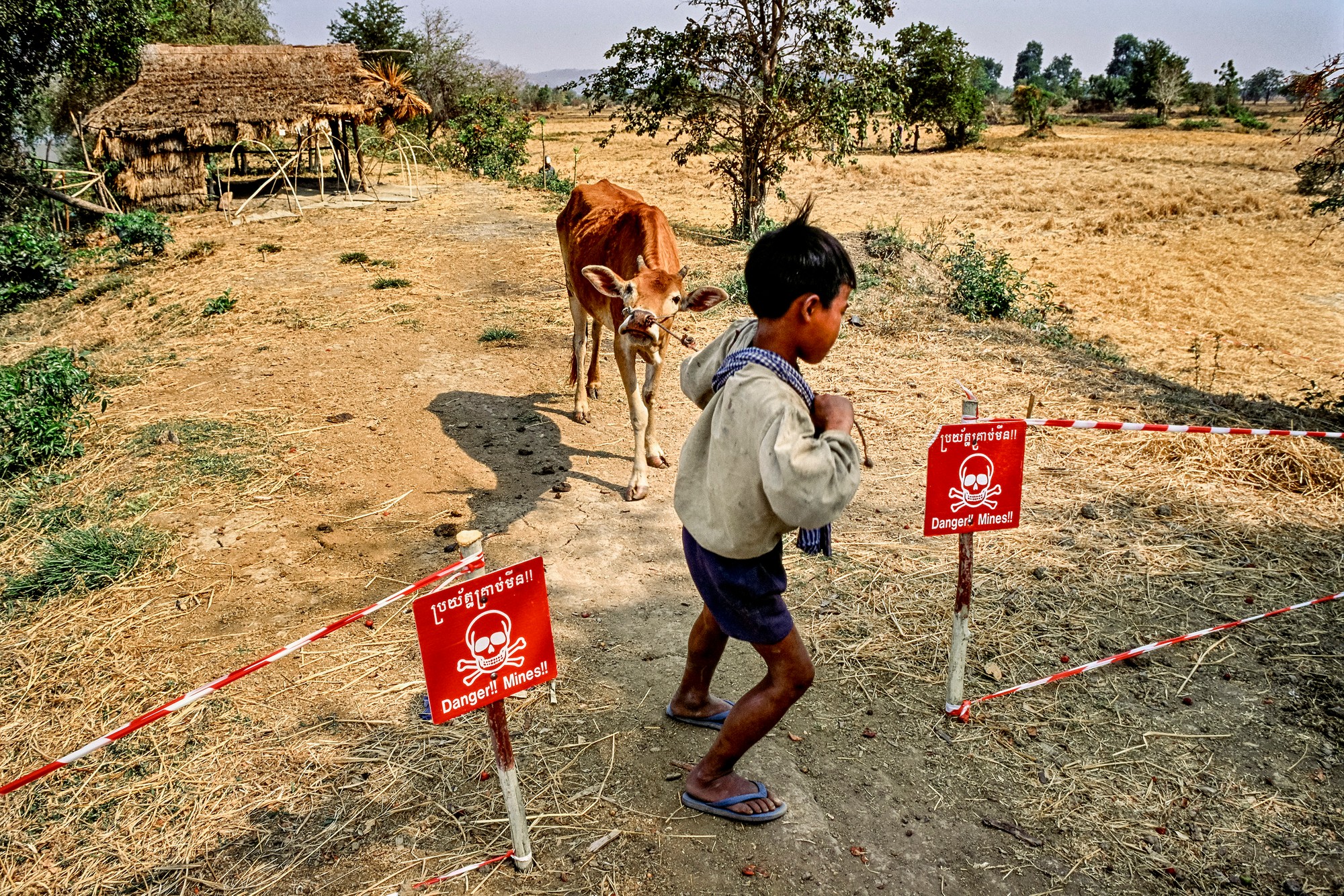
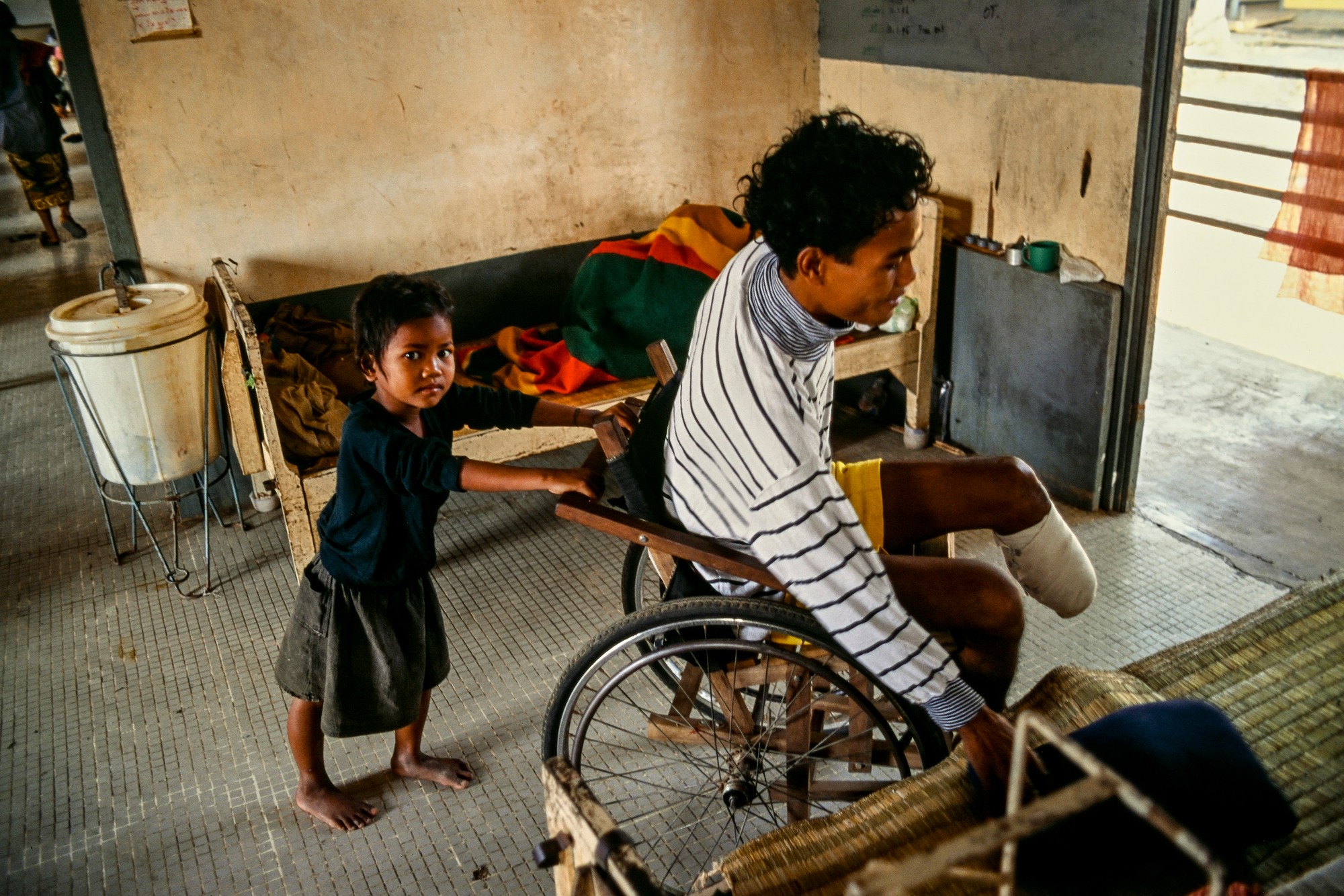
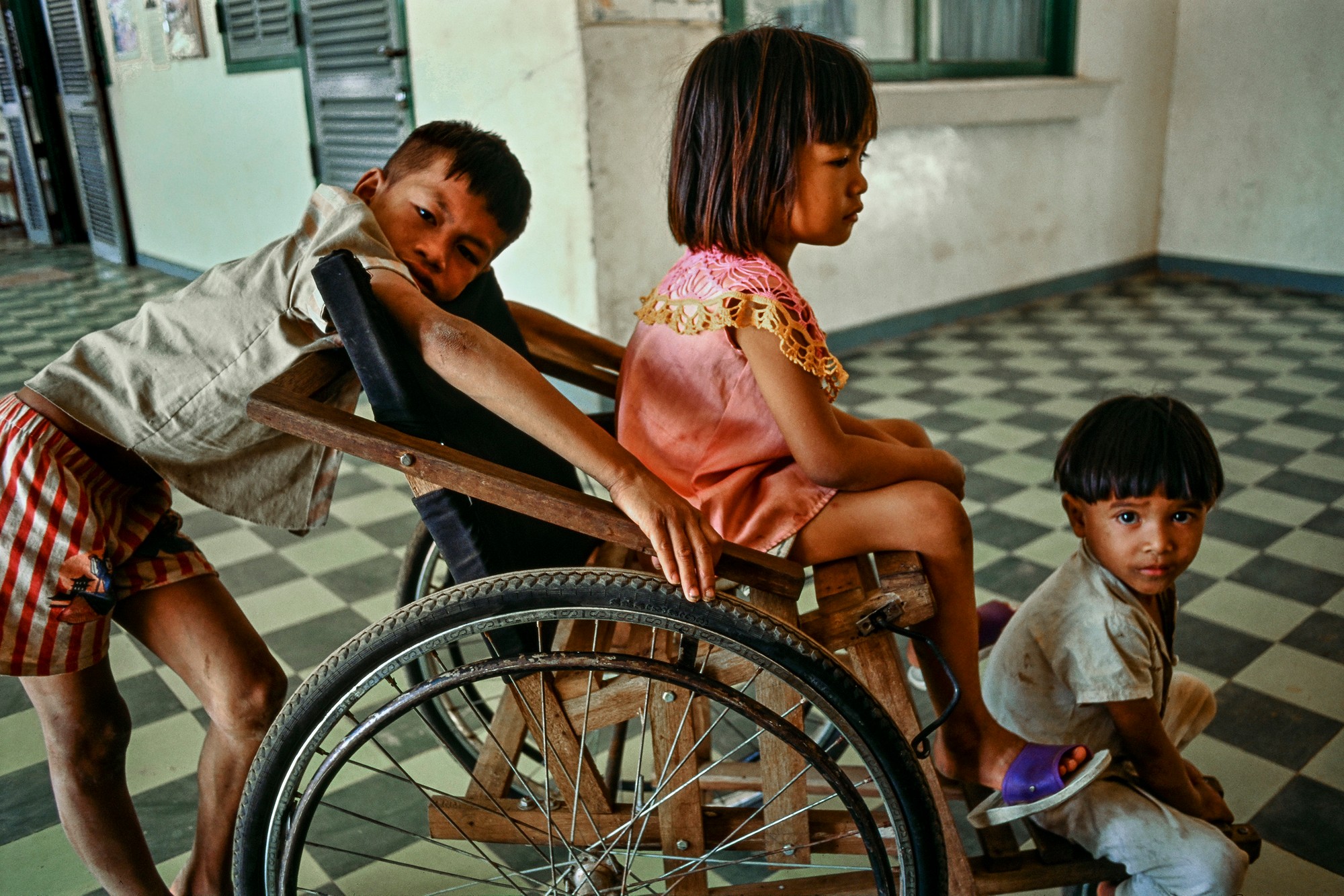
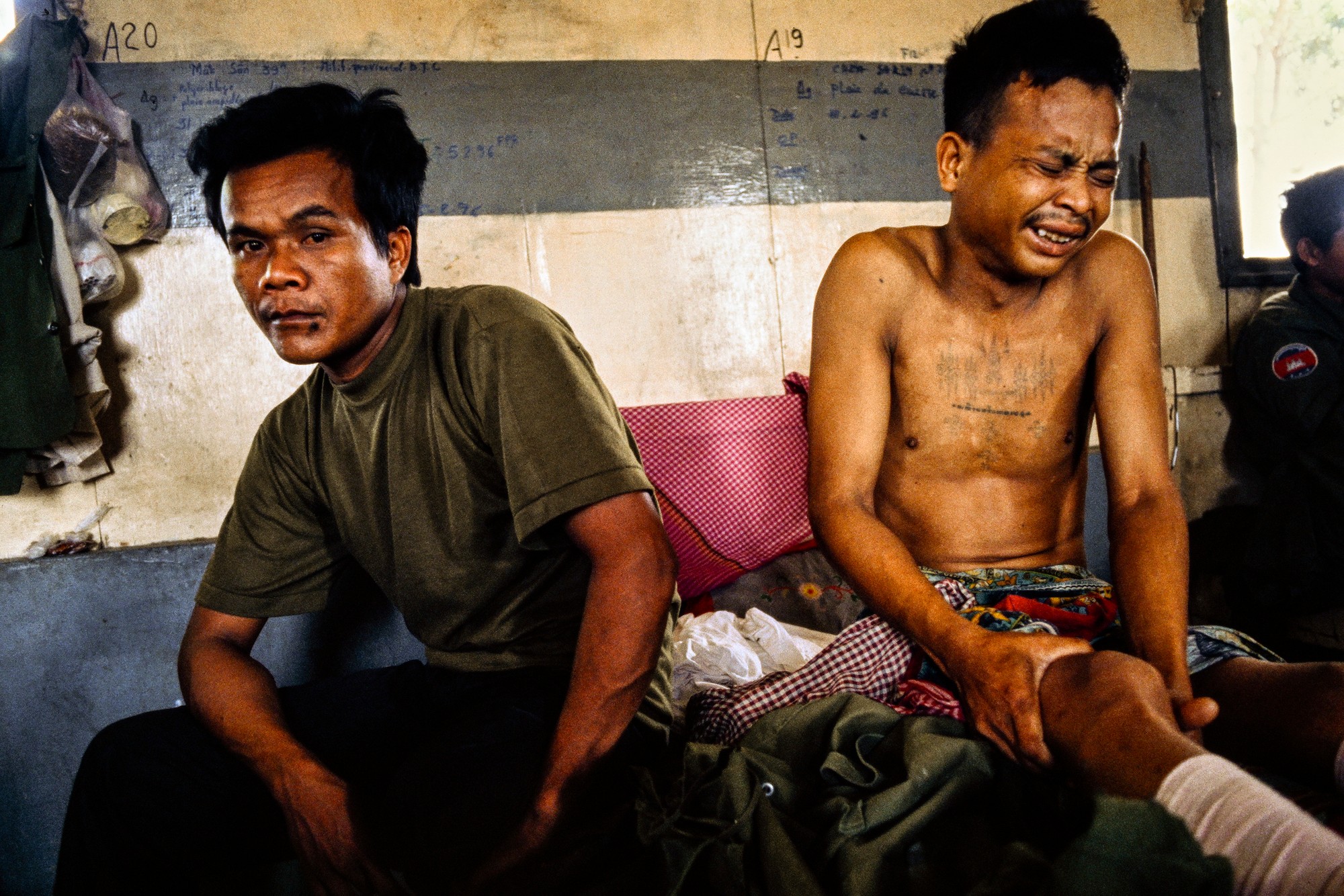
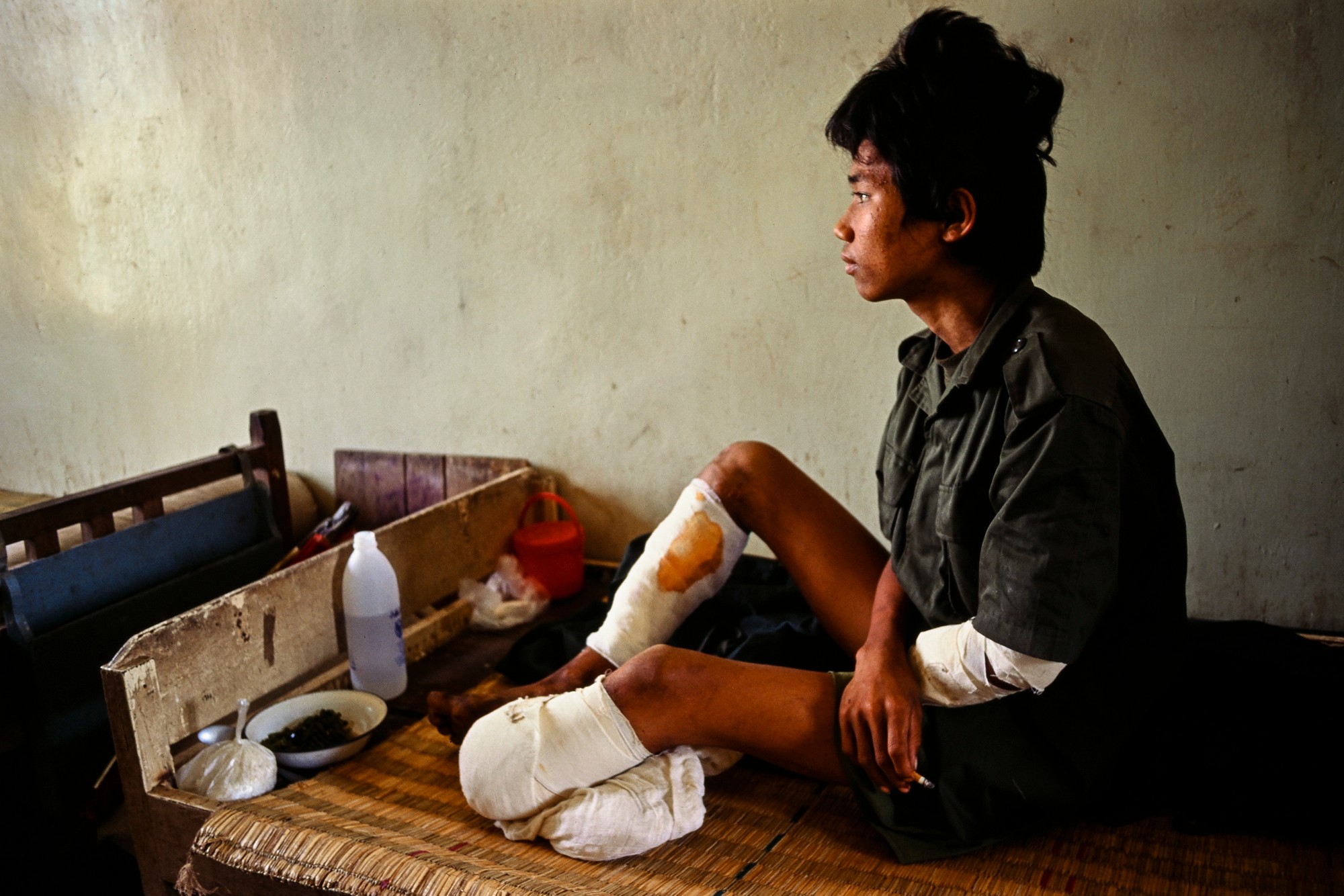
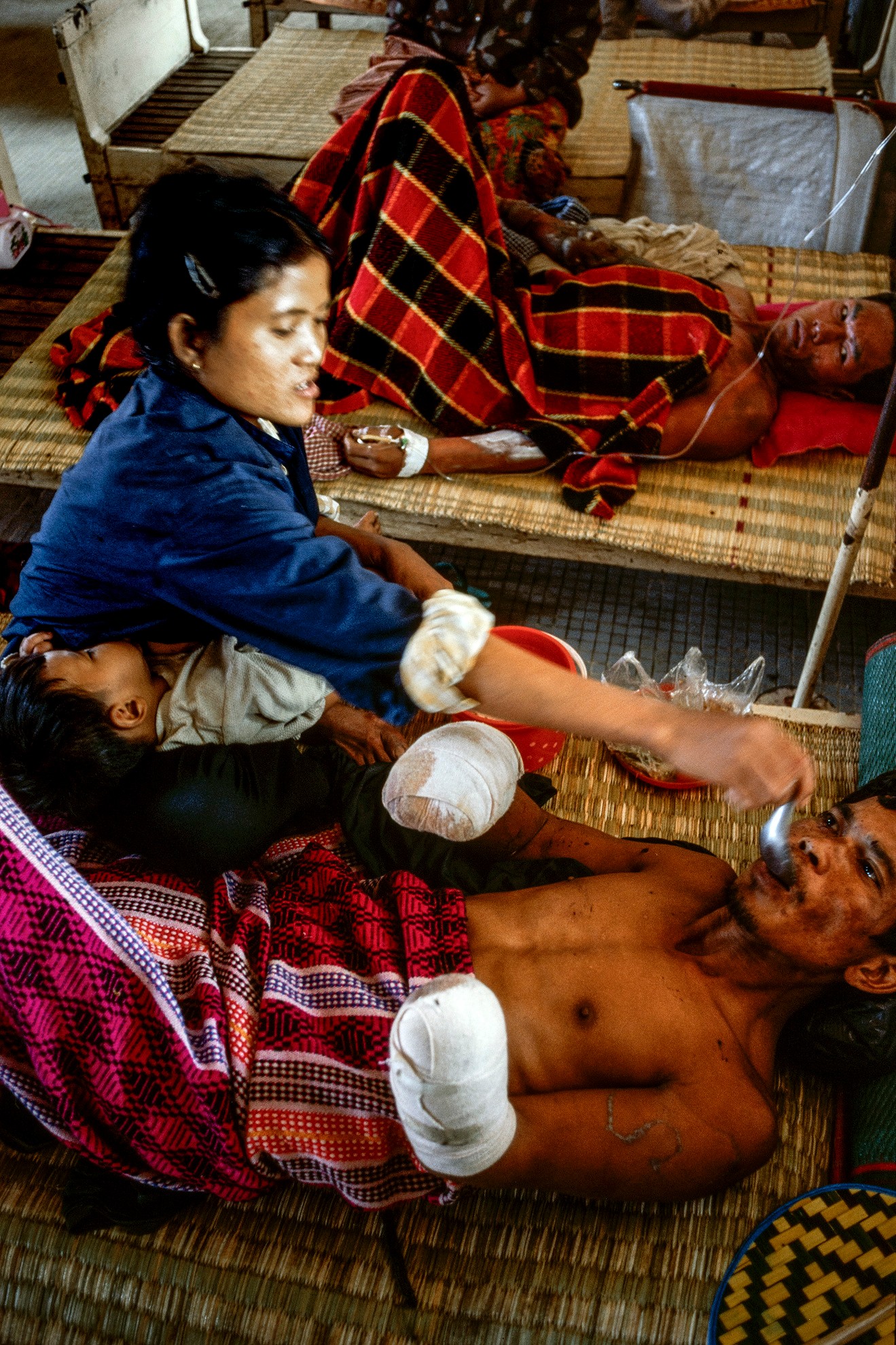
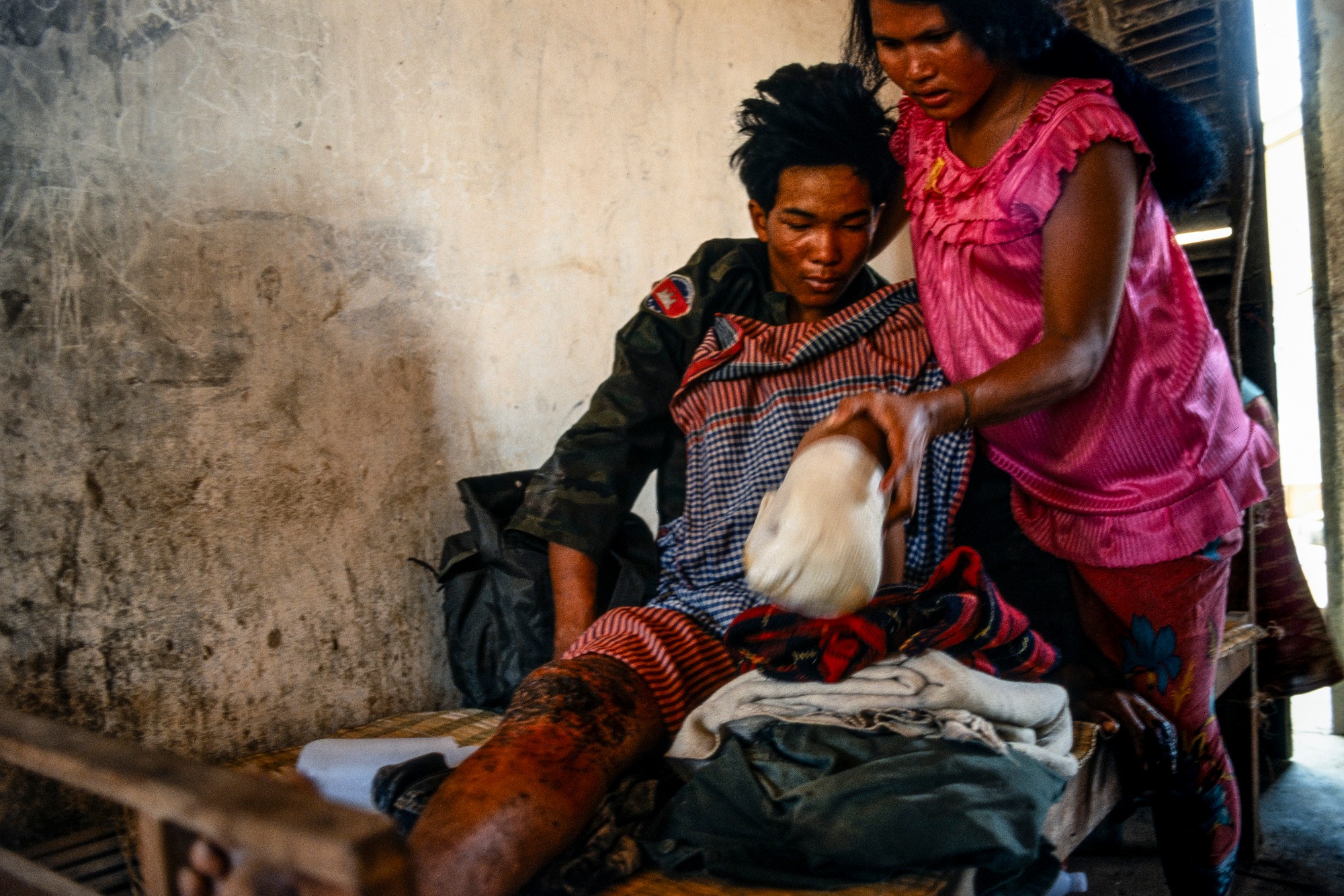
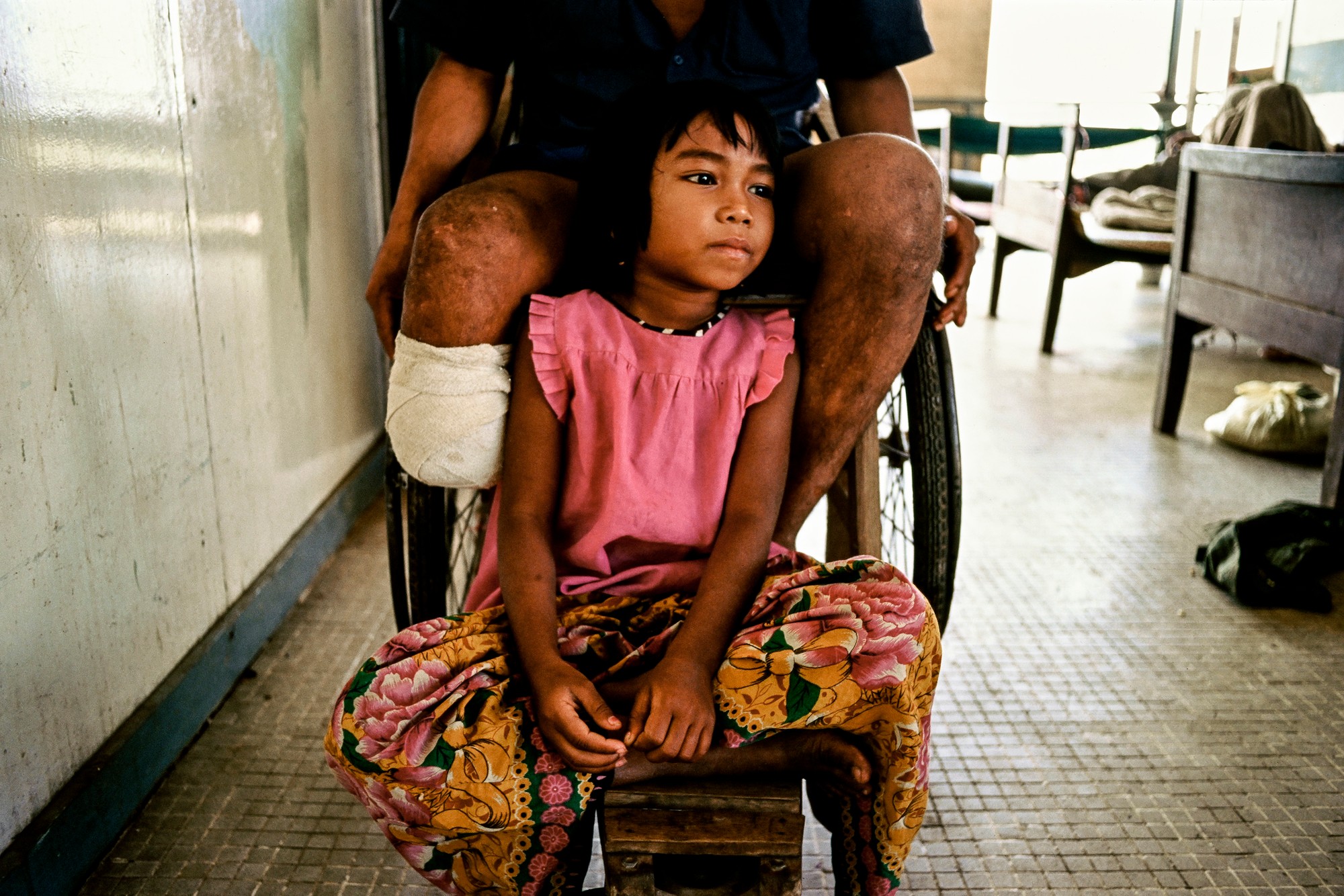
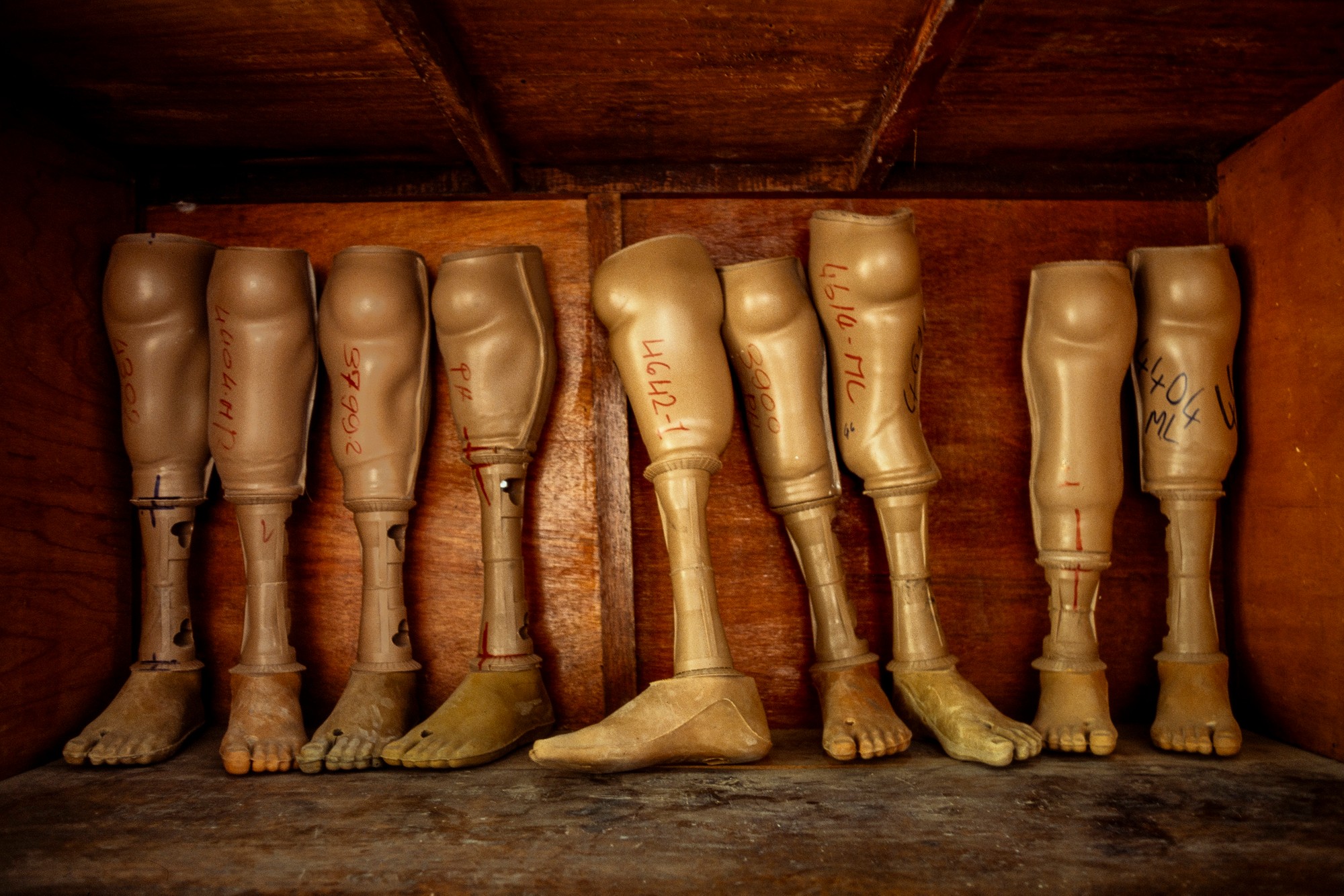
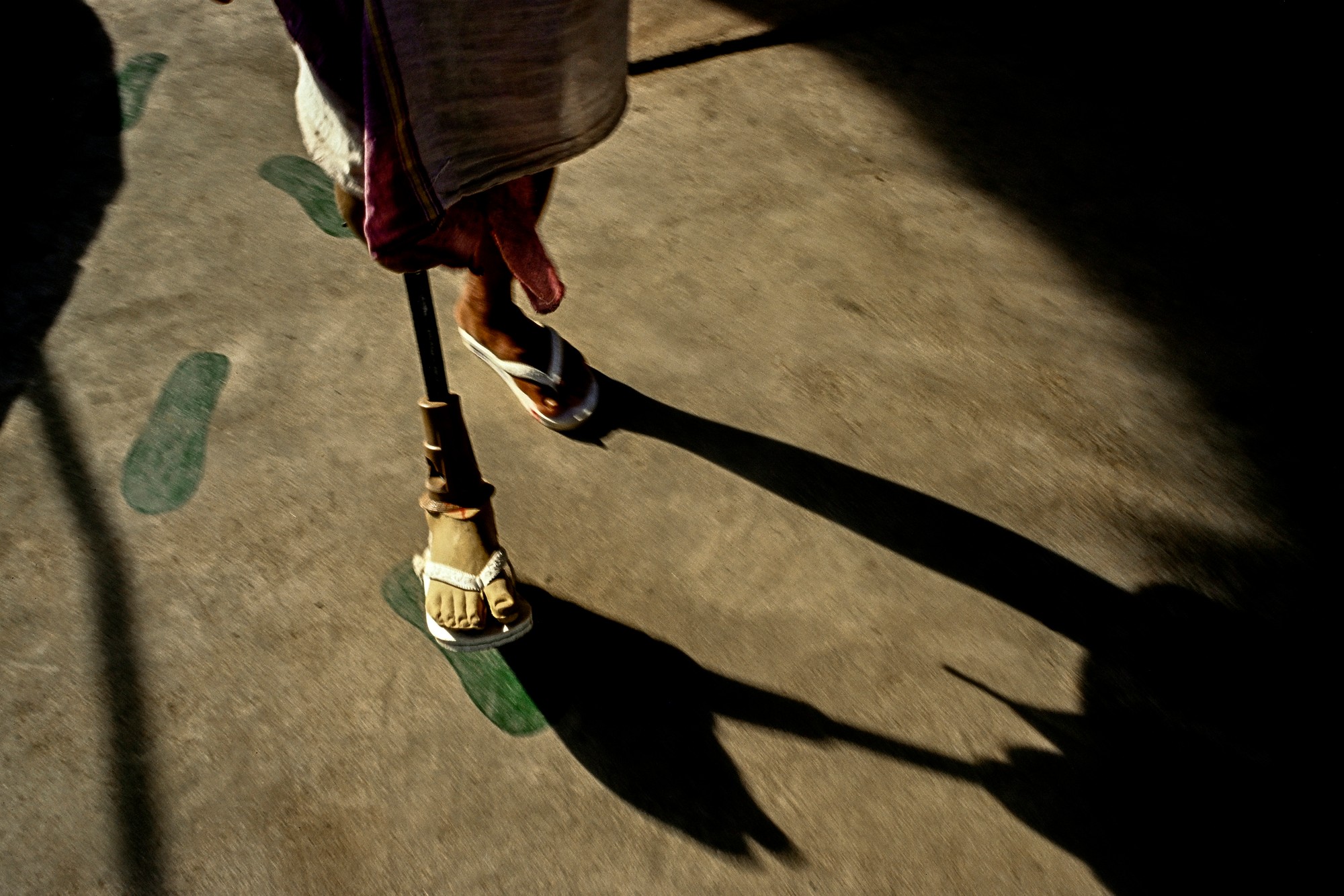
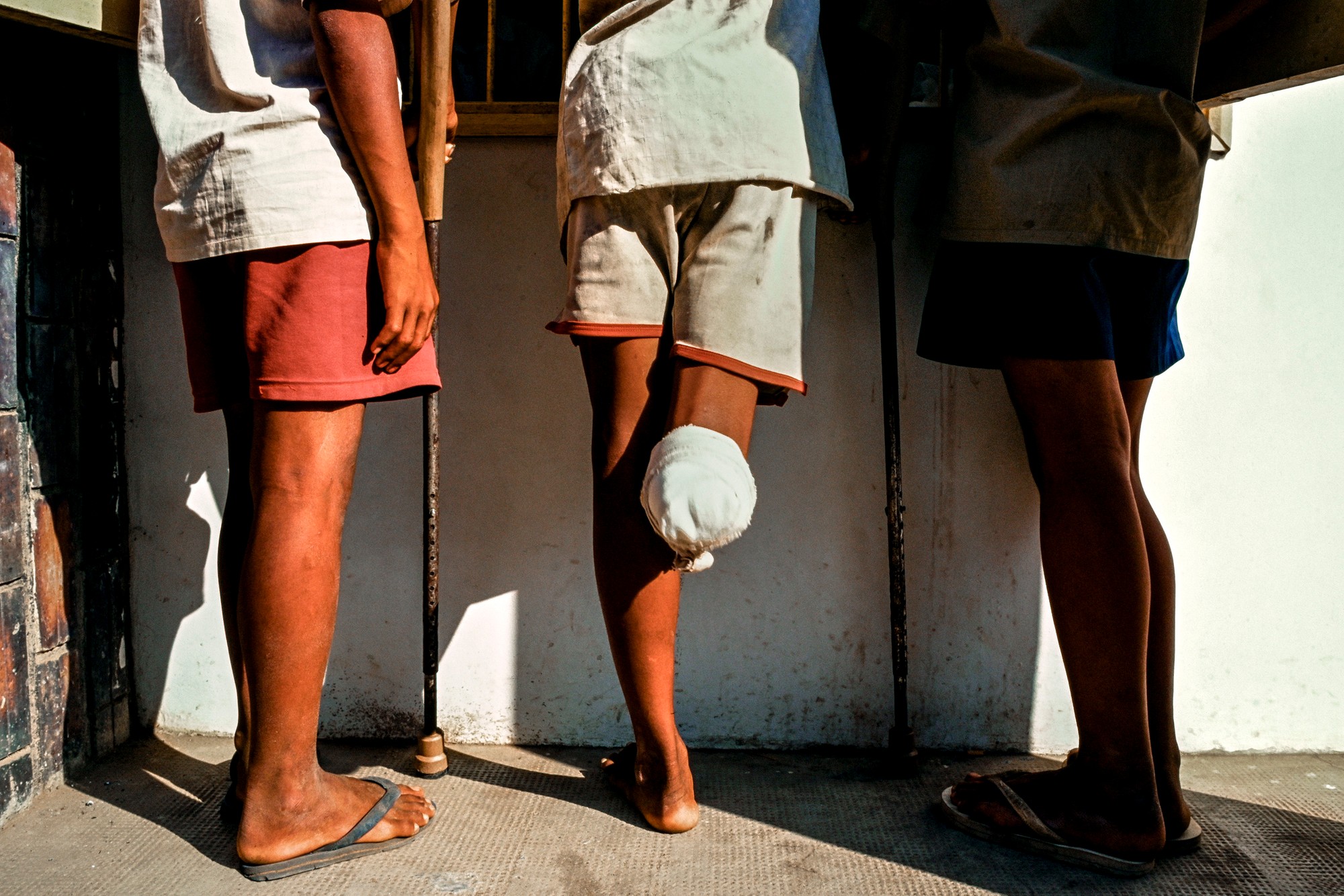
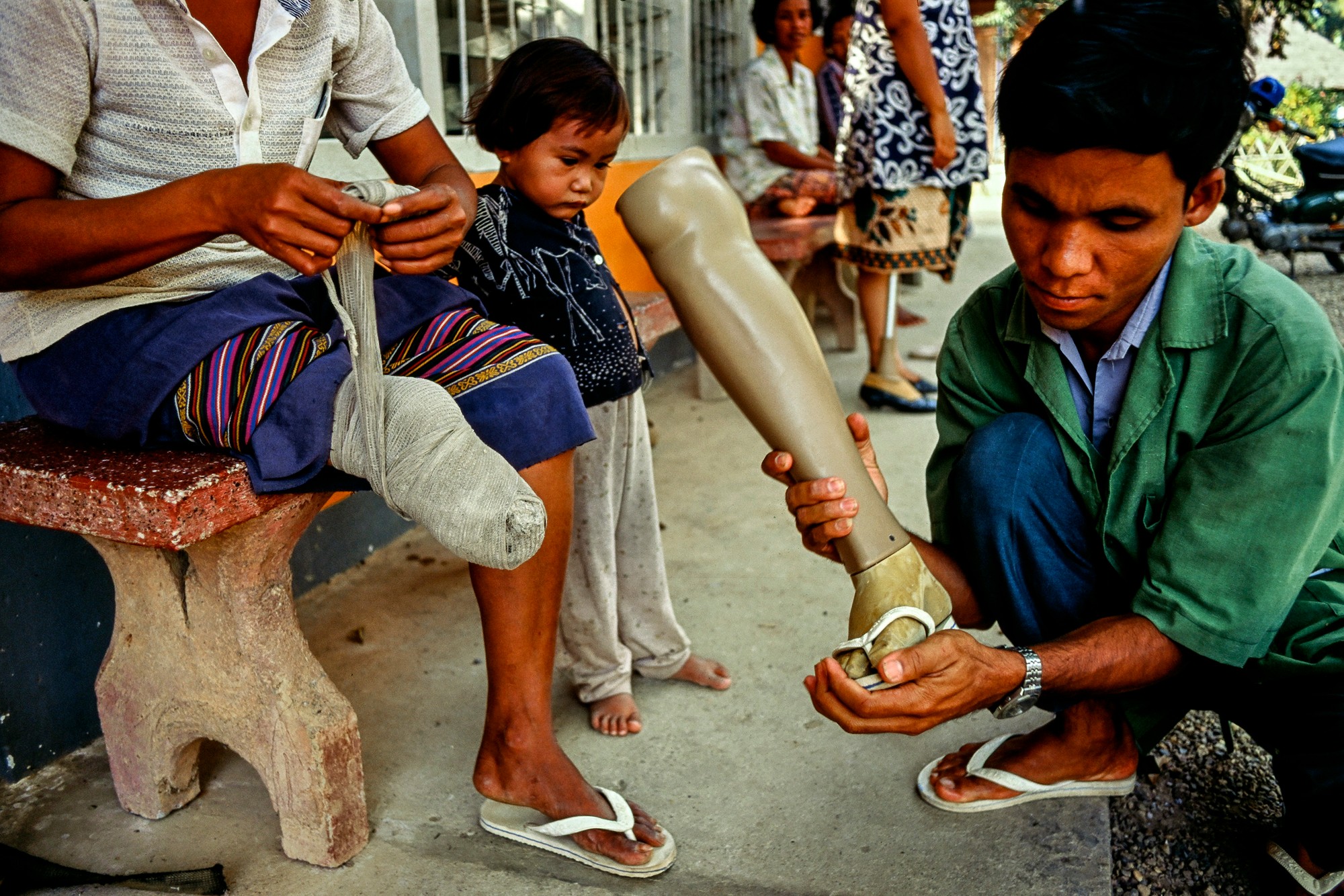
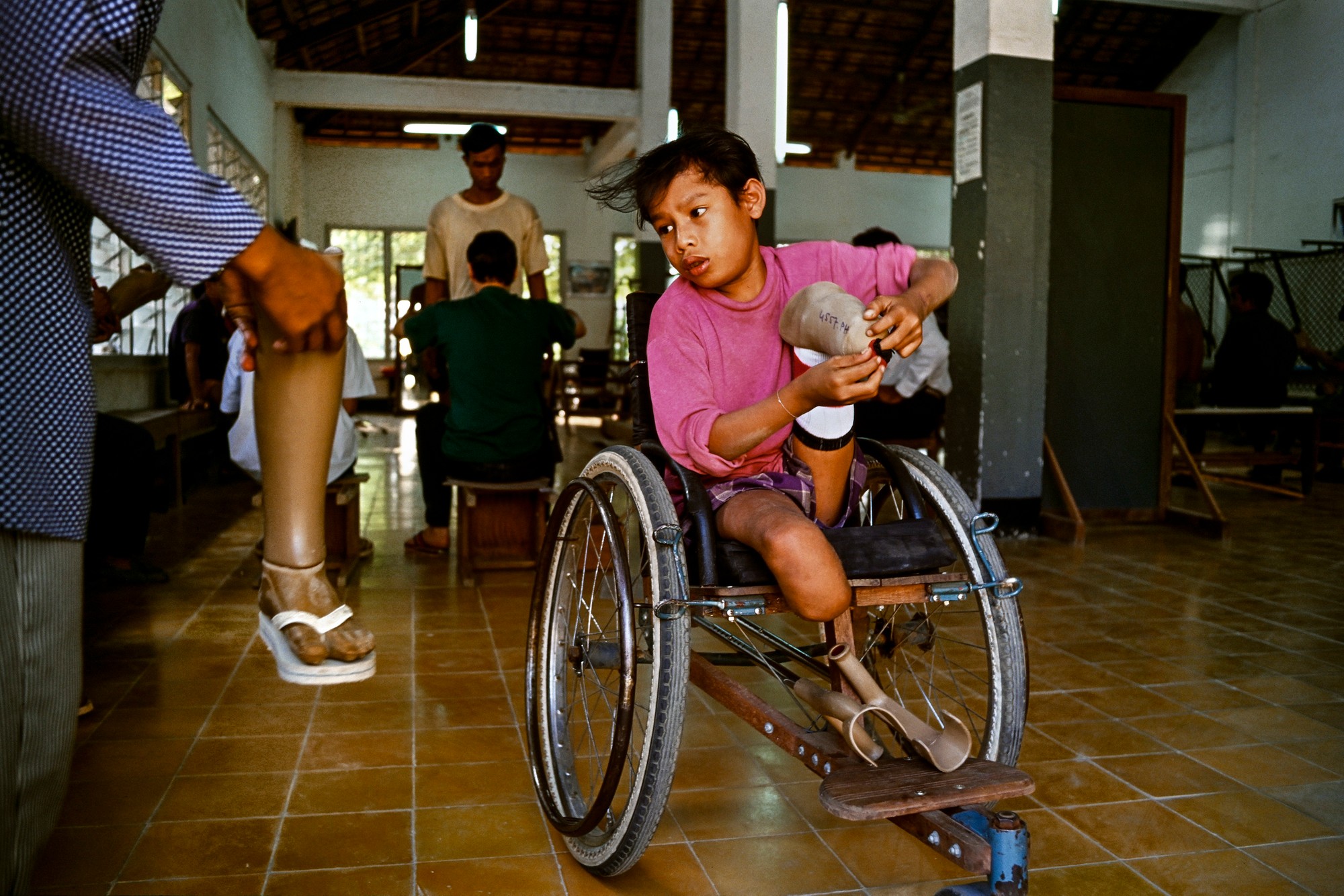
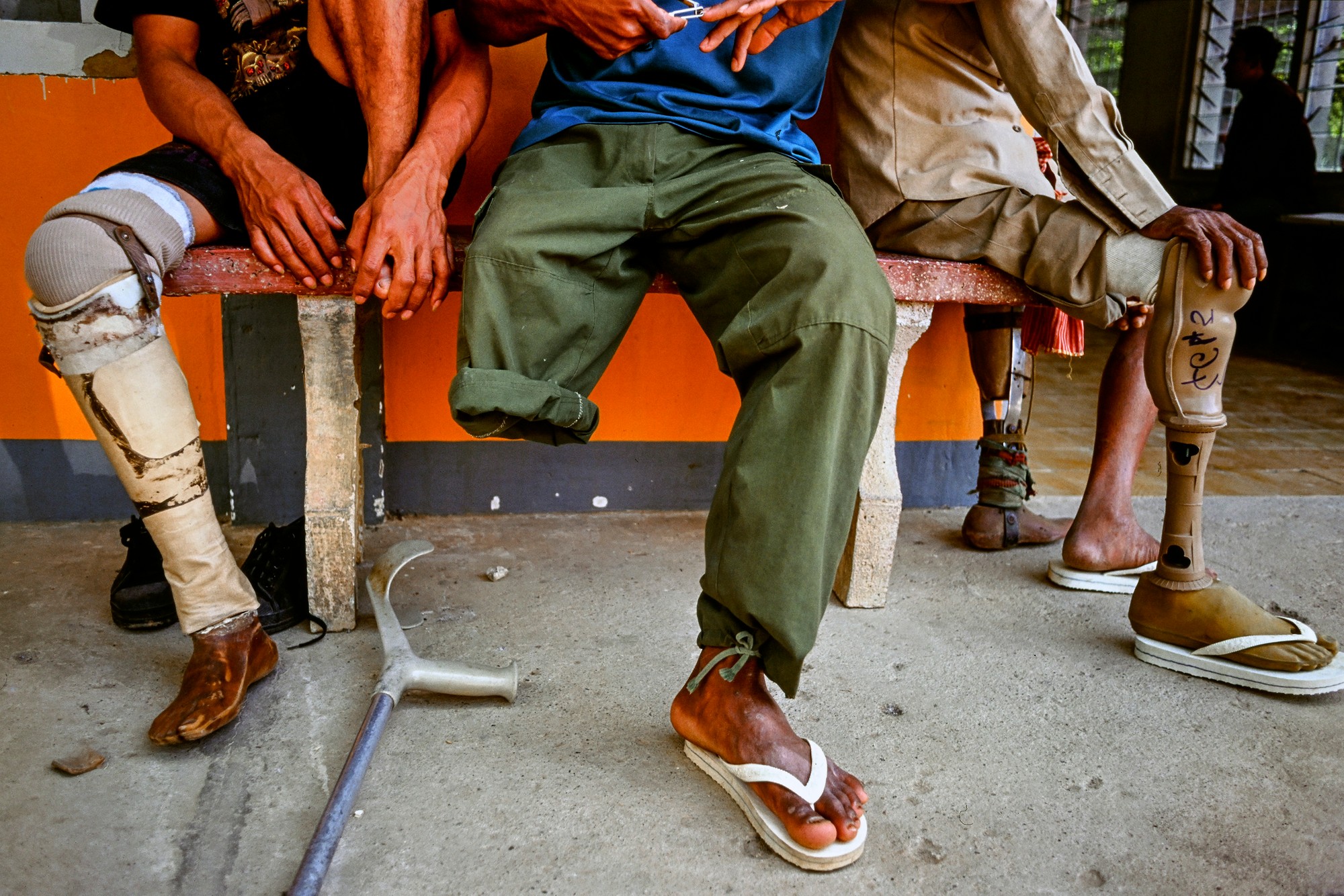
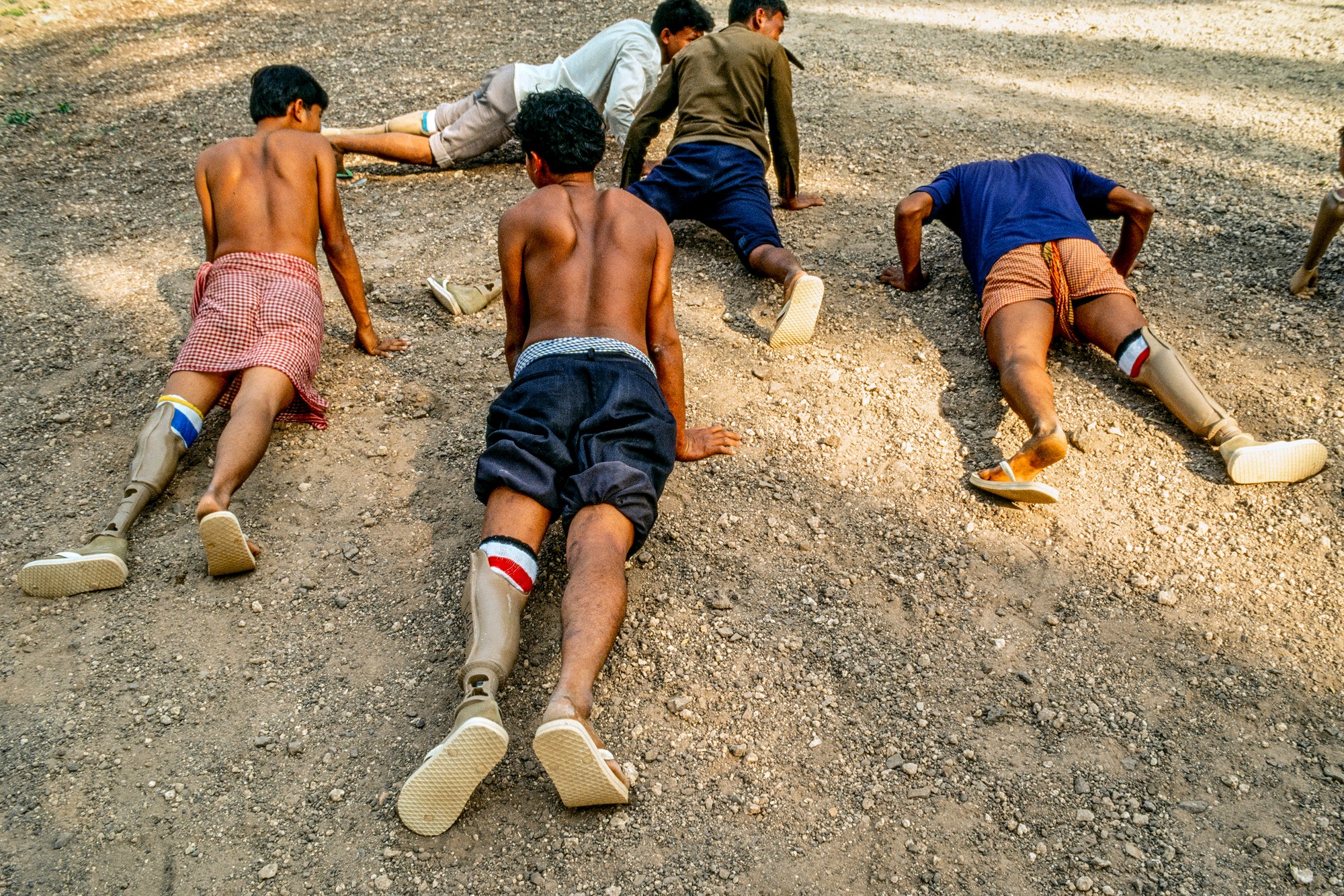
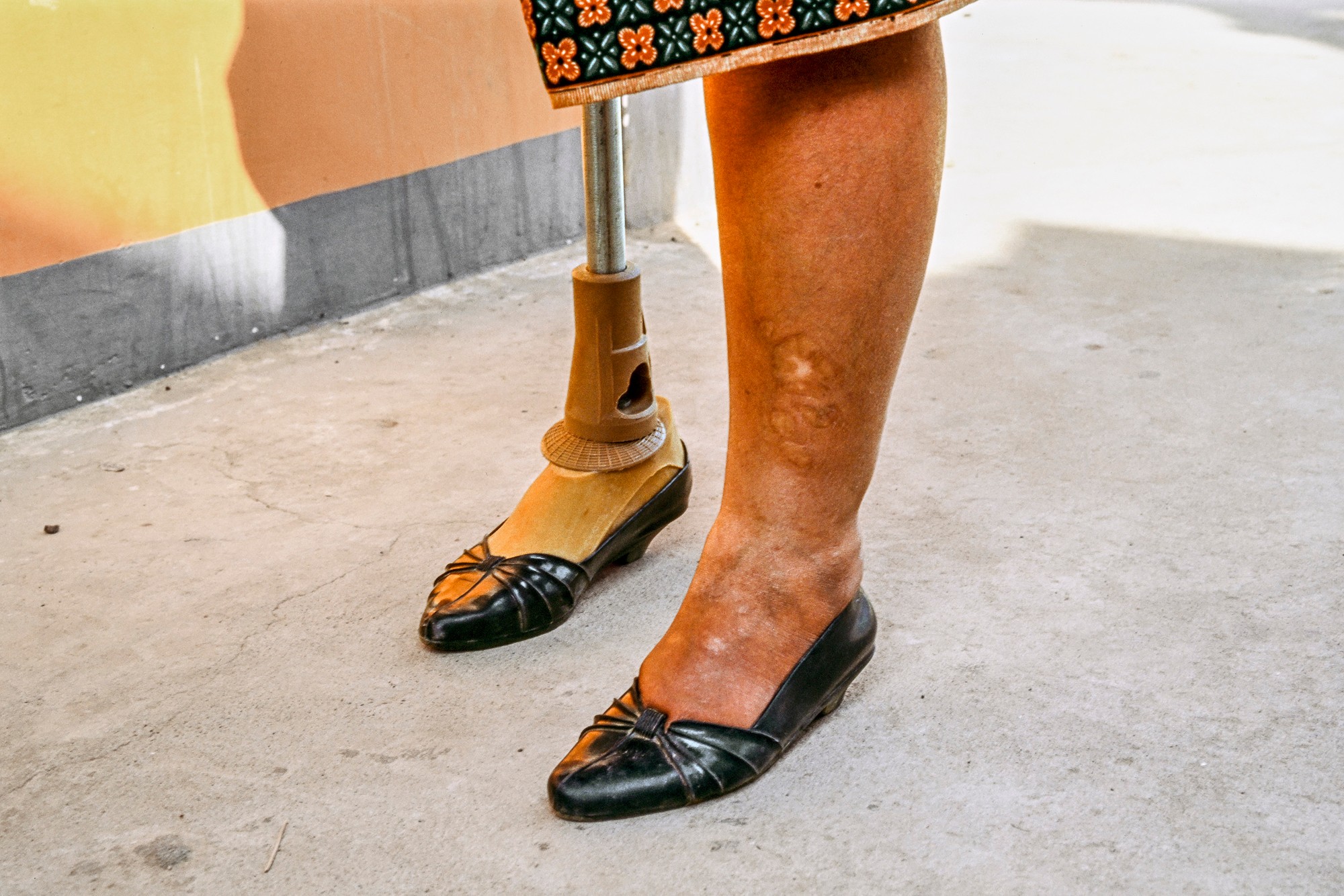
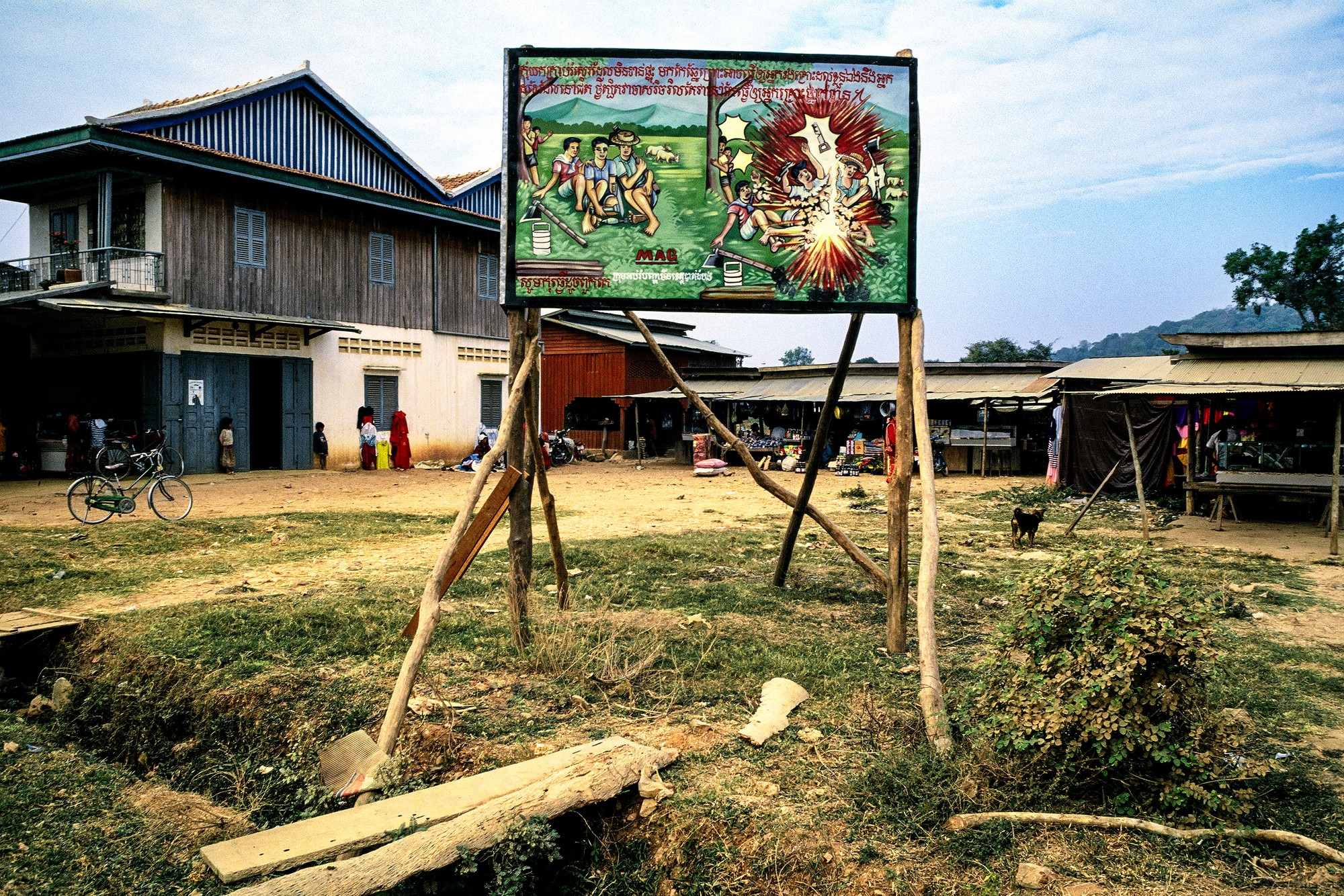
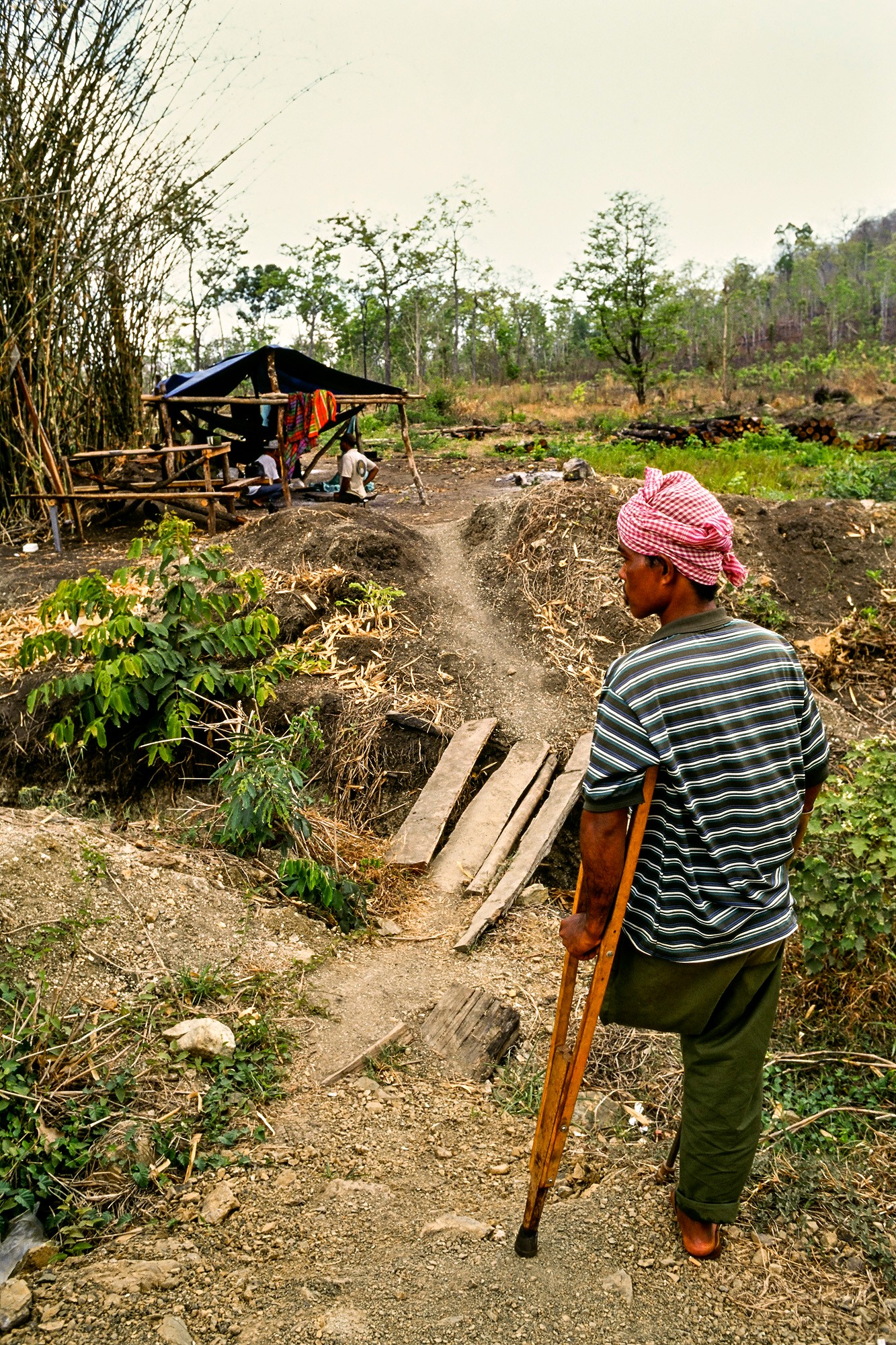
In Cambodia these ‘weapons of cowards’ litter the countryside. The government estimates that there are between 6 to 10 million mines in Cambodia laid by all sides in the country’s turbulent history—with a human population of only 9 million the devastation they wreck and will continue to cause for decades is daunting. Once laid, mines continue to be active for decades, waiting patiently for years after wars end to claim more victims and every month 300 Cambodians are killed or injured by these silent sentinels. Today 1 in 236 Cambodians has lost a limb to mines.
The irony of all the mines is that they have little or no military value. “No battle or war has ever been won or influenced by laying mines. In Normandy, in Germany, in Vietnam—no where did they affect military campaigns. It’s a myth that they have a military purpose, they are only used on innocent people, to destroy their livelihoods and morale”, says Russ Bedford, a Scottish deminer working in Battambang to clear minefields. Russ would know—a bomb expert in the British army for 7 years, he is well aware why countries use the weapons. “Mines are the poor man’s weapon. Rich country’s sell millions of mines to 3rd world armies every year knowing full well they will only kill and maim women, children and farmers”.
And in Cambodia the poor man’s war continues. Despite the Paris Peace Accords signed by Cambodia’s warring parties in 1991 and the UN sponsored elections in 1992, the Khmer Rouge and government forces continue fighting the never ending civil war. While the Khmer Rouge are widely blamed for the laying of mines, they aren’t the only force involved in the cruel practice—government forces, various rebel groups during Cambodia’s civil war, Vietnamese forces and the United States all share the blame in Cambodia’s awful legacy.
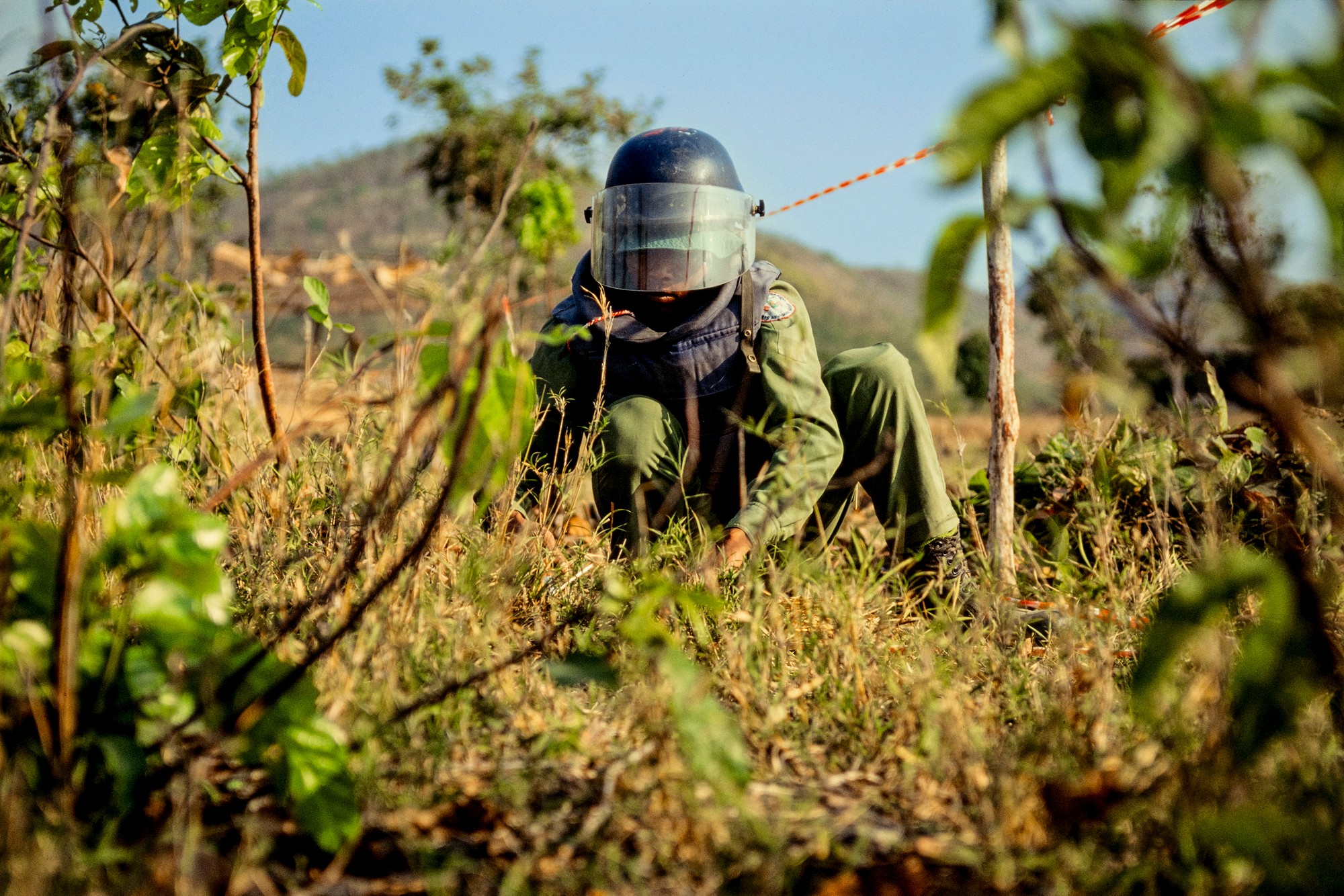
As Russ Bedford stands with his Cambodian trained deminers in a field 40 km south of Battambang he is fully aware that for every mine his men painstakingly remove another is being freshly laid elsewhere. Standing under a tree to escape the searing heat, Russ expresses his frustration readily. “It’s like watching paint dry. We have to inch our way across these minefields, sometimes taking days to find a single mine. These guys in the hills can come back tomorrow and put a hundred mines down in a night and we’re right back where we started. But if we don’t clear them someone will when they step on it, and that’s what keeps me going, I guess”.
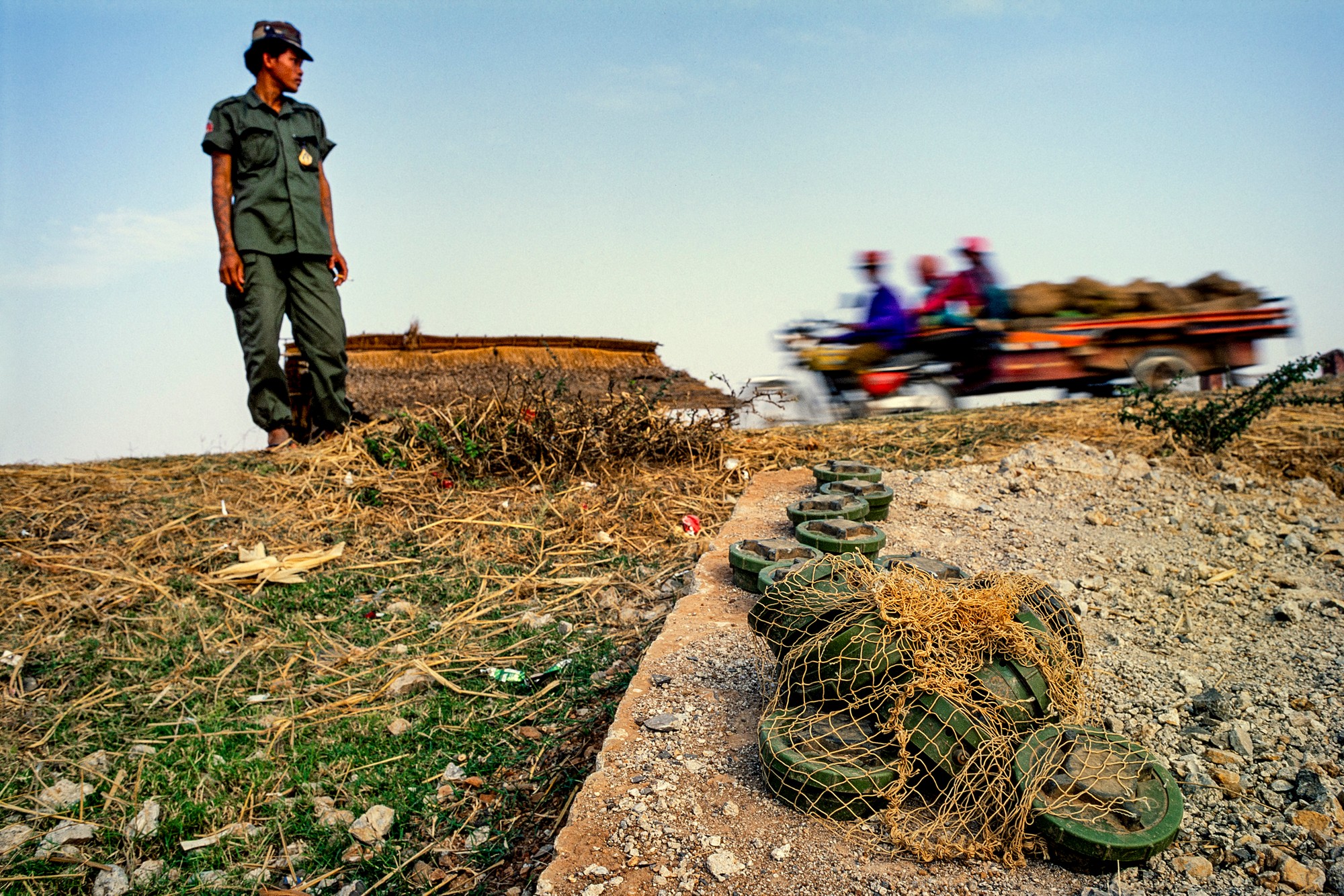
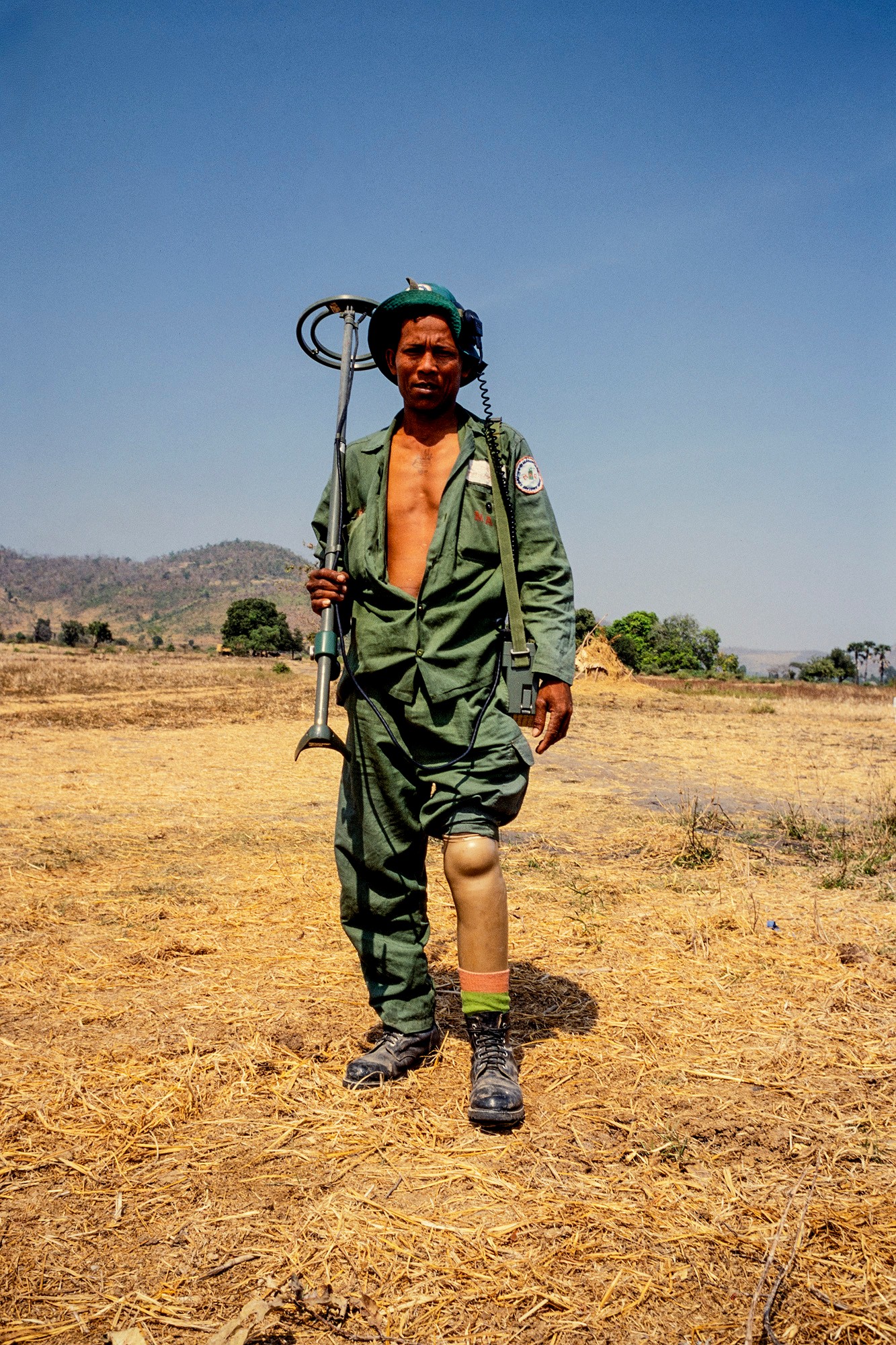
Russ works for the Mines Advisory Group (MAG), a British based NGO that recognizes that mines are not a military problem but a civilian one. For MAG, mines are about communities and their efforts to escape poverty. Mines deny villagers access to land, clean water and communications and while the horrific injuries the mines inflict must be cared for, it is just as important to clear mines so that land can become productive and villagers can feed themselves. Because MAG sees mines as a community problem, their deminers all come from the villages most affected by them. Every morning crews of green clad Cambodians can be seen gathering in and around Battambang waiting for MAG’s trucks to take them to the fields. In the groups are men who have lost limbs to mines as well as women widowed when their husbands stepped on mines. For MAG, providing employment for those victimized by mines is an important priority.
Working for MAG pays well by Cambodian standards and deminers can make over US$200 a month—in a country where average per capita income is less than US$500 a year, they is no shortage of young men and women willing to do the work. But besides the obvious dangers of stepping on mines, MAG workers also have to play a delicate balancing game between government forces and Khmer Rouge guerillas and they often get caught in the middle of the war. On March 25th this year, 26 Cambodian deminers and their British supervisor, Christopher Howe, were kidnapped by Khmer Rouge soldiers near Siem Riep. Although the Cambodians were later released, Christopher Howe is still being held by the Maoist guerillas—very few of the Khmer Rouge hostages have survived the ordeal.
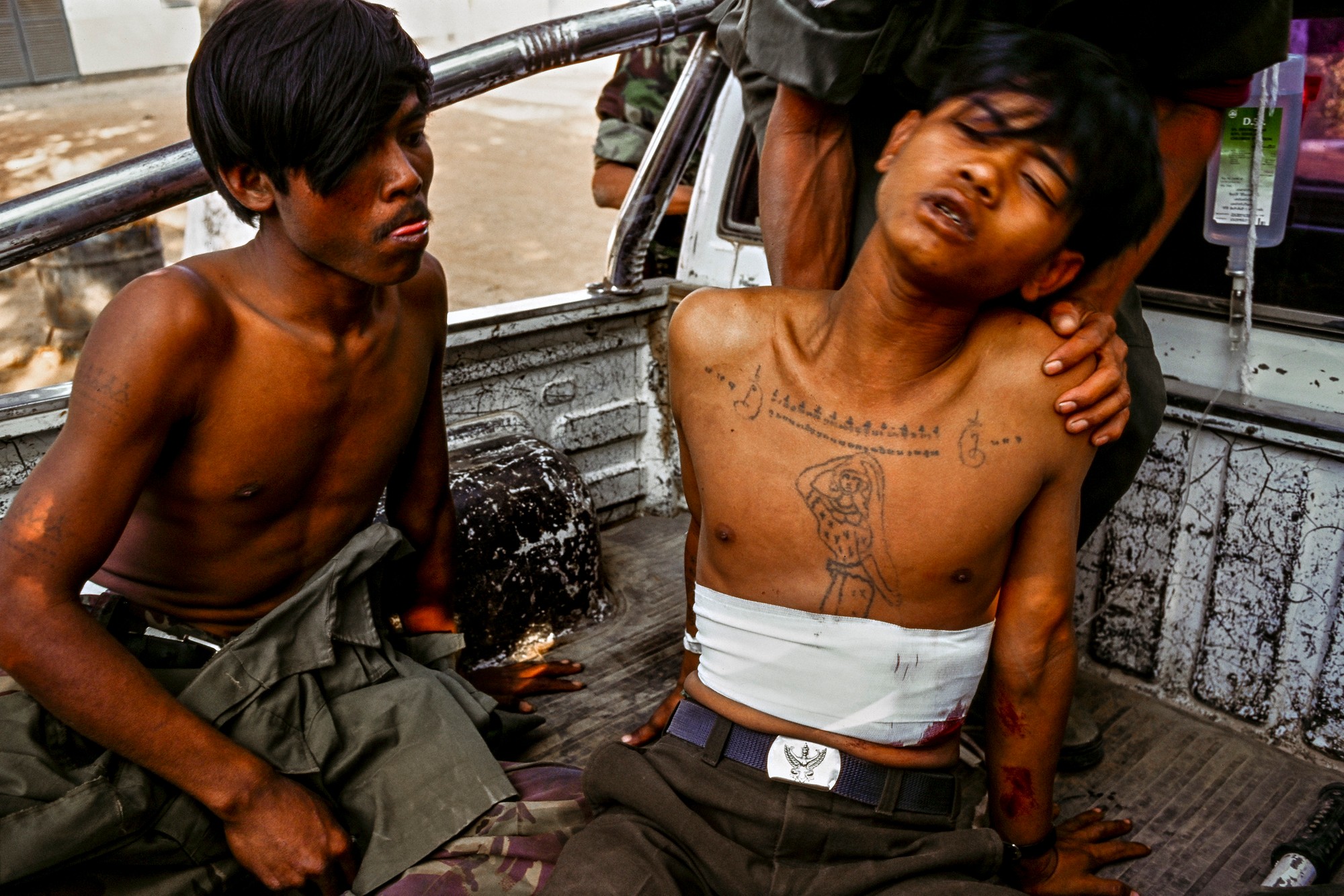
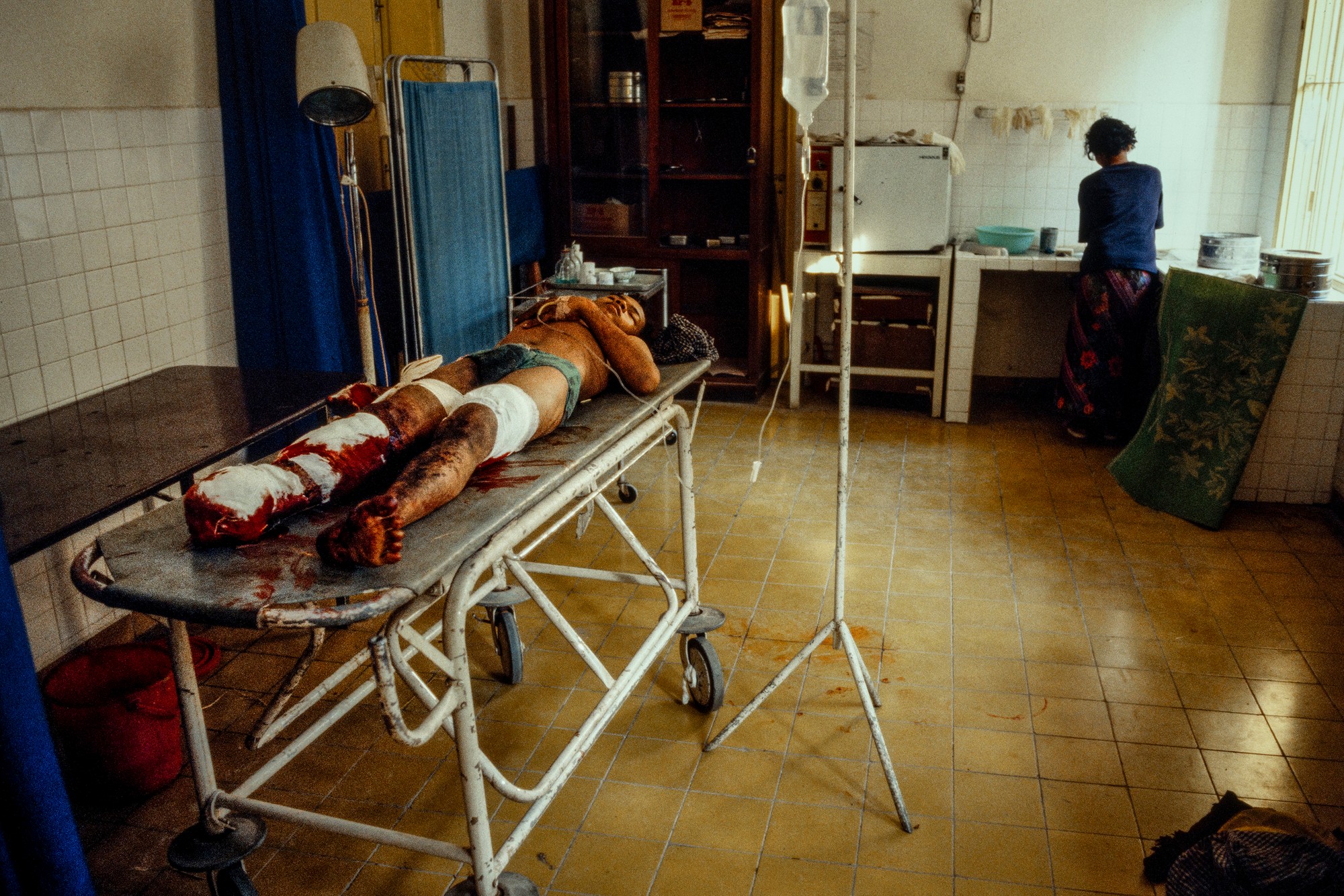
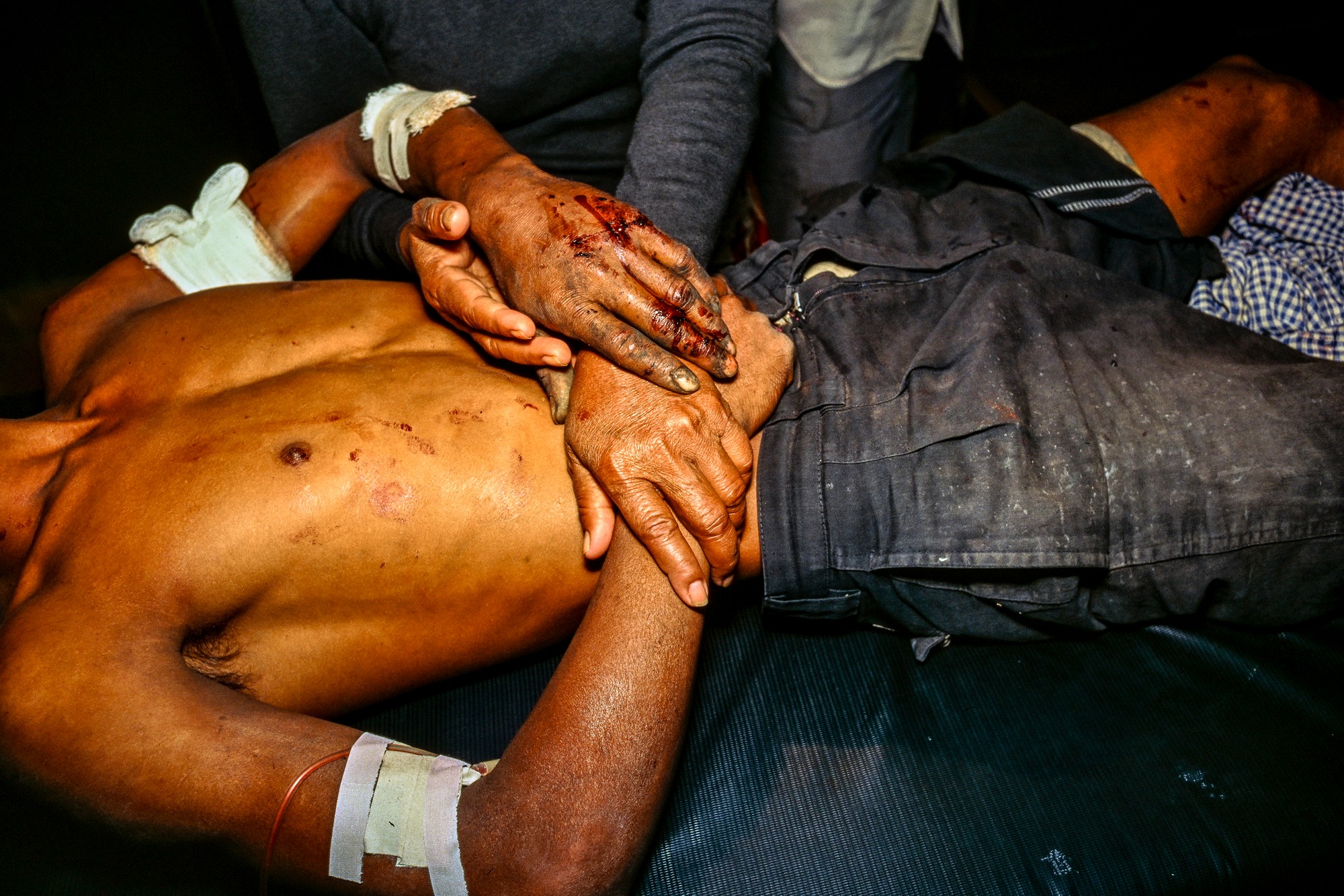
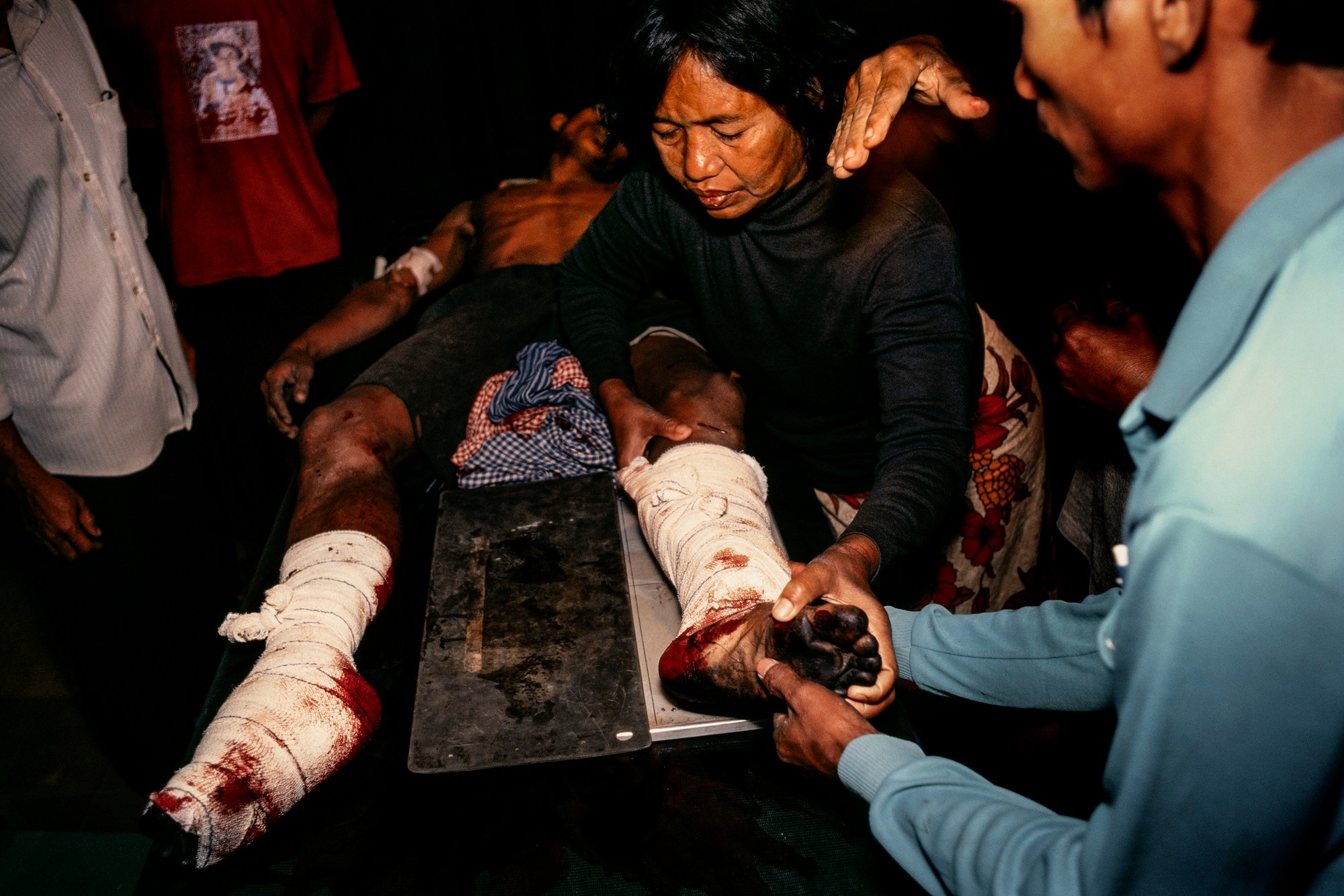
As Seang waited for the doctors to amputate his leg, his father tried to explain what happened. “He was coming back from school when it happened. That morning he had noticed we needed fire wood so said he would get some after school. I told him to be careful but we have never seen mines in the field where he went, so I thought he would be OK”, Seang’s father said. “I heard an explosion but we hear that all the time in our village so I didn’t think about it. It was when I saw two school boys running to my house that I knew what had happened”, he explained with the air of a man all too familiar with these type of tragedies.
Seang Rin lives in Kon Pong Village, a small community caught in the struggle between the government and Khmer Rouge. Standing in Wat Banon, a temple high above Kon Pong village, smoke can be seen rising a few kilometers south of the village. It is a Khmer Rouge camp explains soldiers manning artillery placed in the 14th century temple ruins. Pointing to the west and north, the commander of the small outpost points to where government forces are based—the village literally stands in the way. The people living in Seang’s village, though, cannot depend on the government to protect them and most often have to fend for themselves.
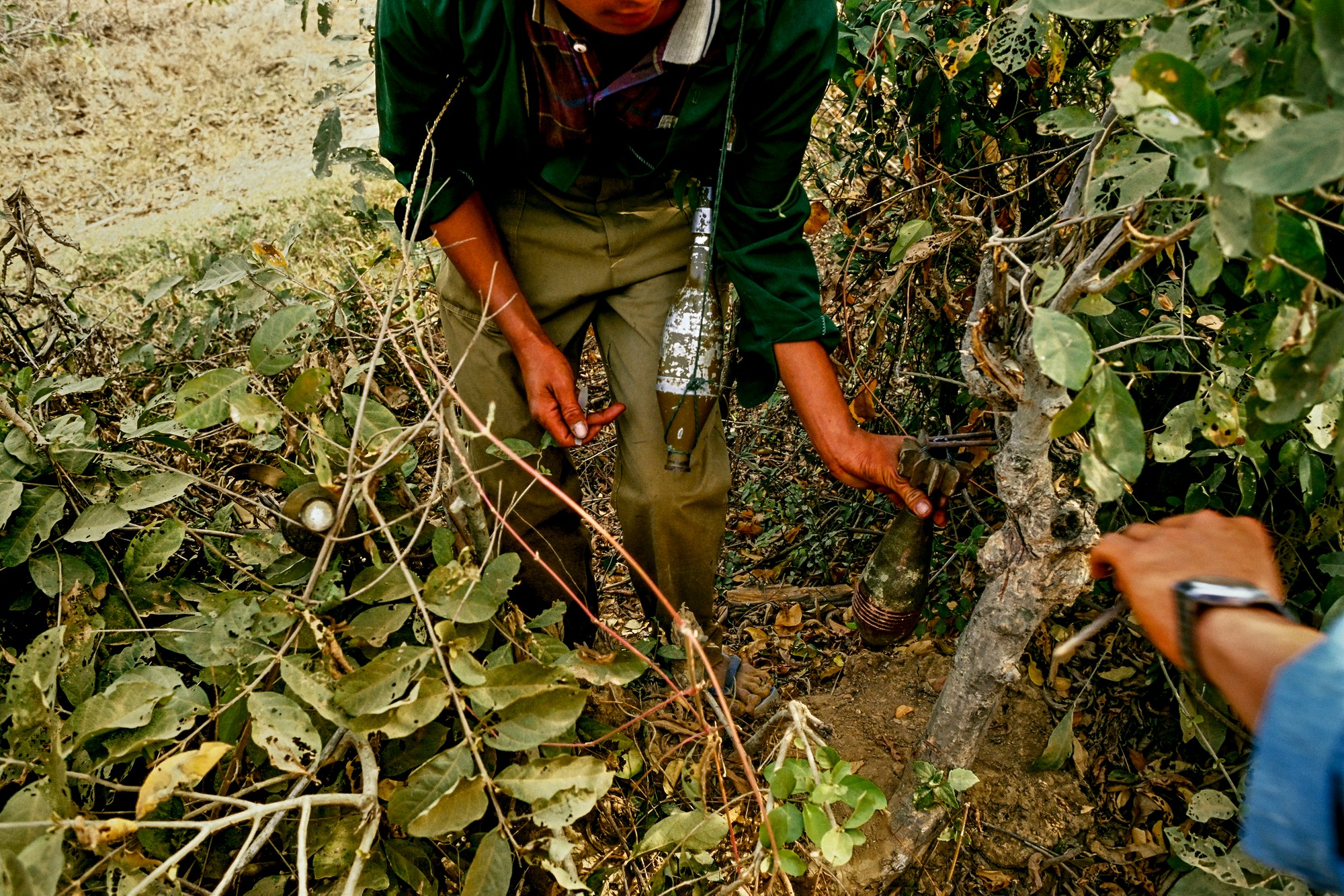
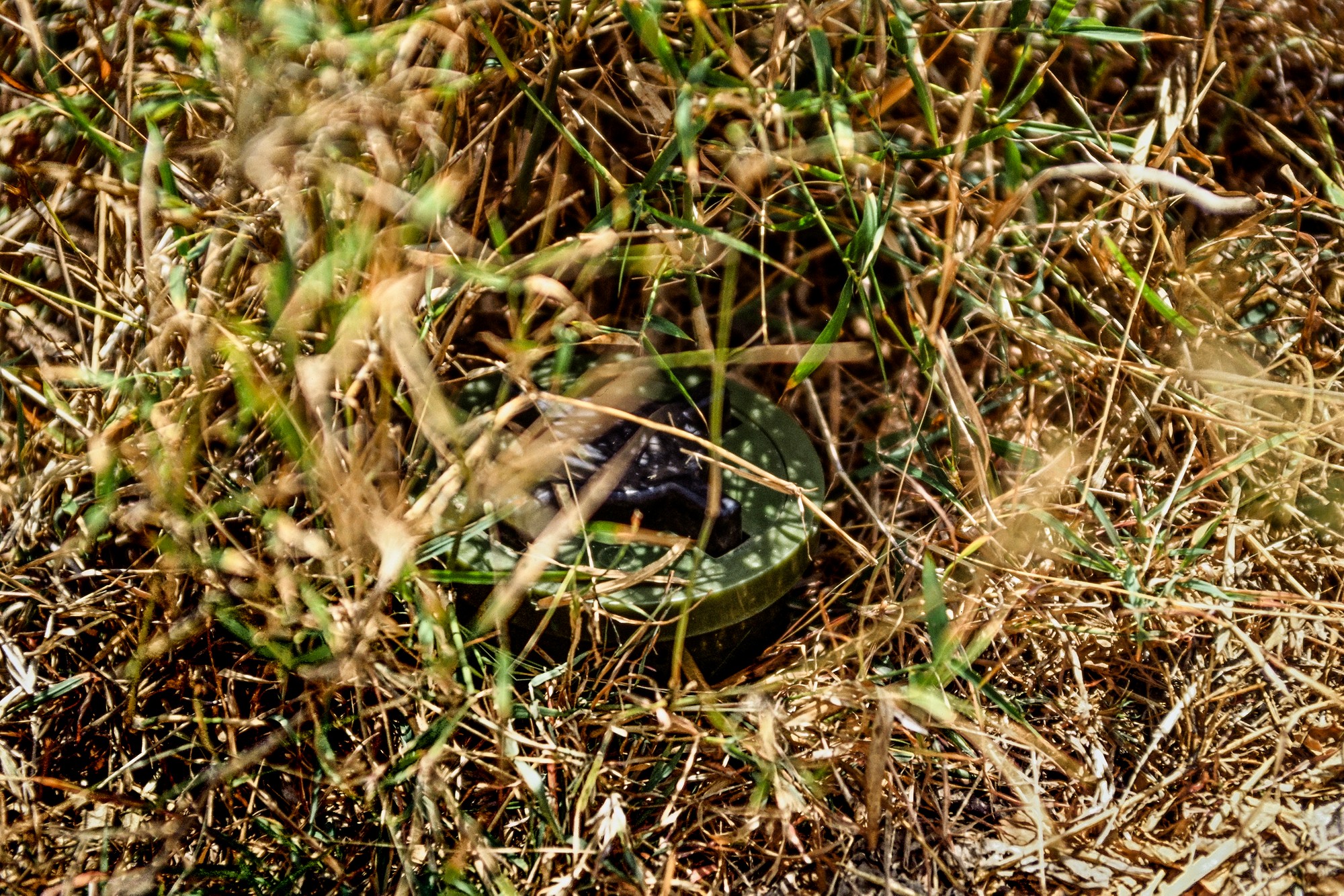
Every morning the Kon Pong village militia, a rag-tag bunch of men from 16 to 60 years old, set out to search for mines laid by the Khmer Rouge the night before. Unlike the deminers at MAG, though, the villagers don’t have metal detectors or training—they only have their experience. Walking through the fields in a long narrow line, men begin to break off and peer into the bushes and small clusters of trees—favorite places to hide mines especially during the dry season when collecting firewood is the main source of income for farmers. It doesn’t take long to find a mine. This time it’s a PMN-2, a Chinese made mine the size of your hand that is green and almost impossible to see for the inexperienced eye. It is the same type of mine that shattered Seang Rin’s leg.
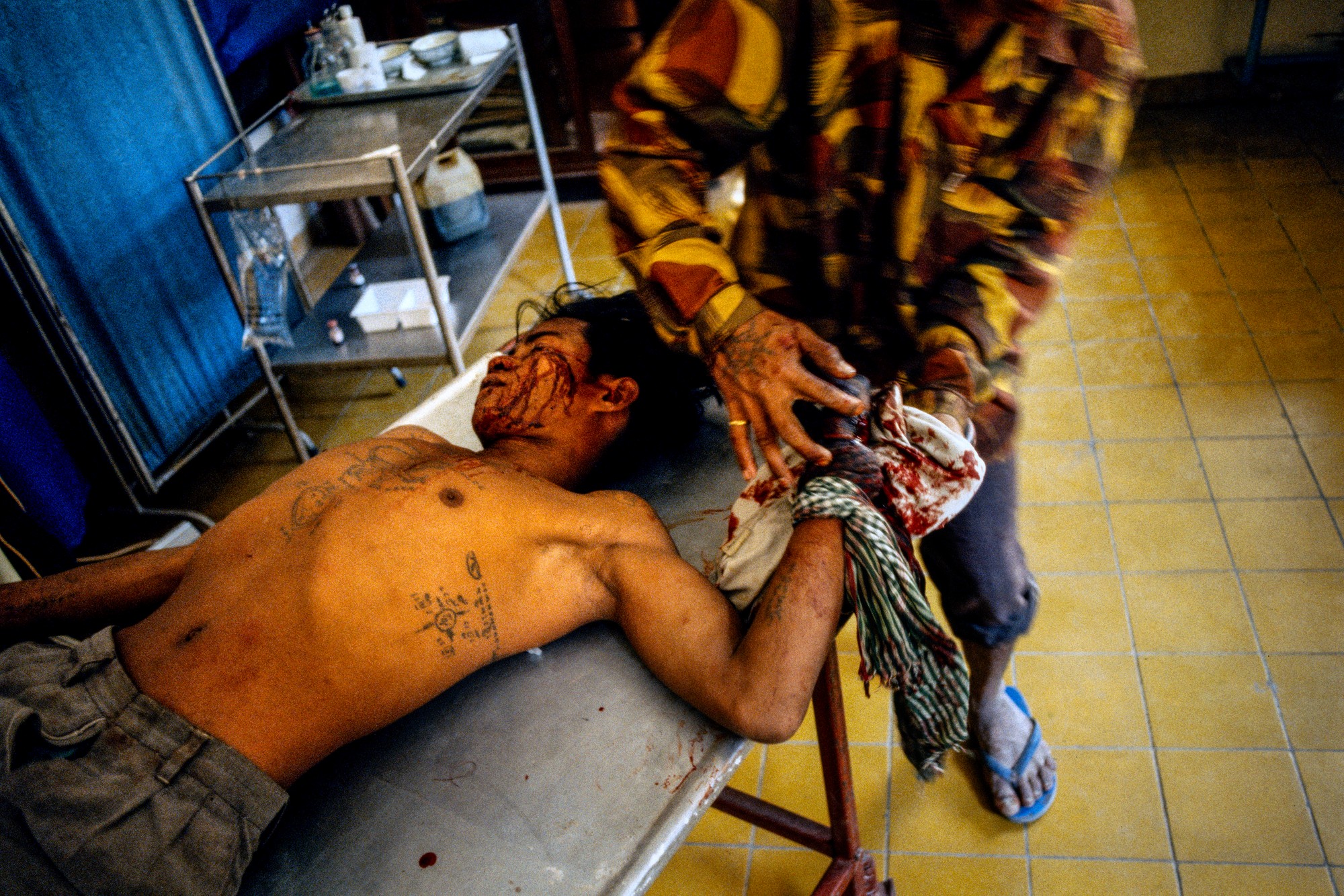
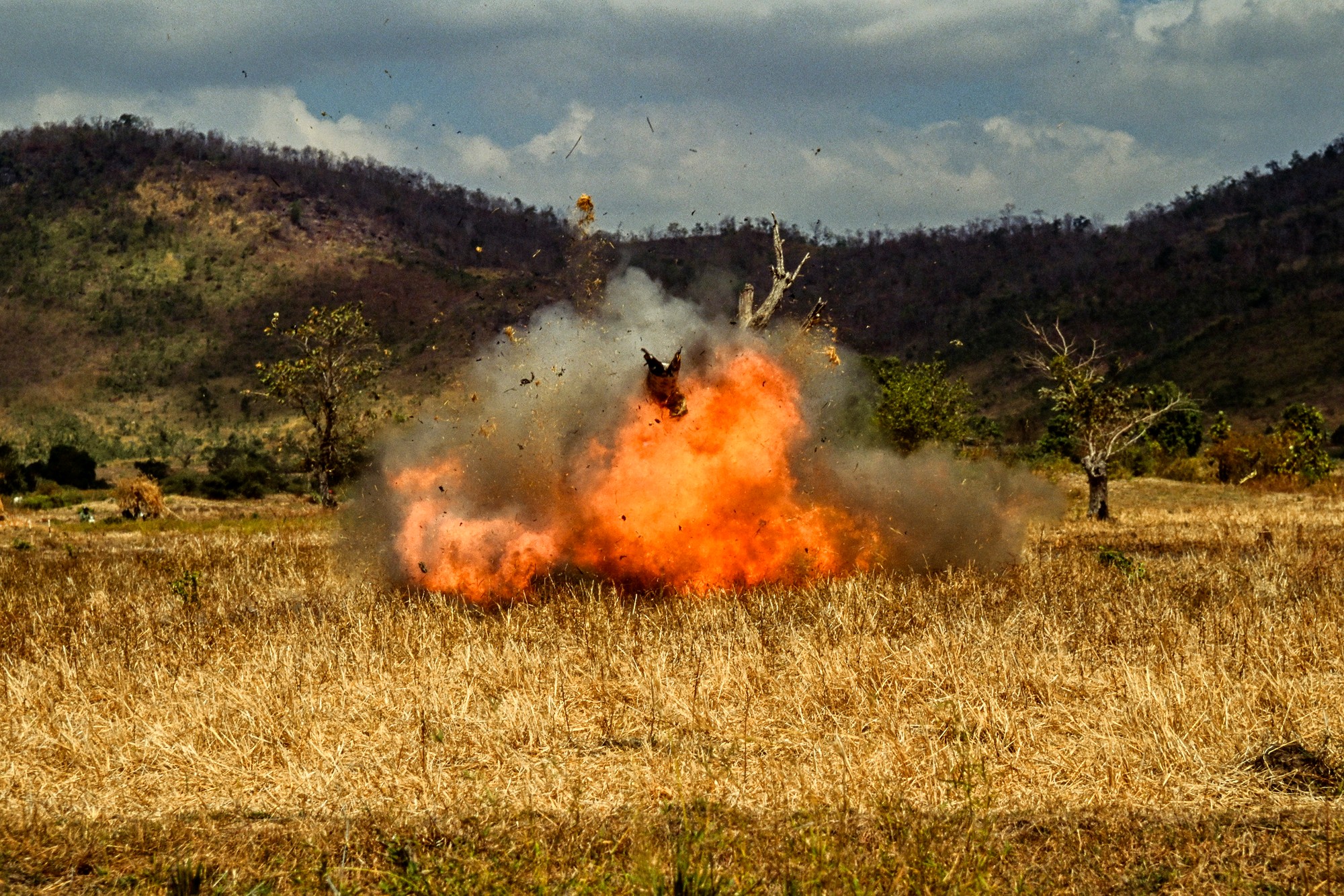
When professional deminers locate mines they are always detonated where they are found using small plastic explosives to trigger the mine. For the villagers, though, no such option exists so the mine will be cleared and defused by hand. Dozens of men found in the hospitals with their hands blown off testify to how dangerous clearing mines this way can be.
But the villagers in Kon Pong often keep the mines they find to reuse later. Every afternoon the villagers set out to lay there own mines to prevent Khmer Rouge infiltration and it is a bloody and dangerous game that has taken several villagers lives and has maimed many more. Seang Rin was the second villager that week to be caught in the middle of a conflict that started years before he was born.
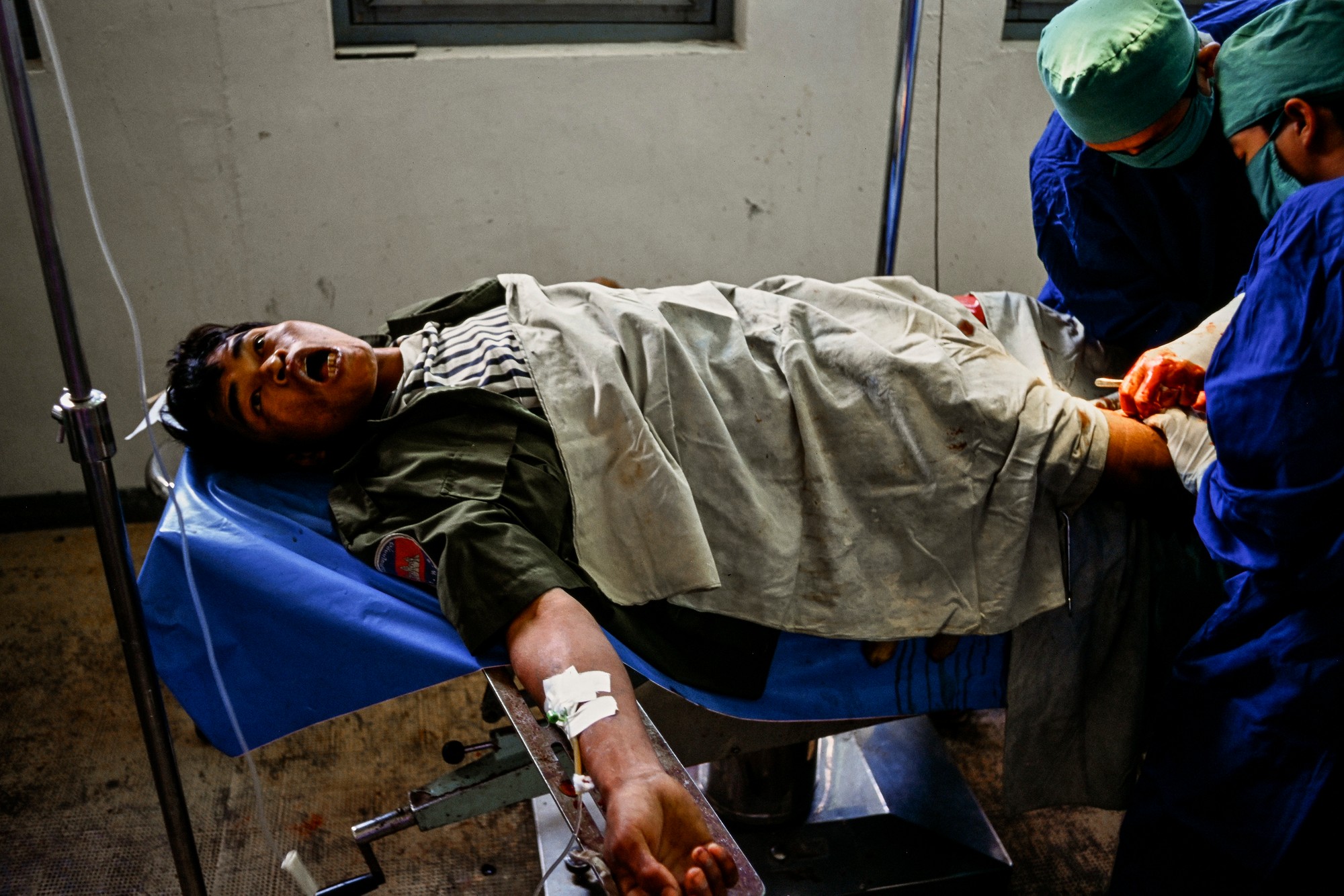
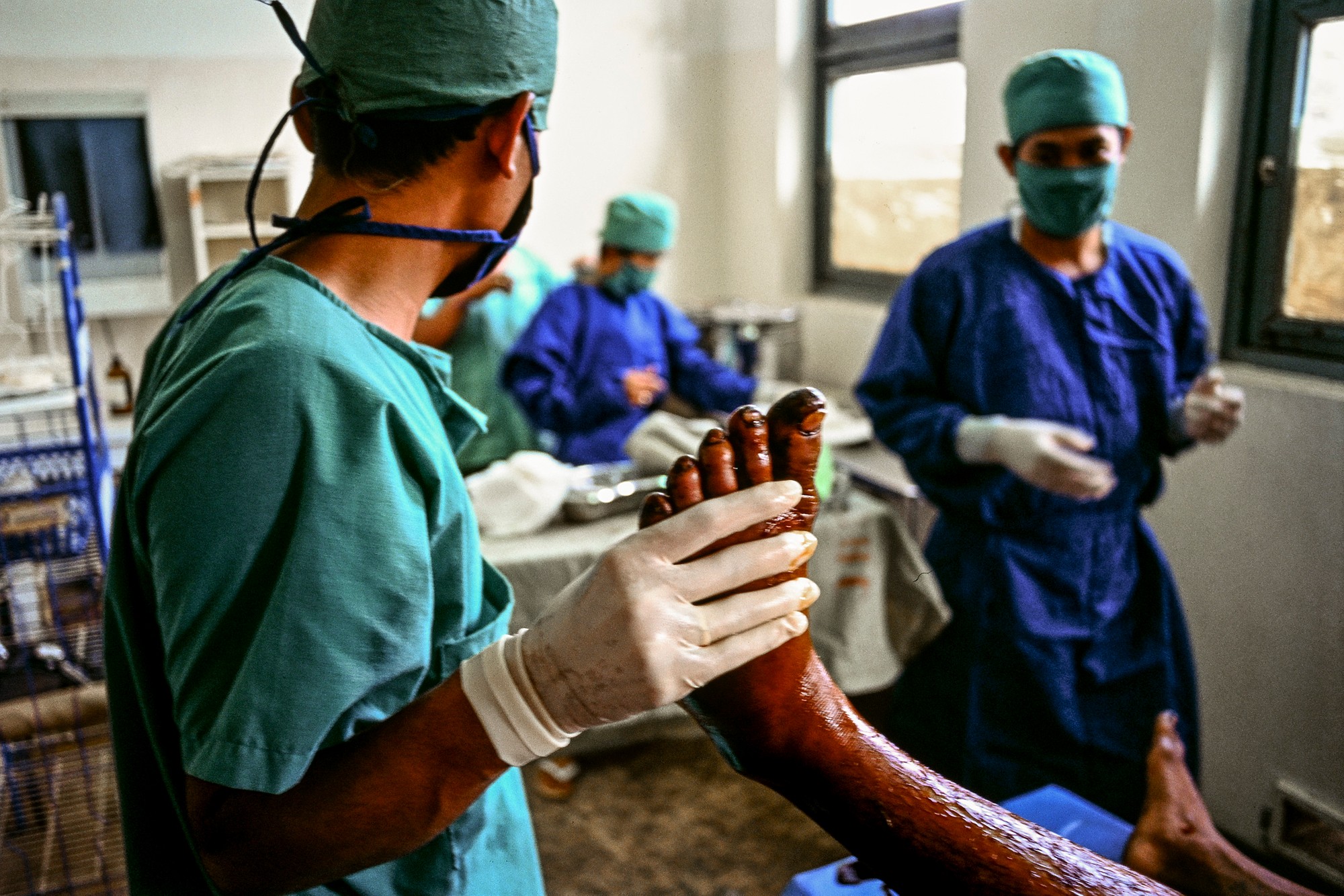
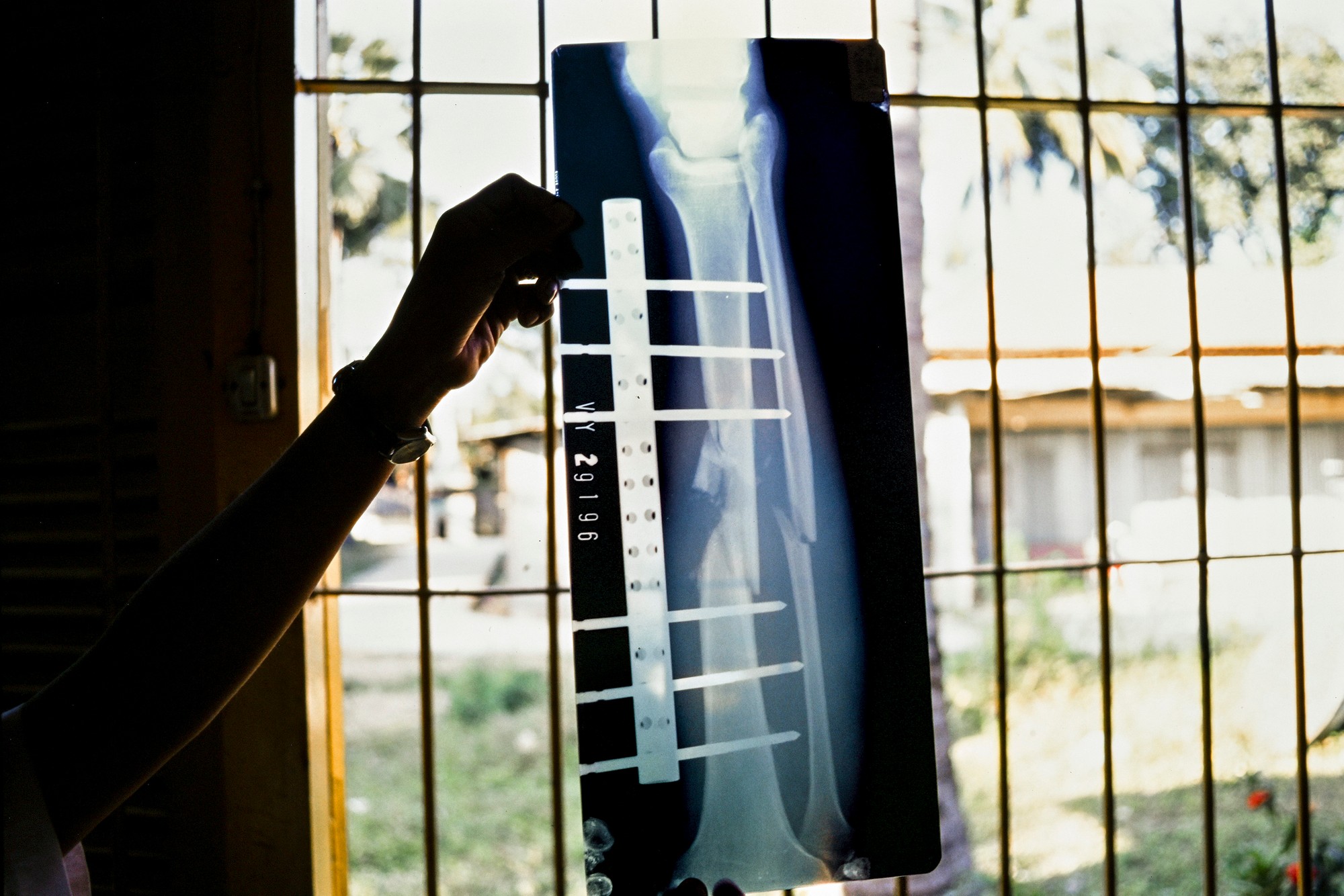
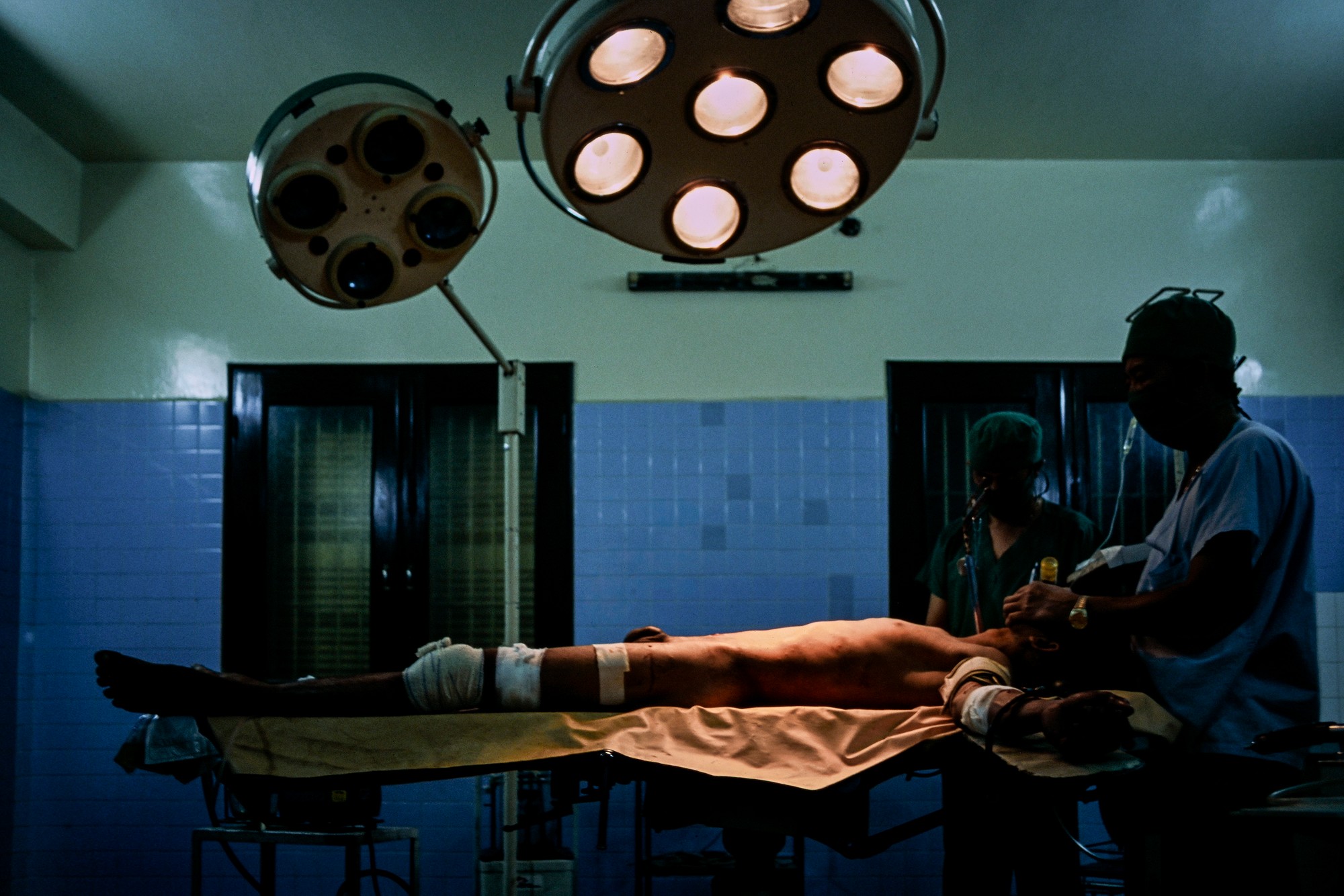
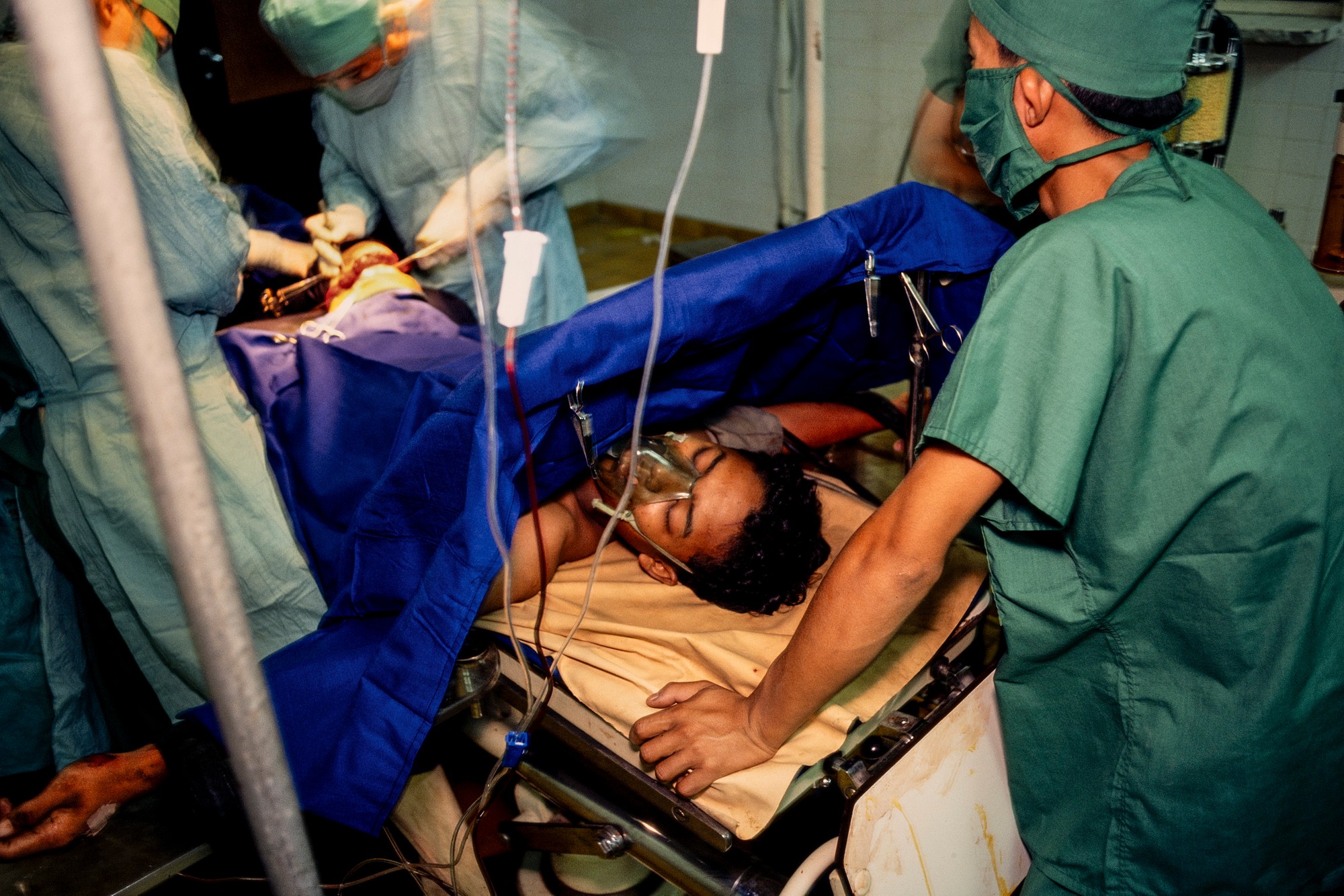
By the time Seang Rin was wheeled into surgery it was already 8pm, 4 hours since he arrived. The doctors performed 4 amputations that day and Seang was the last before the exhausted doctors could go home after the next shift change. The amputation was swift, taking only 5 minutes to cut through the flesh and bone about 8 cm above Seang’s knee. The stump was wrapped after the amputation with the wound left open for several days to check for bleeding and infection before being finally closed.
The next morning when Seang finally woke, he was still groggy from the anesthetic. With his mother sitting on the floor besides him fanning his legs, Seang was talking to an elderly patient beside him who had lost both legs. Apparently, the 50 year old farmer had lost his legs to mines on two separate occasions, most recently near his home when he stepped on a ‘frog mine’ with the prosthetic leg worn since his first mine accident. The mine is called a frog mine because it jumps out of the ground after the foot steps away and explodes above the ground—the man now had two above knee amputations. As he talked, the other mine victims in the ward could be heard giggling at the irony of the man’s accident; humor is about the only weapon most of the patients have left.
“I don’t remember much”, Seang said attempting to recall events from the day before. “I had been in that field many times and there had never been any mines so I thought it would be no problem. I just remember the flash of light and flying through the air. My friends say I didn’t scream or anything but they heard the explosion so came”. His father pointed out the Seang was his only son, not needing to explain the consequences of Seang’s new man-made disability. Living with mines, he explained, was something the villagers had become used to. “What can we do”, he said shaking his head, “we have to continue with our lives”.
As long as mines continue to be used and people continue to live with them, they will be cleared, in the words of Ron Podlaski, ‘one limb at a time’. Unless serious international pressure is applied on manufacturers of mines to ban their production they will continue to wait patiently for their next victims.